Madrid
Madrid, Spain's capital, is always lively and dynamic. It may look compact on a tourist-office map, but it offers a remarkable amount to see and do. Despite living closely with its history, it does not have the chocolate-box prettiness associated with some European cities. Instead, it feels genuinely lived-in: a miniature metropolis animated by cultural events and tapas bars. There is no single best season to visit; something is always happening. While living in Spain, we made several short trips here, including one for New Year's Eve and others to use the airport, and wanted to share our experience.
THINGS TO DO IN MADRID

Puerta del Sol is often called the heart of Madrid. The busy square is surrounded by restaurants, and at midnight on 31 December people traditionally gather to eat twelve grapes for good luck, one with each chime of the clock.

Another major square is Plaza Mayor. Concerts and other events are held in this historic public space, whose central equestrian statue depicts Philip III—not Philip II, as an earlier version of this article stated. A traditional Christmas market fills the square during the festive season.

Gran Vía is one of Madrid's main arteries, a cosmopolitan avenue lined with theatres and musical venues, as well as shops and restaurants. Walk west toward the Royal Palace and you will eventually reach Plaza de España.
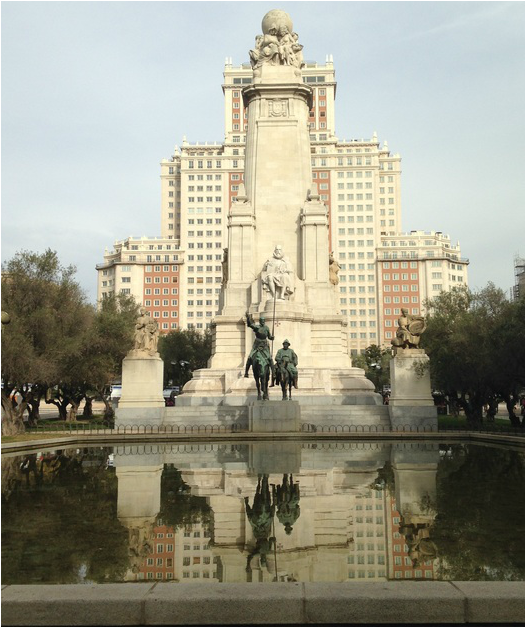
Plaza de España is a green square dominated by the monument to Miguel de Cervantes, with figures of Don Quixote and Sancho Panza. Small seasonal stalls sometimes sell souvenirs and handmade goods. We chose simply to rest on a bench beneath the trees.

Continue from Plaza de España toward Calle de Bailén and you will see the enormous Royal Palace. You can tour the interior, though we had little time and found even the walk around the exterior impressive. Beside it, the Sabatini Gardens are a fine example of formal landscaping, while street musicians often add to the atmosphere. The palace recommends booking timed tickets online; limited free-entry periods apply to eligible EU and Latin American citizens or residents, so check the official conditions.

The Prado is one of Europe's—and the world's—great art museums. In 2026 its regular free-admission periods are Monday to Saturday from 6 pm to 8 pm, and Sundays and public holidays from 5 pm to 7 pm. Expect queues and confirm details on the official website. My personal favourites were Velázquez's Las Meninas and the El Greco collection.

Retiro Park, just behind the Prado, is perfect for a walk if you have time. You can also sit at one of the cafés near the lake and enjoy churros with hot chocolate, a Spanish classic.

The Cibeles Fountain, at the junction of the City Hall and Banco de España buildings, is one of Madrid's best-known landmarks and a traditional gathering point for Real Madrid celebrations.

Madrid's famous flea market, El Rastro, spreads through La Latina on Sundays and public holidays. We never managed to catch it. You can find everything from furniture to small trinkets, and the city's official tourism information lists its hours as 9 am to 3 pm.

Malasaña and Chueca are central neighbourhoods with long-standing LGBTQ+ communities, independent shops, bold fashion and lively cafés. Together they make an enjoyable area for two or three hours of wandering.
WHAT TO EAT IN MADRID

| 
|
Mercado de San Miguel is one of Madrid's most famous food markets. Similar markets exist in many Spanish cities, but we enjoyed its range. We chose steamed mussels with garlic and olive oil and Galician-style octopus. It is now a polished visitor destination rather than a cheap everyday market, so check prices before ordering.
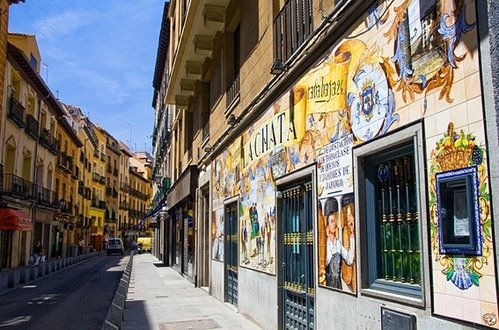
Cava Baja and Cava Alta are two streets full of bars and restaurants. Come in the evening for beer and tapas or try one of the places specialising in grilled and roasted meats.

If shopping on Gran Vía leaves you tired, Public, at Calle del Desengaño 11, served an excellent set lunch when we visited. The €10 price in the original article is historical; menus and opening status can change. We especially liked the spinach-stuffed beef rolls and pasta with Roquefort sauce.
WHERE TO STAY IN MADRID
Because our trip coincided with New Year's Eve, we had to be selective about hotels. In situations like that, an established chain such as NH Hotels can be a practical choice. We tried NH Madrid Sur near Puente de Vallecas metro station and were very satisfied. At other times there are also inexpensive, clean hostels in the centre; Hostal Murcia is one example. Always check recent reviews, the exact address and cancellation terms before booking.
WHAT TO BUY IN MADRID
We bought charming magnets from stalls at Plaza de España and some turrón, a Spanish confection resembling Turkish saray helvası. Madrid is highly cosmopolitan, so it also has shops for almost every taste.
If You Have Upcoming Travel Plans...
When you make a purchase by clicking our links, we get to earn a small commission but you still pay the same price. So, it's a win-win for everyone!

Book hotels via Booking.com | 
Find Cheap Flights via Skyscanner | 
Get a Travel Insurance via World Nomads | 
Make International Money Transfer via Wise |

Book Tours & Attractions via Getyourguide | 
Book a Cruise | 
Book Bus/Ferry/Train/Transfer via 12goAsia | 
Find free accommodation in exchange for petsitting |