Kenya Travel Diary: Maasai Mara, Lake Nakuru and Mombasa
MZUNGU IN THE MIST
Mzungu is a Swahili word widely used in East Africa for a foreigner, especially a European or white visitor. Its tone depends on context; it is not inherently an insult, although it can certainly make you feel conspicuous. Why the sudden Swahili lesson? Because of our much-loved journey through Kenya and Zanzibar.
Our Kenya adventure began when our dear friend Yasemin went there as a volunteer. The country had not been in our plans, but we thought, ‘If Yasemin is already there, why not?’ and designed an ambitious route across a large part of Kenya. Those conversations soon became, ‘If we are already in Kenya, why not Tanzania too?’—and that is how we found ourselves in Zanzibar. But that is another story.
Our Kenya adventure began when our dear friend Yasemin went there as a volunteer. The country had not been in our plans, but we thought, ‘If Yasemin is already there, why not?’ and designed an ambitious route across a large part of Kenya. Those conversations soon became, ‘If we are already in Kenya, why not Tanzania too?’—and that is how we found ourselves in Zanzibar. But that is another story.
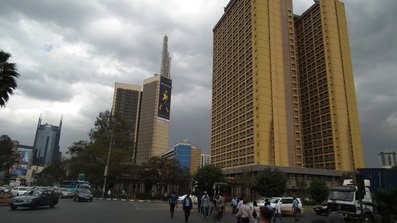
We found our best-value fare with Air Arabia, which meant flying through Sharjah. The route was a little longer but not especially difficult, and we landed safely at Nairobi’s Jomo Kenyatta International Airport. There we met Yasemin and her friends. Our travelling group—three Turks, three Greeks and one German—was complete.

Our first stop was Maasai Mara National Reserve. We visited on three consecutive days and saw scenes that are genuinely difficult to encounter elsewhere. The reserve is extraordinarily rich in wildlife and forms part of the ecosystem crossed during the Great Migration. The timing and location of wildlife can never be guaranteed, so choose responsible guides and keep a respectful distance.
Our second stop was Lake Naivasha and Hell’s Gate National Park. Hell’s Gate is one of Kenya’s parks where walking and cycling are important ways to explore, though access and safety conditions can change. Guided walks are available in parts of its dramatic gorge landscape. Check Kenya Wildlife Service notices, especially after heavy rain, and never enter restricted sections.
Our second stop was Lake Naivasha and Hell’s Gate National Park. Hell’s Gate is one of Kenya’s parks where walking and cycling are important ways to explore, though access and safety conditions can change. Guided walks are available in parts of its dramatic gorge landscape. Check Kenya Wildlife Service notices, especially after heavy rain, and never enter restricted sections.

Third came Lake Nakuru National Park, rich in birdlife and one of Kenya’s important rhino conservation areas. Kenya Wildlife Service reports both black and white rhinos and around 450 bird species in the park. Giraffes, zebras, baboons and other animals can also be seen beyond formally protected areas, but sightings depend on habitat, season and luck. Never feed or approach wildlife.
From there we travelled to Kakamega Forest, Kenya’s only remaining tropical rainforest ecosystem. Before dawn we joined a guided walk to watch the sunrise. Tuğçe and I did not quite complete what felt more like a morning run than a walk, but participation is what matters—so back to the story.
After the tour, our friends continued in the opposite direction toward Lamu, while we returned to Nairobi and took an intercity bus to Mombasa, Kenya’s second-largest city. On board we were served warm cola, Fanta, soda and peanuts—hospitality without limits. During that journey, many rural areas had limited electricity and roadside drinks were often served at ambient temperature. We also discovered Novida, a pineapple-flavoured malt drink that we immediately wanted imported back home. These details reflect our trip at the time; infrastructure and services have changed since then.
From there we travelled to Kakamega Forest, Kenya’s only remaining tropical rainforest ecosystem. Before dawn we joined a guided walk to watch the sunrise. Tuğçe and I did not quite complete what felt more like a morning run than a walk, but participation is what matters—so back to the story.
After the tour, our friends continued in the opposite direction toward Lamu, while we returned to Nairobi and took an intercity bus to Mombasa, Kenya’s second-largest city. On board we were served warm cola, Fanta, soda and peanuts—hospitality without limits. During that journey, many rural areas had limited electricity and roadside drinks were often served at ambient temperature. We also discovered Novida, a pineapple-flavoured malt drink that we immediately wanted imported back home. These details reflect our trip at the time; infrastructure and services have changed since then.
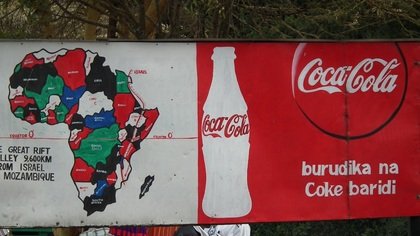
When we finally reached Mombasa, we arranged our onward flight. In this predominantly Muslim coastal city, we followed a Lonely Planet recommendation, tried local dishes at a Muslim-owned restaurant and were very pleased. The next morning we visited Fort Jesus, built by the Portuguese in the late sixteenth century. Then a tuk-tuk—another form of local shared transport, also known in Turkey as a three-wheeler—carried us slowly and rather dramatically along the road to the airport for our flight to Tanzania.
I will save detailed accounts of those places for another article and offer a few miscellaneous observations about Kenya instead. No spoilers—read on in peace.
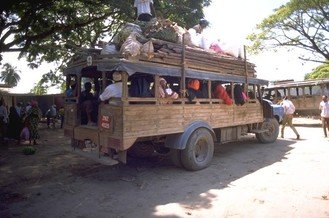
Some aspects of the journey were difficult: waste management, road conditions and sanitation varied greatly, and Nairobi’s modern skyline could sit beside informal rubbish burning and chaotic traffic. As visibly foreign visitors, we were sometimes quoted inflated prices, which made ordinary purchases tiring. Bargaining is common in some markets, but avoid treating every interaction as a confrontation: ask your accommodation or guide about fair local prices, agree on taxi or market prices in advance and remember that poverty and inequality shape these encounters. Matatus—the colourful private minibuses used for public transport—were memorable, crowded and often driven with more confidence than we possessed.
I will save detailed accounts of those places for another article and offer a few miscellaneous observations about Kenya instead. No spoilers—read on in peace.
Some aspects of the journey were difficult: waste management, road conditions and sanitation varied greatly, and Nairobi’s modern skyline could sit beside informal rubbish burning and chaotic traffic. As visibly foreign visitors, we were sometimes quoted inflated prices, which made ordinary purchases tiring. Bargaining is common in some markets, but avoid treating every interaction as a confrontation: ask your accommodation or guide about fair local prices, agree on taxi or market prices in advance and remember that poverty and inequality shape these encounters. Matatus—the colourful private minibuses used for public transport—were memorable, crowded and often driven with more confidence than we possessed.
Hot pepper is called pili pili in Swahili, and bell pepper may be called pili pili hoho. People we met recognised names such as Galatasaray and Istanbul, as well as prominent Turkish political figures, partly because of Turkish schools and institutions in the region. Kenya is a major tea producer and one of the world’s leading exporters of black tea; the older claim that it ranked first in all black-tea production and second in green-tea production was inaccurate. Its varied altitude and geography create strikingly different climates and landscapes.
Roads were one of the hardest parts of our trip. On paper, our plan was to leave early and arrive at each destination by noon. When a 300-kilometre minibus journey took about nine hours, we immediately upgraded our 700-kilometre Kenya–Tanzania route from road to air.(Our ‘Kenyan Pegasus’ solution.) Major roads seemed constantly under construction, and unfinished sections slowed travel. Conditions have improved on many routes since our visit, but journey times can still be long; check current advice rather than estimating from distance alone.
Despite every challenge, Kenya has an extraordinary landscape and wildlife heritage. Travel thoughtfully, use responsible local operators, respect communities and conservation rules—and go see it for yourself.
Roads were one of the hardest parts of our trip. On paper, our plan was to leave early and arrive at each destination by noon. When a 300-kilometre minibus journey took about nine hours, we immediately upgraded our 700-kilometre Kenya–Tanzania route from road to air.(Our ‘Kenyan Pegasus’ solution.) Major roads seemed constantly under construction, and unfinished sections slowed travel. Conditions have improved on many routes since our visit, but journey times can still be long; check current advice rather than estimating from distance alone.
Despite every challenge, Kenya has an extraordinary landscape and wildlife heritage. Travel thoughtfully, use responsible local operators, respect communities and conservation rules—and go see it for yourself.
If You Have Upcoming Travel Plans...
When you make a purchase by clicking our links, we get to earn a small commission but you still pay the same price. So, it's a win-win for everyone!

Book hotels via Booking.com | 
Find Cheap Flights via Skyscanner | 
Get a Travel Insurance via World Nomads | 
Make International Money Transfer via Wise |

Book Tours & Attractions via Getyourguide | 
Book a Cruise | 
Book Bus/Ferry/Train/Transfer via 12goAsia | 
Find free accommodation in exchange for petsitting |