ANGKOR WAT
Naturally, Angkor Wat is the first name that comes to mind when you think about things to do in Siem Reap =) Its name is generally translated as ‘Temple City’, and it belongs to the astonishing archaeological landscape created by the Khmer Empire, whose successive capitals flourished here between the 9th and 15th centuries. Do not picture a few crumbling stones when we say ruins: many of these monuments still stand in extraordinary splendour.

Angkor Wat itself is designed as a symbolic representation of Mount Meru, the sacred mountain in Hindu cosmology. Its five central towers evoke Meru’s peaks, while their rising profiles resemble mountain summits. This five-tower symbolism applies specifically to Angkor Wat, not to every temple in the archaeological park.

| 

|
Angkor was inscribed on the UNESCO World Heritage List in 1992. According to the official Angkor Enterprise ticket information checked in August 2026, admission costs USD37 for one day, USD62 for a three-day pass valid over seven days, or USD72 for a seven-day pass valid over thirty days. We chose the one-day ticket. The price felt high, but the experience was worth it; in the heat, we preferred one carefully planned day to racing through temples for several days.
| 
| 
|
HOW TO GET TO ANGKOR WAT
Angkor Archaeological Park covers roughly 400 square kilometres and its major temples are spread out, so walking between them is impractical for most visitors. Cycling can be rewarding if you are fit and comfortable in the heat, but the simplest option for a one-day Angkor Wat itinerary is usually to hire a tuk-tuk and driver. You can arrange one independently or through your accommodation; booking through the hotel was the least tiring choice for us. Transport prices vary, so agree on the route, waiting time and total fare before setting out.

| 
|
Sunrise and sunset are among Angkor’s most popular experiences, but—as usual—we chose sunset. An extremely early start would have made an already demanding day harder. We therefore asked our hotel for a driver from about 10:00 until 18:00 and paid USD15. That was the price of our trip, not a current quotation; confirm today’s fare before booking.
After an unhurried breakfast, we met Mr Rith outside the hotel and planned our route. We chose a classic small-circuit day covering three or four of the best-known temples: Angkor Wat, Bayon and Ta Prohm, made even more famous by Tomb Raider. Afterwards, Mr Rith dropped us at the smaller and then less crowded Pre Rup for sunset and waited below.
ANGKOR WAT TEMPLE
| 
|
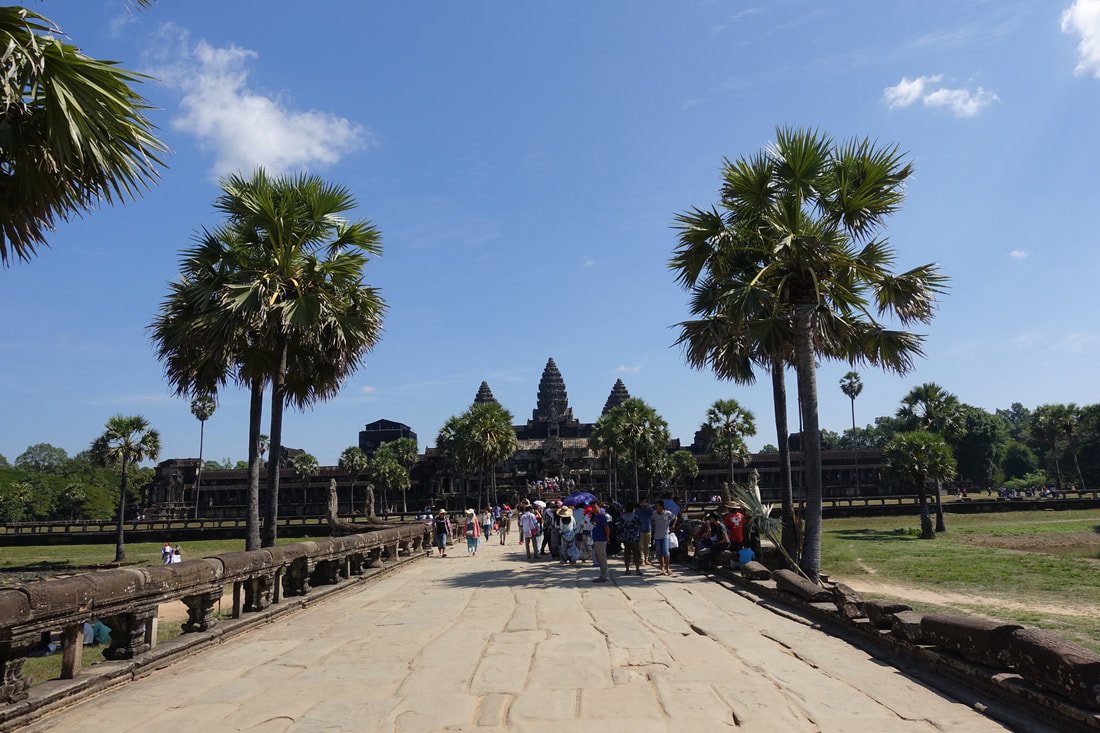
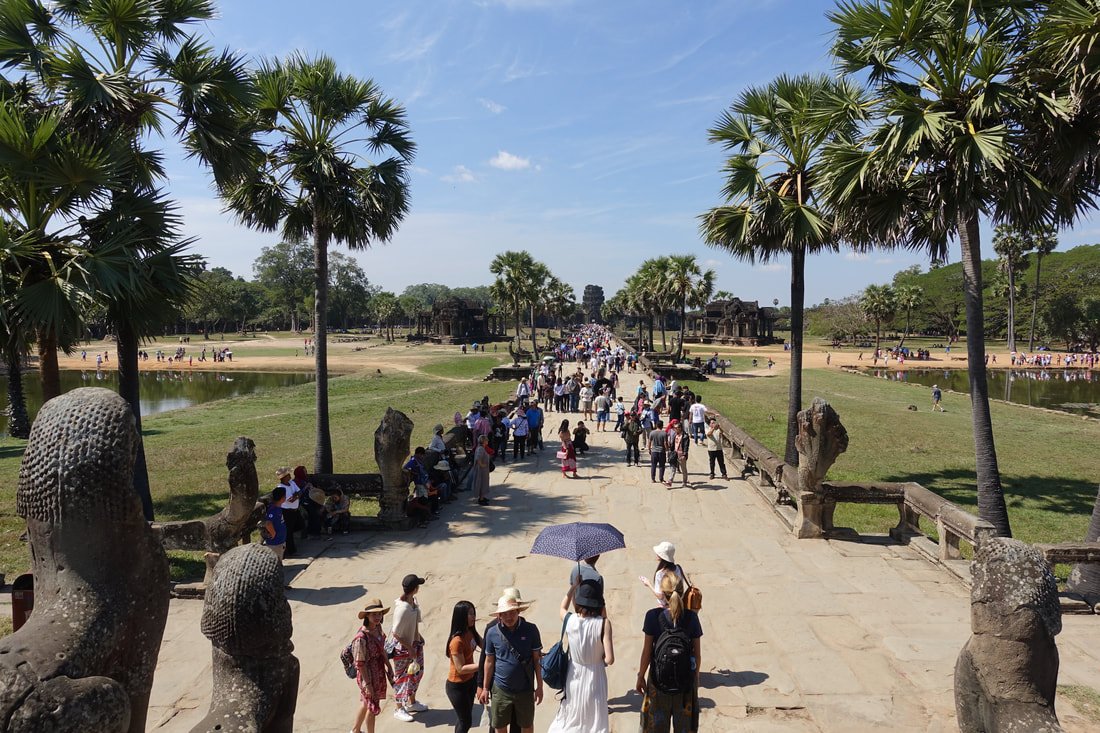
Our tuk-tuk driver deposited us beside the road—like two kittens—and said he would see us in an hour. The moment we spotted the causeway crossing the great moat towards the monumental façade we knew from photographs, we began taking pictures. Every so often we reminded ourselves to put the camera down and look at it properly with our own eyes.

| 
|
Once we crossed the causeway and entered, the atmosphere seemed to seep into our bones. Perhaps we imagined its spirituality, but every detail on the walls contributed to it. Looking down the long entrance galleries felt like standing between two facing mirrors, with an impression of infinity stretching away on both sides.
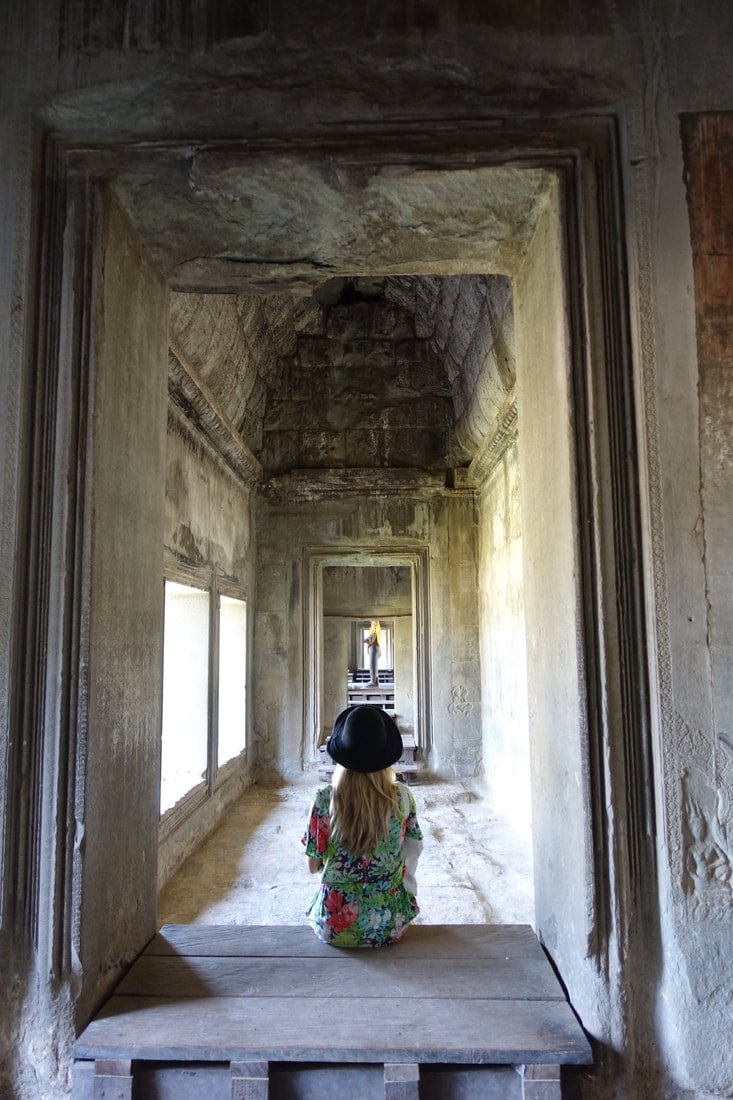
| 

|
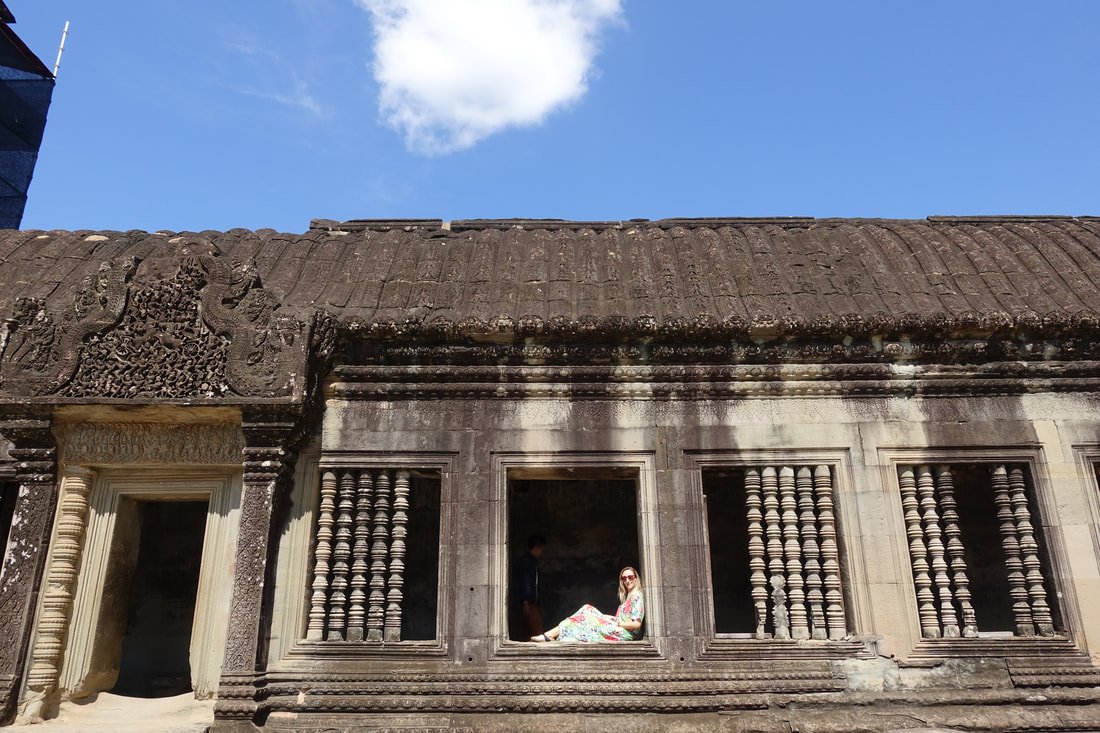
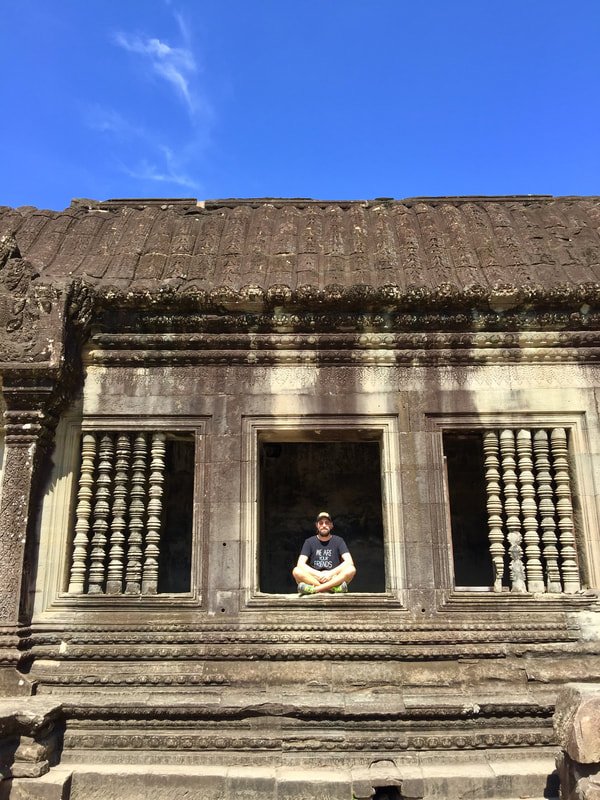
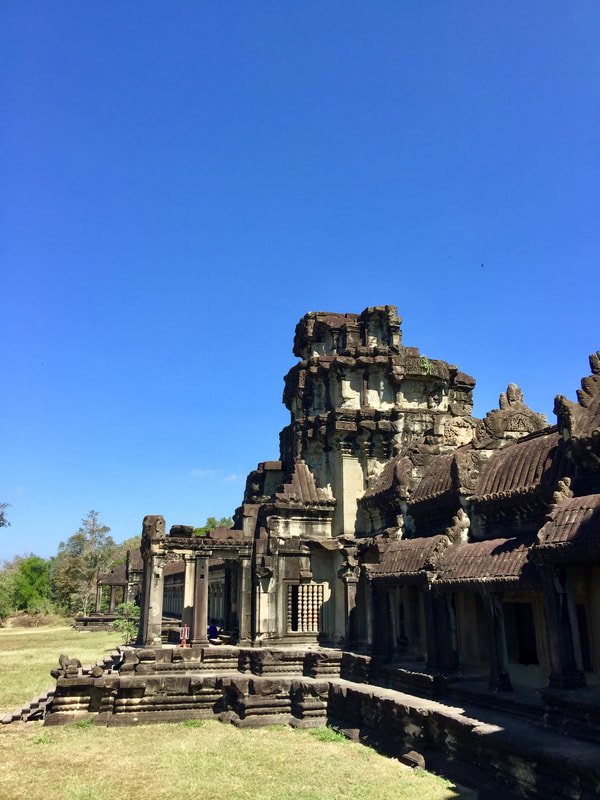
And that turned out to be only the entrance. We passed through more courtyards and doorways than we could count, eventually giving up on the grand plan and concentrating on the details nearest us. Built in the first half of the 12th century, Angkor Wat was originally dedicated to the Hindu god Vishnu and later became an important Buddhist site. It is also the park’s best-known sunrise location.
| 
| 
|
BAYON TEMPLE
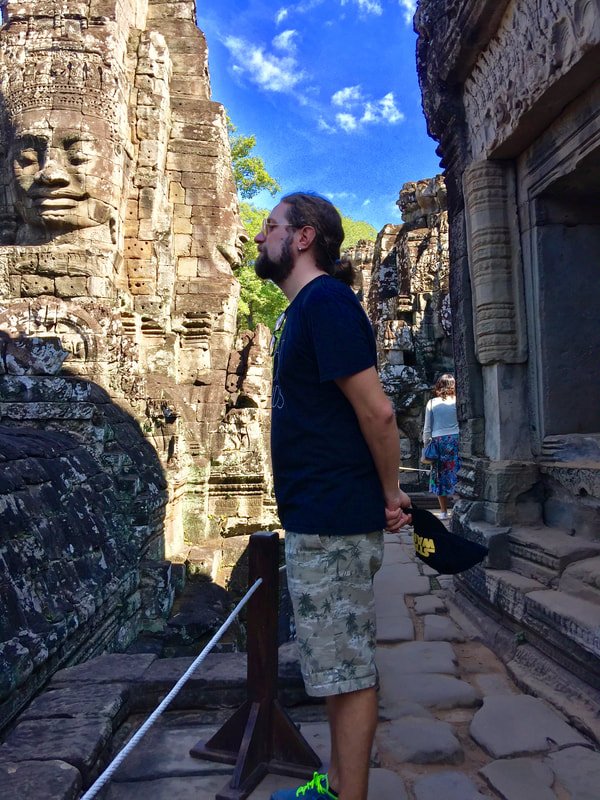
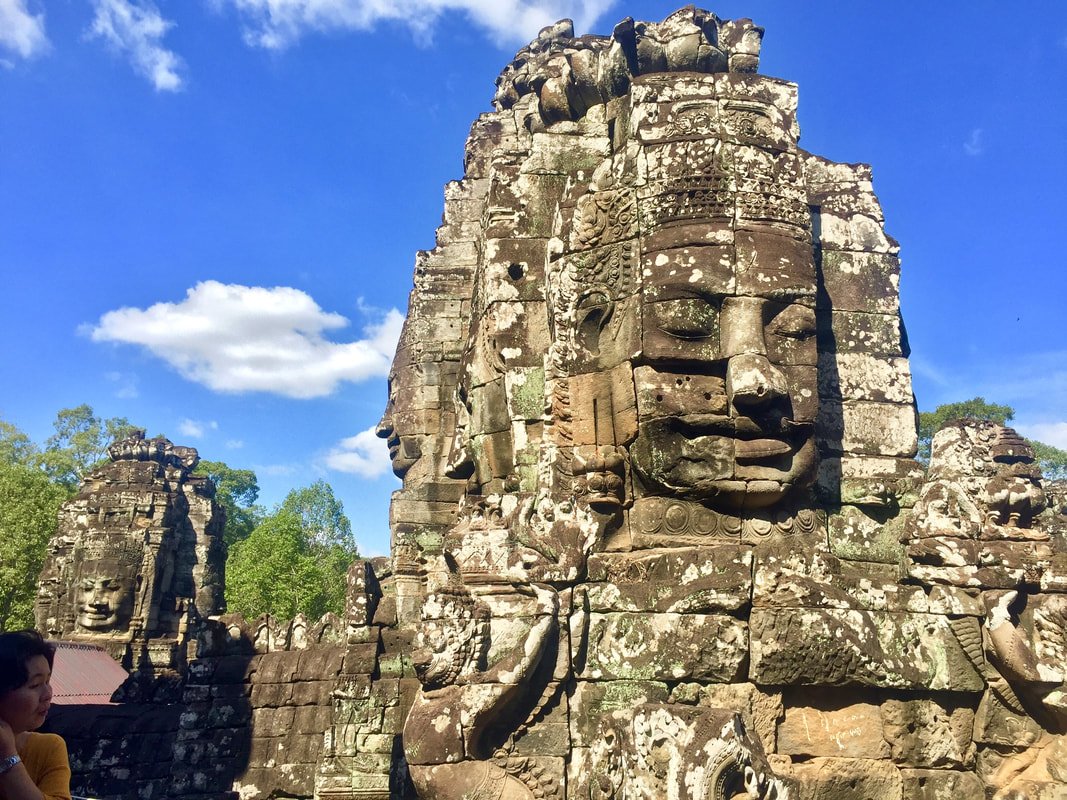
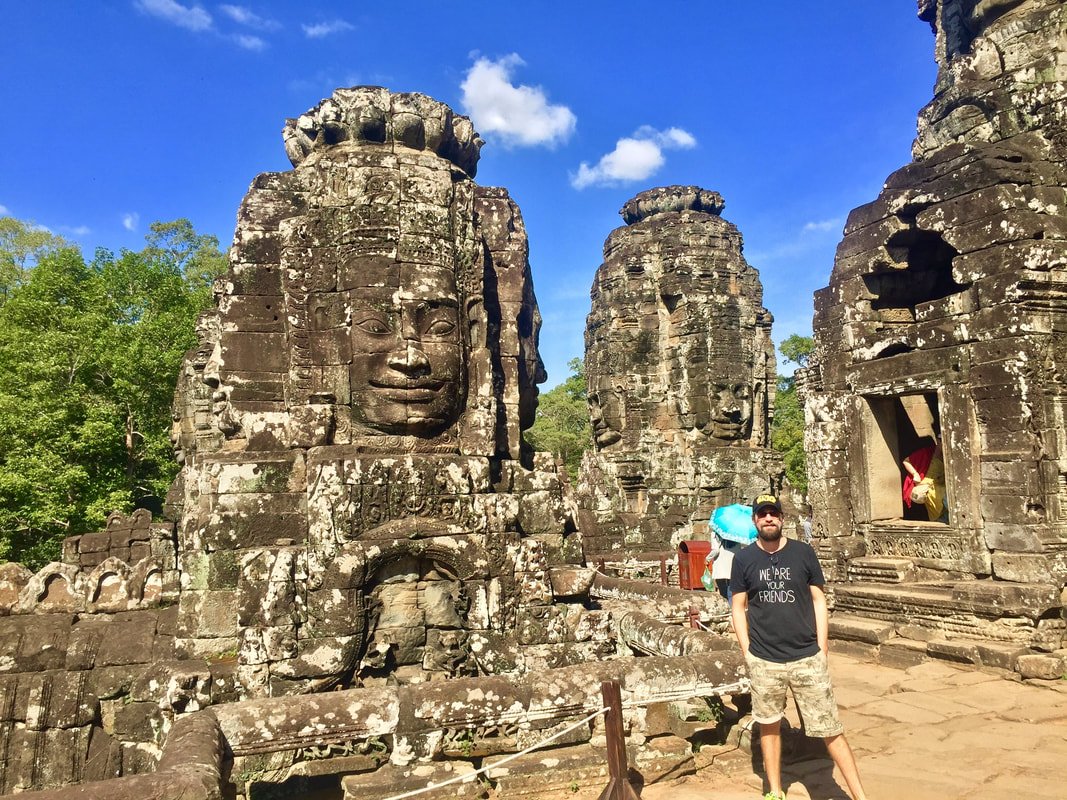
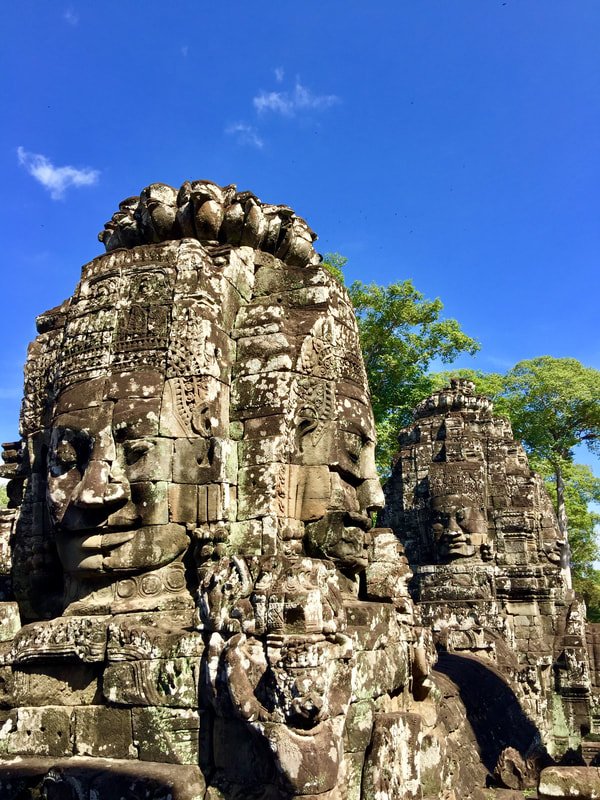
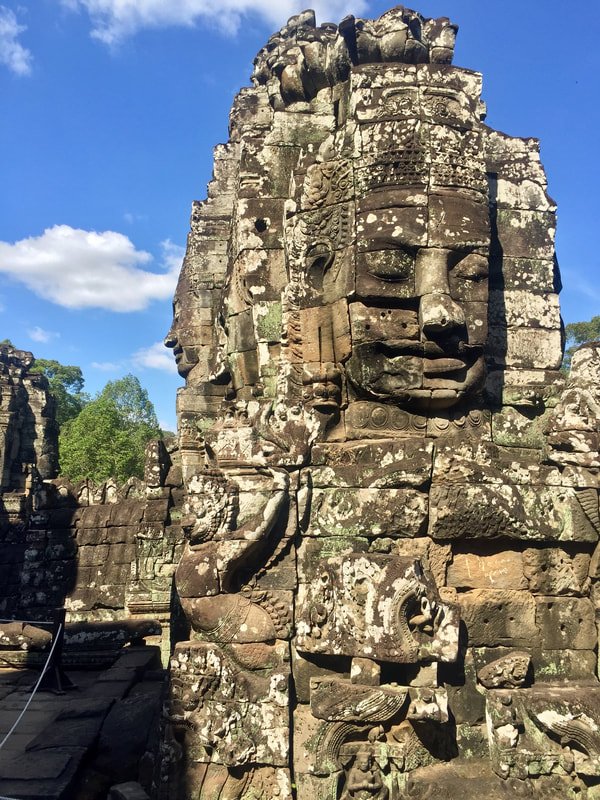
Bayon is the defining temple of Angkor Thom—the one everyone recognises from its immense stone faces. Numbers quoted for its towers vary because the complex changed over time and parts have been lost. The APSARA National Authority notes that 37 towers survive from an original total estimated at 49 or 54, many bearing faces on several sides; the familiar claim of exactly 54 towers and 216 faces should therefore not be treated as certain. Whatever the count, the effect is wonderfully surreal, and the faces that look identical at first gradually reveal their differences.

| 
|
We had read that around 10:00 or 16:00 could be a good time to visit Bayon, but at any hour it is difficult to forget. Before reaching the faces, you pass through dark, narrow passages pierced by slim shafts of light and through beautifully spare stone doorways in every direction.
| 
|
Bayon feels like a place from a fairy tale, and its conservation allows the monument’s age and character to remain visible rather than polishing away every imperfection.


| 

| 

|
TA PROHM TEMPLE
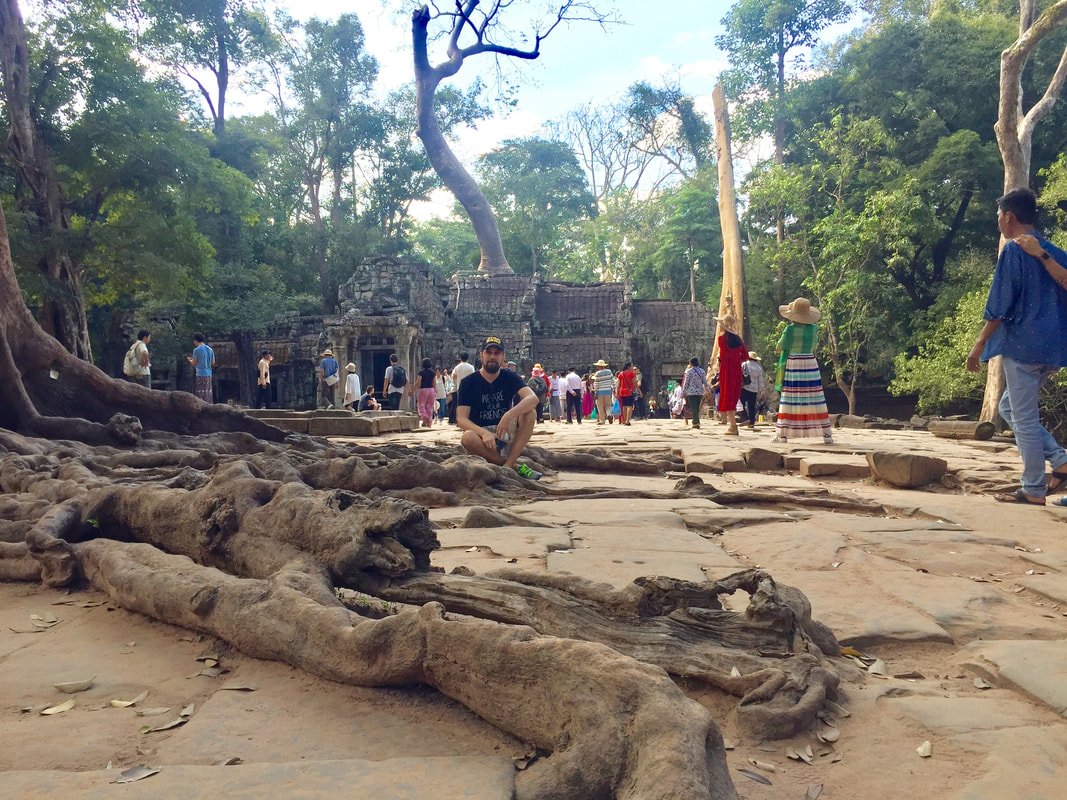
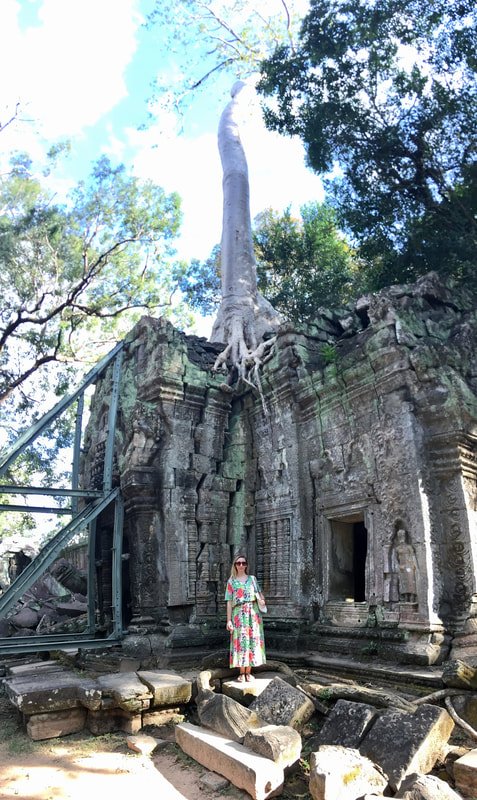
Ta Prohm became known around the world after appearing alongside Angelina Jolie in Tomb Raider. To us, however, it looked like the perfect illustration of nature’s overwhelming power over human construction.

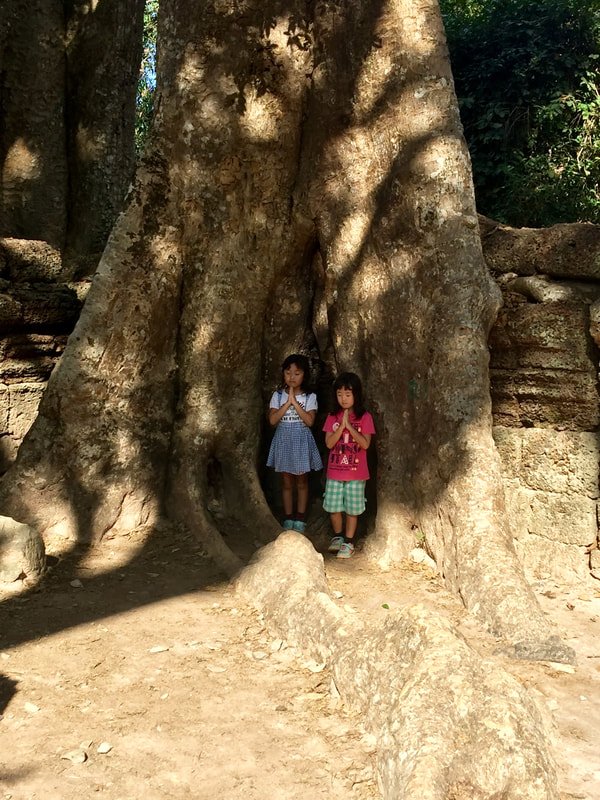
Strangler figs and other great trees rise almost to the sky above the massive stone structures, creating scenery that seems dreamlike. Stone and living wood could hardly suit each other better. APSARA explains that the trees were deliberately retained as part of Ta Prohm’s romantic character, while consolidation and restoration continue where roots or unstable masonry create safety risks. It is more accurate to describe this as careful conservation than as the trees simply being removed one by one.

| 
|
Of course, exploring so many seemingly abandoned buildings in the middle of lush nature alongside hundreds of other visitors can be frustrating. Yet when we stopped trying to photograph every second and allowed ourselves simply to look, the crowds bothered us much less.
| 
| 
|
PRE RUP TEMPLE
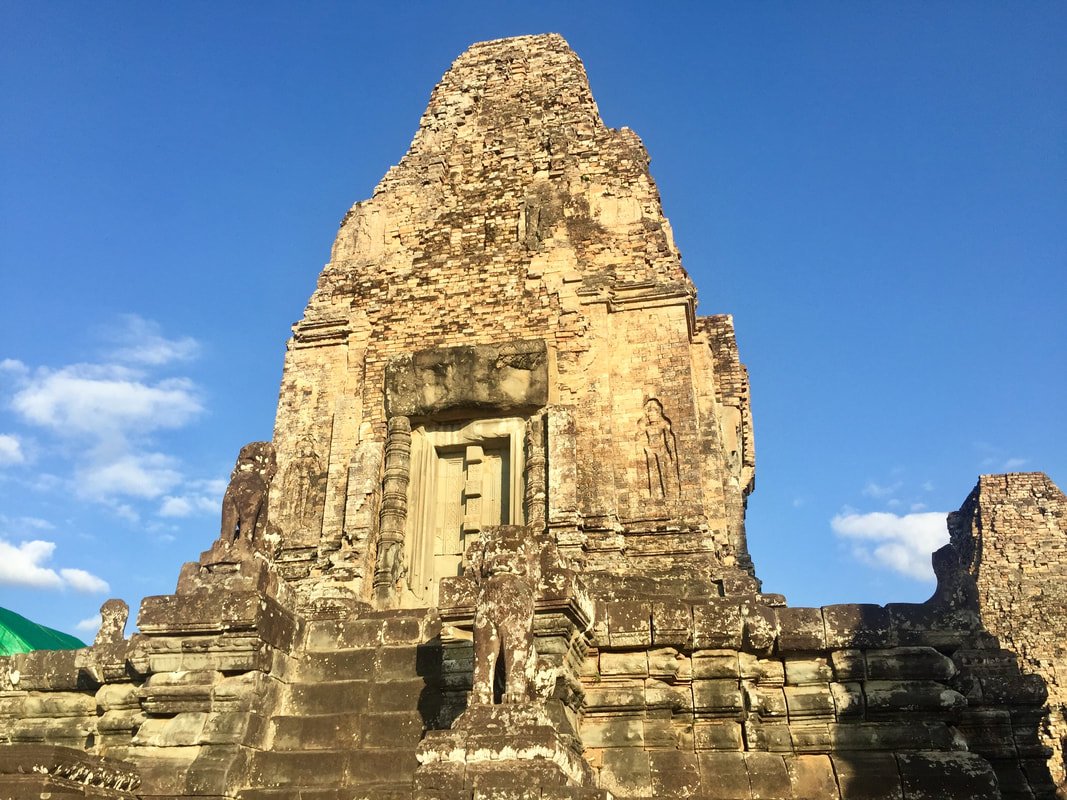
Although Pre Rup is a popular sunset spot, it had fewer visitors than some of the larger temples during our trip, so we chose it too. Before tackling the very steep steps, we bought iced coffee and freshly peeled pineapple from a Cambodian vendor near the entrance.

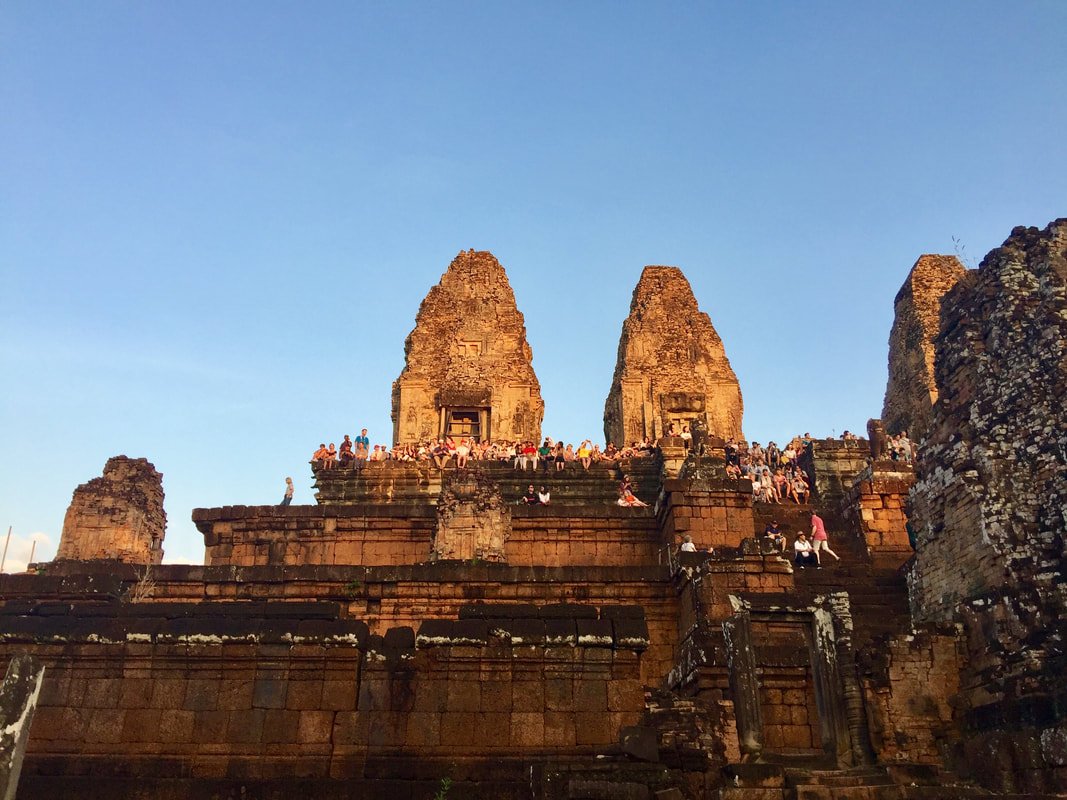
Your knees may tremble at the top, and some elevated sections have limited protection at the edges. Take the stairs slowly, follow any barriers and staff instructions, and do not sit or dangle your legs over unsafe ledges—however tempting the sunset view may be.
| 
|
To be completely honest, the sunset itself did not overwhelm us. We watched the sun drop behind the greenery with roughly 250 other people, then hurried down before it became too dark. Mr Rith was dozing in a hammock attached to his tuk-tuk; we found him and returned to the hotel.

| 
|
WHAT TO EAT AT ANGKOR WAT
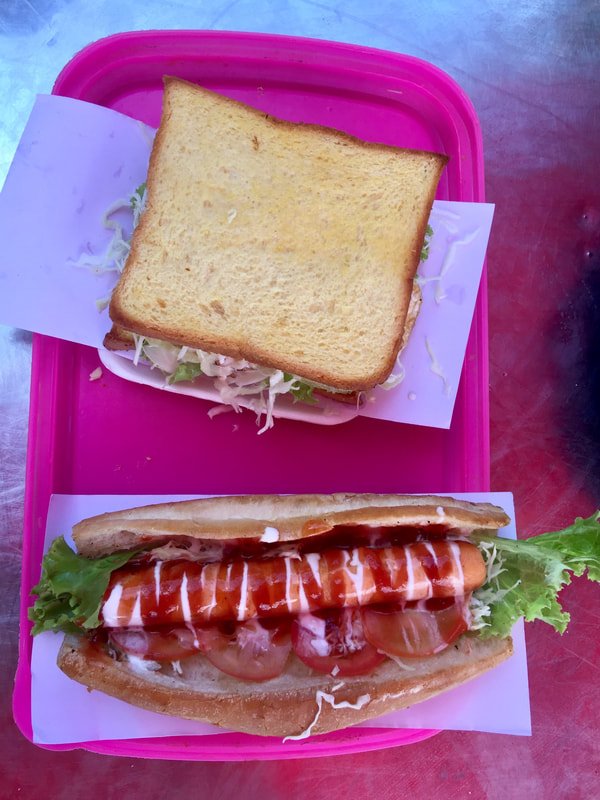
Food around the main temples can cost more than meals in Siem Reap, so we carried plenty of water and biscuits. Even so, eating a hot dog and an omelette sandwich from a small van beneath its red umbrellas was unexpectedly enjoyable. It was hardly the healthiest lunch, but at that moment it tasted wonderful. Small stalls also sell fresh fruit and juice. Bring enough water, avoid feeding monkeys and dispose of all rubbish responsibly. Factual information checked against UNESCO, APSARA National Authority and Angkor Enterprise sources in August 2026.
| 
|

If You Have Upcoming Travel Plans...
When you make a purchase by clicking our links, we get to earn a small commission but you still pay the same price. So, it's a win-win for everyone!

Book hotels via Booking.com | 
Find Cheap Flights via Skyscanner | 
Get a Travel Insurance via World Nomads | 
Make International Money Transfer via Wise |

Book Tours & Attractions via Getyourguide | 
Book a Cruise | 
Book Bus/Ferry/Train/Transfer via 12goAsia | 
Find free accommodation in exchange for petsitting |