IPOH
On our way back from a trip to the Cameron Highlands, we did something we would not normally do: we left buying our return tickets to Kuala Lumpur until the last minute. It turned out to be a lucky decision, because on the day we were due to leave we made a spontaneous plan to spend a night in Ipoh. We had previously stopped in smaller, less-touristy Malaysian towns such as Kuala Terengganu and Mersing, either to break up a long journey or simply to explore. Apart from village life and beautiful nature, however, we had not found a great deal to see. We set off assuming Ipoh would be much the same, but we could not have been more wrong.
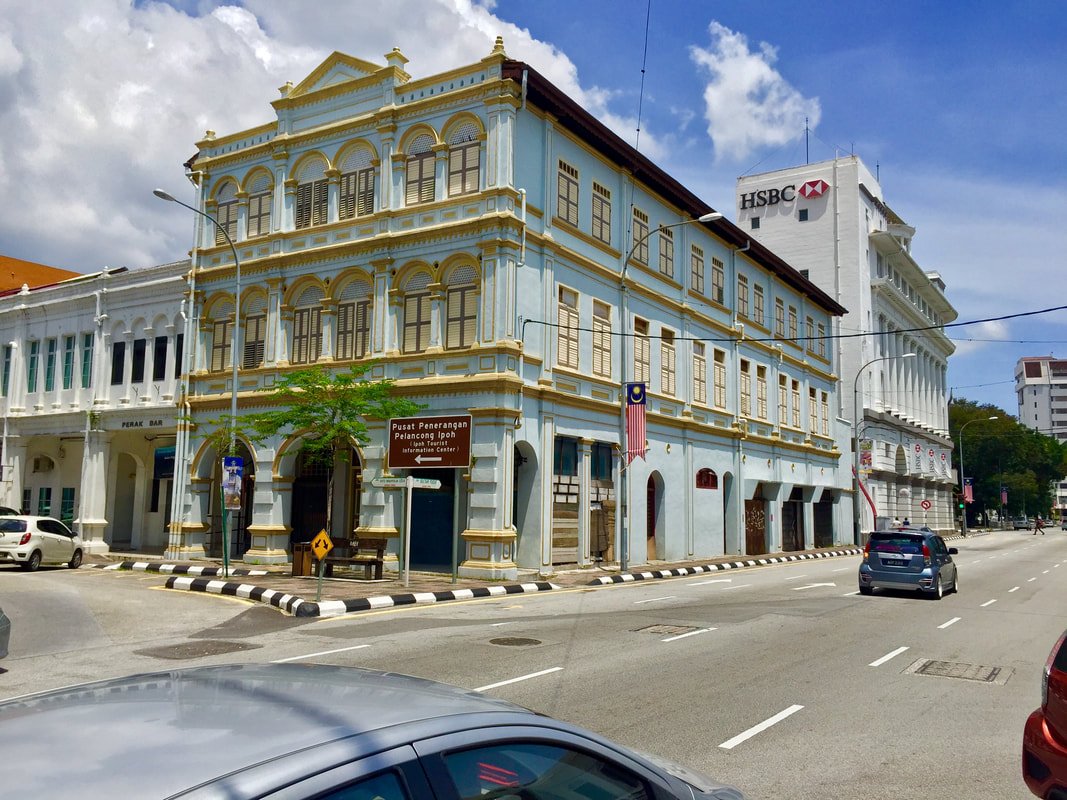
| 
| 
|
We were surprised to discover that Ipoh is one of Malaysia’s larger cities, yet offers a far calmer and more refined pace of life than Kuala Lumpur. With its boutique hotels, courteous residents, distinctive architecture and memorable local food, it did not take long before we were asking each other, “When can we come back?”

|
Malays, Chinese and Indians live side by side across Malaysia. The balance differs from one city to another, and Ipoh has a particularly strong Chinese heritage—something that is easy to see in both its food and architecture. Speaking purely from our own experience, we often found the Chinese-influenced food and streetscapes especially varied and polished.


| 

| 

|
We loved exploring the well-planned centre, the colonial-era buildings we are so fond of and Ipoh’s famous local dishes. We even wondered whether we could live here if we ever spent a longer chapter of our lives in Malaysia. To us, Ipoh felt more relaxed, characterful and appealing than Kuala Lumpur. If you have time to spare during a Kuala Lumpur trip, consider giving Ipoh at least a day and a half or two days.
THINGS TO DO IN IPOH
KONG HENG SQUARE

Leaving the façade's patina intact felt far more authentic than fully renovating it.
Now to the liveliest part of Ipoh. After the city’s economic fortunes declined in the 1970s, several central buildings were emptied and left to deteriorate. More recently, a thoughtful regeneration project helped turn the Kong Heng area into one of the old town’s most engaging public spaces.

The perfect Instagram pose =) | 
The stalls traded until 6 p.m. each day during our visit. |
The façades and courtyards of two pre-war buildings were carefully revived to create an atmospheric cultural space. By “revived,” we do not mean painted in bright colours and polished into something museum-like. The abandoned buildings kept their patina and personality, allowing the area’s original character to shine through.


| 
|
Cafés, boutique hotels, murals, street vendors and a barbershop sit among steel, glass and vines cascading from above, creating an effortlessly stylish setting—almost like a Pinterest image brought to life. Just as we arrived, rain began pouring down. We took shelter in Plan B, a restaurant designed in keeping with the surroundings, lingered over coffee and, naturally, took plenty of Instagram-worthy photographs.

| 

|
CONCUBINE LANE
This narrow lane is said to have once housed the mistresses of Chinese and British businessmen and to have been a place where some visitors came to smoke opium. Today it is lively for a very different reason, lined with cafés and shops. After taking a few photographs, you can pick up a freshly squeezed mango juice, cross over to Kong Heng Square or browse stalls filled with trinkets and inexpensive goods.


| 

|
HAN CHIN PET SOO
This former club for Hakka Chinese tin miners—where members once gathered to gamble and smoke opium—has been turned into a museum. Admission is by donation, but places are limited and advance booking through the official website is required. We had reserved a place, yet turned back at the door when we realised the guided visit would take around an hour; to be honest, we are not great fans of compulsory guided tours =D Instead, we visited the Ho Yan Hor Museum next door.
Current note: As of August 2026, Han Chin Pet Soo still requires an online appointment. Visitors should bring the confirmation email on a phone or in print, and entry remains donation-based.
Current note: As of August 2026, Han Chin Pet Soo still requires an online appointment. Visitors should bring the confirmation email on a phone or in print, and entry remains donation-based.

The blue building is the Ho Yan Hor Museum; the white building to its right is Han Chin Pet Soo.
HO YAN HOR MUSEUM
Do not let the word “museum” mislead you: this is the modest former home where Dr Ho Kai Cheong began selling his own herbal tea blend. Starting with just four dollars and selling Ho Yan Hor tea from a roadside stall outside his home, he eventually built what was, in effect, a tea empire. The museum tells that story and displays some of his household belongings. As incurable tea drinkers, we naturally found it fascinating. Before you leave, you can sample several herbal teas without being pressured to buy anything. It is not an essential stop, but it offers an unusual little experience—and a welcome air-conditioned break from the tropical heat.

| 
| 
|
PASAR MALAM — NIGHT MARKET
Malaysia is famous for its night markets. In a tropical climate, life naturally becomes livelier after sunset, so a city may have several pasar malam. Some resemble Turkish neighbourhood markets, selling fruit and vegetables, while others focus on clothes, jewellery and inexpensive accessories. The best part is the chance to sample Malay street food at very reasonable prices.

| 
| 
|
Ipoh has several night markets, and we chose Gerbang Malam on Jalan Dato Tahwil Azhar because it was close to our hotel. It was wonderfully lively. After we had exhausted ourselves trying on imitation sunglasses, Gökay booked a one-hour foot massage. The queue for women was too long, so I chatted instead with a group of friendly Malay women who were eager to practise their English with a fair-skinned blonde visitor. As it turned out, Gökay’s massage was painfully intense anyway—haha.
MEMORY LANE FLEA MARKET
Memory Lane is a large flea market held on Sunday mornings along Jalan Horley. We did not appreciate how crowded it was until we were already among the stalls selling mountains of second-hand odds and ends, antiques and goods of rather uncertain provenance; when it became overwhelming, we made a quick escape. Still, if you are in Ipoh on a Sunday morning, it is worth seeing. If you feel comfortable taking home something that may have passed through several generations, it can also make a memorable souvenir—although I am not sure I would bring home a pair of Chinese chopsticks that had been used for decades. Some items here are less “second-hand” than fifth-hand.
Current note: Recent local reporting in July 2026 confirms that Memory Lane, also known as Pasar Karat Loken, continues to operate every Sunday along Jalan Horley.
Current note: Recent local reporting in July 2026 confirms that Memory Lane, also known as Pasar Karat Loken, continues to operate every Sunday along Jalan Horley.

| 
|

| 
|
IPOH RAILWAY STATION
As you walk around, it is easy to sense that this small city was once an important centre. Ipoh grew wealthy through the tin-mining boom, and its later economic slowdown meant that relatively few skyscrapers replaced its older urban fabric. The railway station is one of the city’s grandest British colonial-era landmarks. Construction began in 1914 and the station opened in 1917; it was not built in the 1800s as the original version of this article stated. With few buildings of a similar scale nearby, its architecture still dominates the centre. Trains between Ipoh and Kuala Lumpur continue to use the station. The building also housed the now-closed Majestic Station Hotel and is sometimes nicknamed the “Taj Mahal of Ipoh.” Across the road stand the historic Town Hall and former courthouse.

Ipoh Railway Station
BIRCH MEMORIAL CLOCK TOWER
Another landmark inherited from the British colonial period, this clock tower is mainly a photogenic stop. At sunset, however, the Sultan Idris Shah II Mosque directly opposite becomes a particularly beautiful part of the view.

The clock tower. | 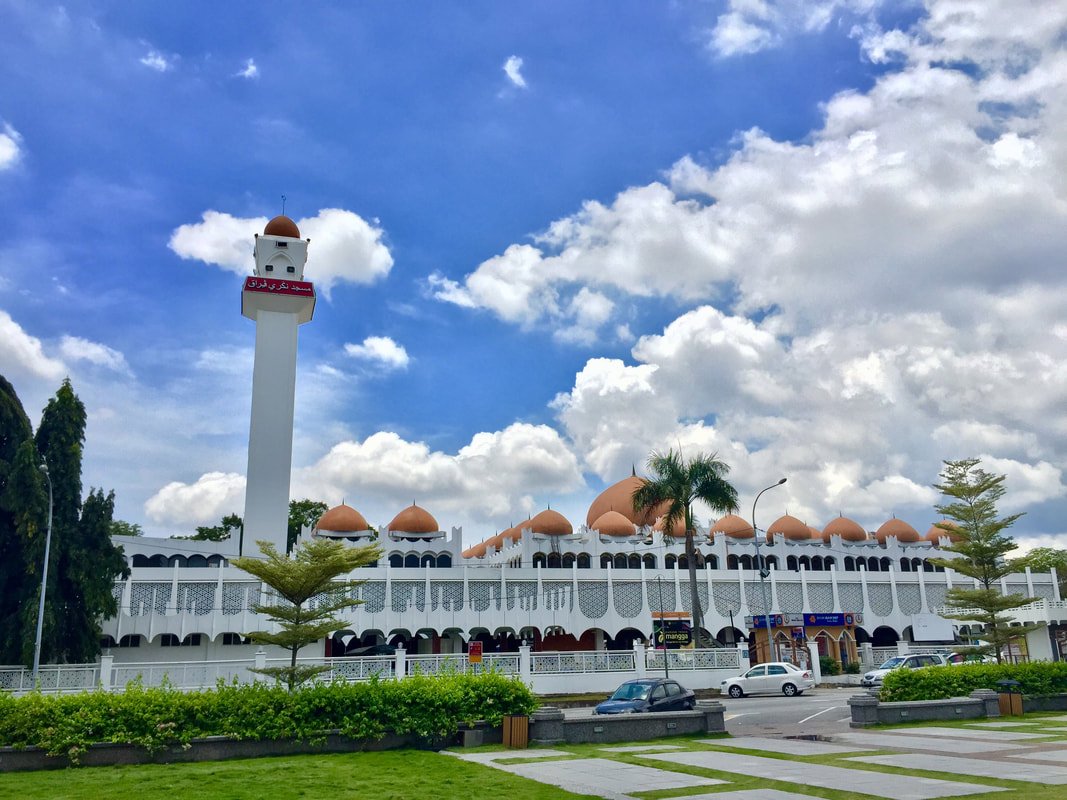
Sultan Idris Shah II Mosque |
IPOH'S BRIDGES
We had not seen Ipoh’s bridges mentioned in anything we read before the trip, yet they completely won us over. The green riverside paths beneath them felt like a small urban paradise. Several bridges cross the Kinta River through Ipoh; we used the two leading towards the historic centre.


| 

|
WHAT TO EAT IN IPOH
Ipoh is a wonderful city for food. You can sample local specialities very cheaply in small street restaurants. Malaysian kopitiams and hawker-style eateries may not always look inviting at first, but some of the cooks have been preparing the same noodles for decades. We ate our way around Malaysia without any serious problems, so we were happy to step inside and order something unfamiliar. Prices mentioned in this article reflect our visit and should not be treated as current. Ipoh also has elegant restaurants and stylish cafés, and many boutique hotels hide especially attractive dining rooms on their ground floors. We tried one and were very glad we did.
LOU WONG RESTAURANT
At 49 Jalan Yau Tet Shin, this restaurant is known for one of Ipoh’s classic combinations: poached chicken with bean sprouts. You can find the dish in many places, but Lou Wong claims to be an originator. We tried it and, honestly, did not find it extraordinary. Chicken is as ubiquitous in much of Asia as bread is in Turkey; ask a local for a quick meal recommendation and chicken rice will often be high on the list.

Lou Wong Restaurant | 
Poached soy-sauce chicken, bean sprouts and noodles |
Lou Wong serves very soft poached chicken with a bowl of bean sprouts, the kind of combination you will see in many Chinese restaurants. Because we are not great bean-sprout enthusiasts, we ordered a salad and two portions of chicken. It was perfectly pleasant and worth considering for lunch. The price quoted in the original article—RM10 per person—dates from our visit.
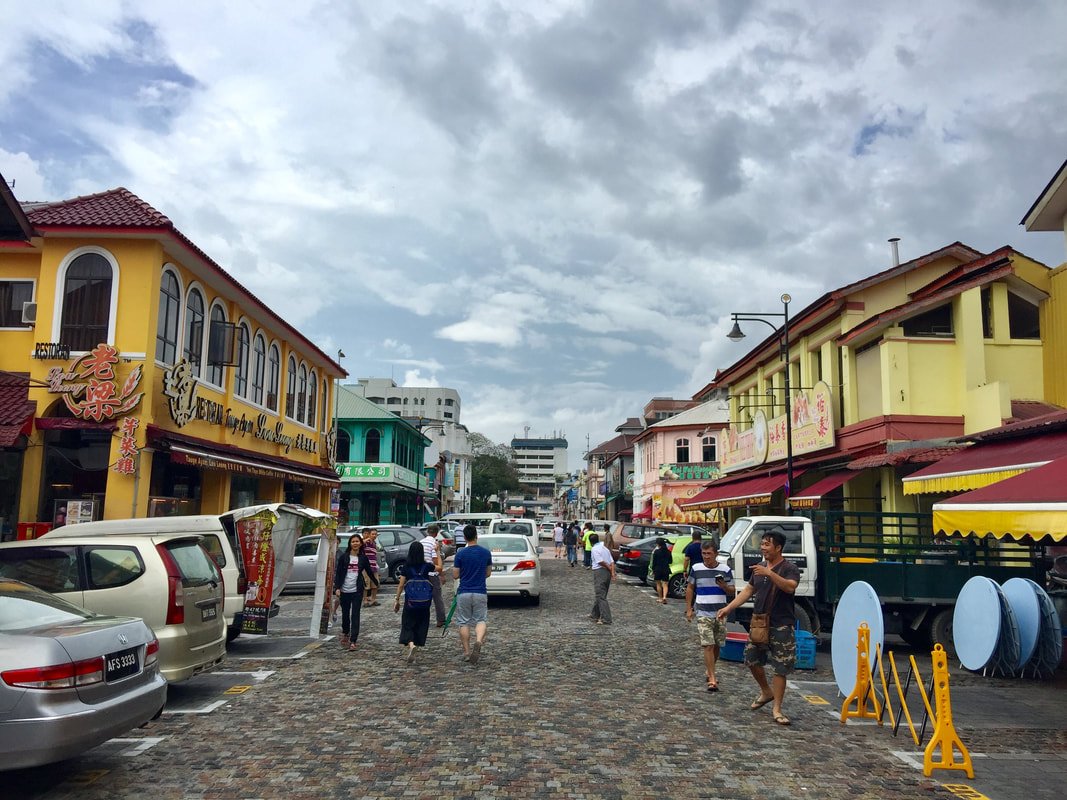
The street where Lou Wong is located. | 
It felt wonderfully open without high-rise buildings. |
SIN ENG HEONG
You will recognise this shop on Jalan Mustapha Al-Bakri by the queue, often twenty or thirty people long. Do not overthink it—join the line. Part of the old-fashioned shop functions as a bakery, where an elderly Chinese couple seemed to be constantly shaping trays of kaya puffs while customers carried away boxes at a time. To explain a kaya puff, we should first explain kaya: a rich, creamy coconut jam. A kaya puff is a small, freshly baked pastry filled with it. They are excellent at breakfast or with tea and coffee, and the ones here were exceptional. Do not buy one “just to try”; take a box. You may thank us the next morning if your hotel serves chicken rice for breakfast. The original RM10 price for a box of ten reflects the time of our visit.
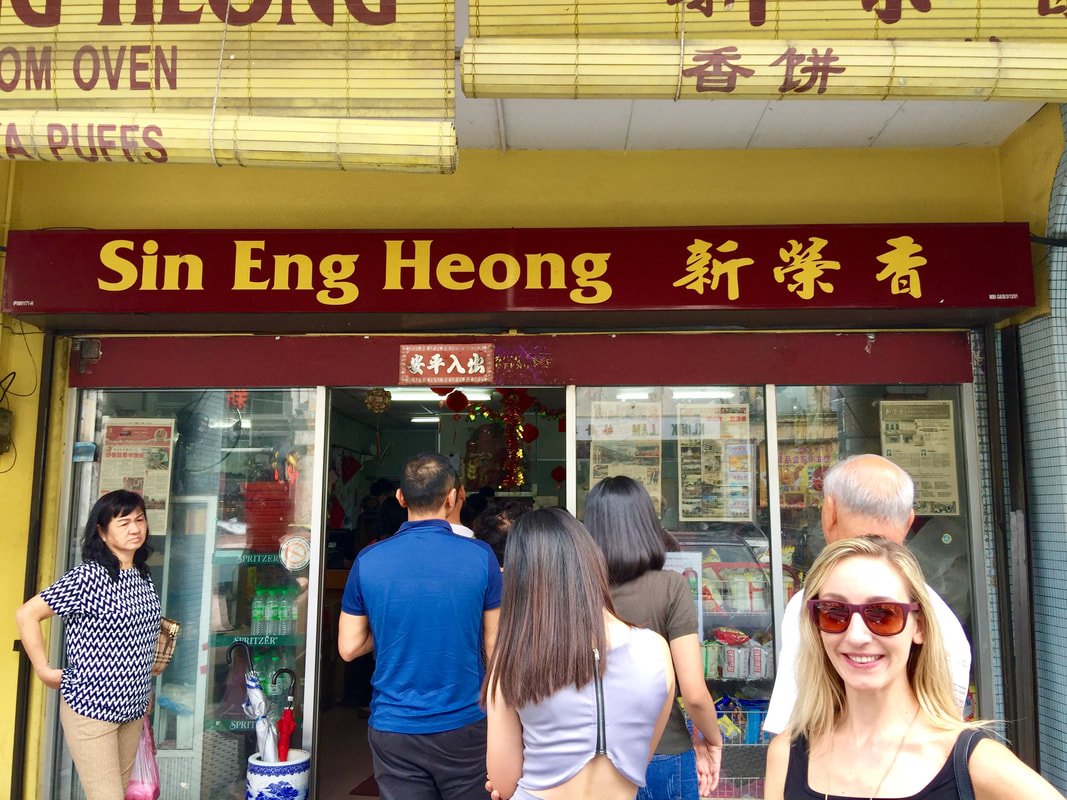
The queue for kaya puffs. | 
Tray after tray of kaya puffs. |
THEAN CHUN RESTAURANT
Very close to Kong Heng Square, at 73 Jalan Bandar Timah, this traditional restaurant has spent decades serving the same signature dish: kai see hor fun, a noodle soup with chicken and prawns. Noodles, shredded chicken and a couple of large prawns arrive in a deeply flavoured chicken broth. The RM7 price quoted in the original article dates from our visit.


| 
|
Thean Chun is also popularly known as the Hall of Mirrors because of the large mirrors lining the dining room, which let you watch the bustle behind you. The space works almost like a shared food hall for several vendors. After ordering kai see hor fun, you can also order satay from a nearby stall. Satay consists of marinated chicken or pork skewers cooked over charcoal, but the real magic is the spicy peanut sauce served alongside. Peanut sauce with grilled meat may sound odd at first, yet the combination works remarkably well. The old prices in this article are retained as memories of our trip, not current menu prices.
FUNNY MOUNTAIN
Funny Mountain, at 49 Jalan Theatre, works like a tiny corner kiosk. There is no seating and just two main products: soy milk and tau fu fah, a silky soybean pudding. Cars as well as pedestrians queue at the counter, and many customers collect their dessert and drive away. It is not a dramatic flavour, but if—like me—you enjoy delicate, neutral tastes, warm tau fu fah is wonderfully light. You can take it away in a plastic bowl. The RM2 price mentioned in the original article dates from our visit.


| 
|
IPOH WHITE COFFEE
Ipoh white coffee is another of the city’s best-known products, although you can now find it throughout Malaysia. We had tried it before and were not especially keen, so we did not seek it out in Ipoh. Traditionally, the beans are roasted with margarine—historically made with palm oil—then ground and brewed; the drink is often served with sweetened condensed milk. Instant versions are also widely sold, but white coffee itself is not defined by being soluble like instant coffee. It can be rich and sweet. Nam Heong is one of the old-town coffee shops closely associated with the drink’s history if you would like to try it at the source.
HAPPY CAFE
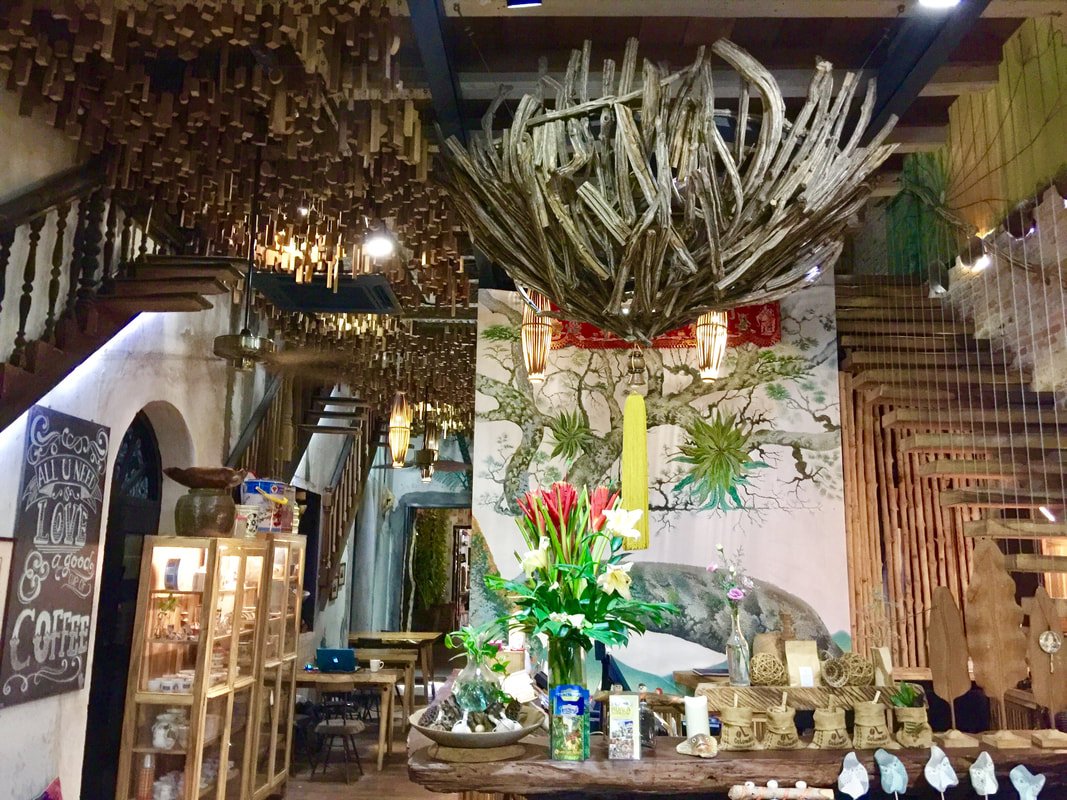
Happy Eight Ipoh, at 46 Jalan Market, was part of a small boutique-hotel group in Ipoh. As we walked back towards our own hotel, the interior drew us in and we decided to have dinner at its café, Happy Cafe. The menu could be described as local Malaysian flavours interpreted in a more Western style.


| 
|
We ordered chicken chop, chicken-and-vegetable skewers, gyoza and fresh orange juice. Eating at a solid-wood counter in a small private nook divided by woven screens felt wonderfully theatrical. A glass floor revealed large koi swimming beneath our feet, erasing what little sense of reality remained. The food was not transcendent, but it was very good. I remember the bill coming to roughly RM50, though that was the price at the time of our visit.

| 
| 
|
PURPLE CANE TEA HOUSE
Purple Cane Tea House, at 2 Jalan Dato Tahwil Azhar, barely draws attention from the street, but stepping inside feels like entering another world. Packets of the teas featured on the menu are sold near the entrance. Farther in, a glass partition brings natural light into an inner courtyard. We immediately settled at one of the low, cushioned tables where you can sit close to the floor.
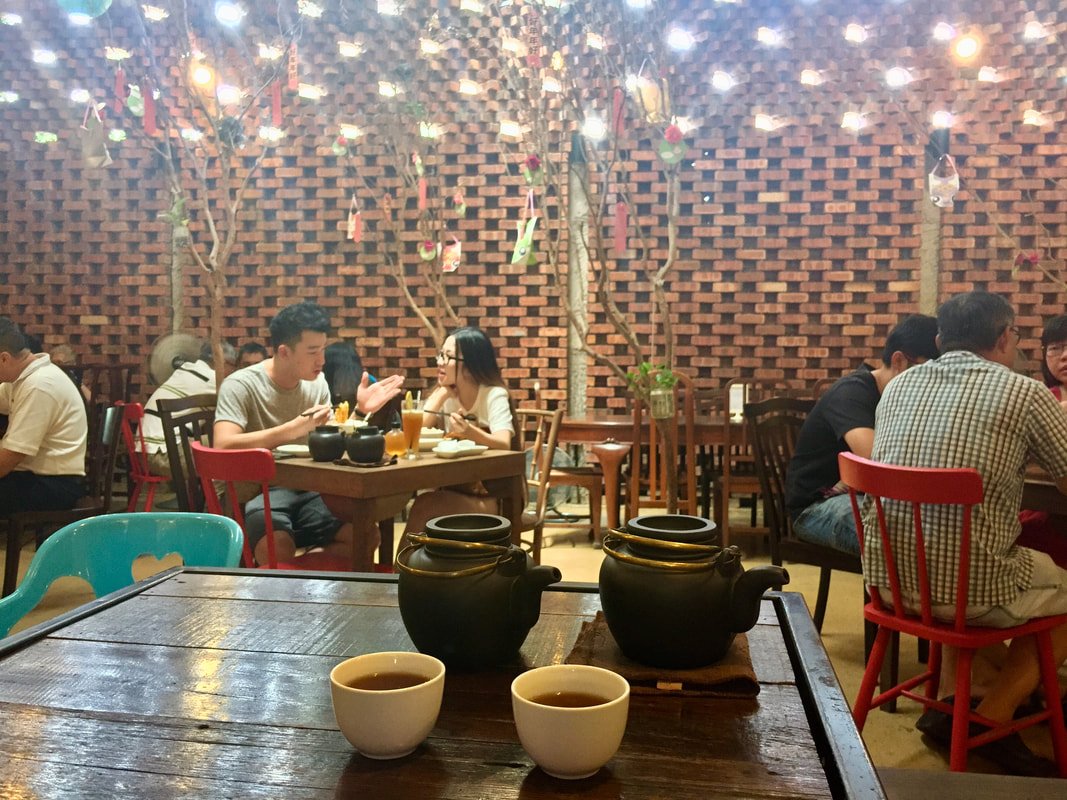
Had we been hungry, we would have ordered food too, because the dishes on neighbouring tables looked excellent. The “Eight Treasures” tea caught our eye, but we were tired and missing Turkish tea, so we chose a black tea instead. If only we had known that Eight Treasures tea was reputed to cure practically everything! Next time. The staff brew your tea fresh at the table and keep adding hot water until you ask them to stop. All that was missing was a backgammon board =)

| 

|
POMELO
Pomelo is strongly associated with Ipoh, although you can find it throughout Malaysia. Imagine a mandarin the size of a melon and you have a rough idea. It has a thick green skin, juicy citrus flesh and plenty of vitamin C. A whole fruit would have been too much for us, so we bought a large peeled segment from one of the fruit stalls you see all over Malaysia. The RM2 price dates from our visit.

| 
|
WHERE TO STAY IN IPOH
Hotels in Ipoh come in many forms: hostels, distinctive boutique properties reminiscent of Alaçatı and simple guesthouses like the one we chose. We found a last-minute deal at Shamrock Garden Guest House. We paid around TRY75 for a Saturday night, but the room was essentially just a bunk bed. Even so, it was spotless, the bathroom was private, the beds were large, and there was an LCD television with English-language channels plus a mini fridge. One detail we loved throughout Asia was finding a kettle in almost every room, from the simplest hotel to the most luxurious, so you could return in the evening and make coffee. Shamrock Garden also had a pleasant terrace for that coffee or a quick breakfast. Prices and availability naturally change, so check current listings before booking.

| 
|
HOW TO GET TO IPOH
You can travel between Kuala Lumpur and Ipoh by train or bus. Booking Malaysian trains online used to be awkward, so we often compared bus, train and ferry options through Easybook or BusOnlineTicket. For current rail schedules and official ticketing, it is best to check KTMB directly.
Because Ipoh trains filled up quickly during our trip, we took a bus back to Kuala Lumpur. At the time, it cost RM20 per person and the journey took five to six hours. Today, KTMB’s ETS service links Ipoh with KL Sentral in roughly two to two and a half hours on many departures, although schedules and fares vary. If you travel from the Cameron Highlands as we did, buses run from Tanah Rata to Ipoh; check the latest timetable before travelling. The road is extremely winding, so sit towards the front if you are prone to motion sickness.
Current note: Information checked in August 2026 against KTMB’s current ETS route and timetable pages. Old prices above are kept only as part of our original travel story.
Current note: Information checked in August 2026 against KTMB’s current ETS route and timetable pages. Old prices above are kept only as part of our original travel story.
Amanjaya Terminal, Ipoh’s main long-distance bus terminal, is well outside the old town. Grab, local taxis and public buses are the practical onward options. Uber no longer operates in Malaysia, and the old promotional-code advice in the original article is no longer valid. Check the live fare in the Grab app or ask your accommodation about the most suitable current connection.


Who are these Go players? 
| 

|
If You Have Upcoming Travel Plans...
When you make a purchase by clicking our links, we get to earn a small commission but you still pay the same price. So, it's a win-win for everyone!

Book hotels via Booking.com | 
Find Cheap Flights via Skyscanner | 
Get a Travel Insurance via World Nomads | 
Make International Money Transfer via Wise |

Book Tours & Attractions via Getyourguide | 
Book a Cruise | 
Book Bus/Ferry/Train/Transfer via 12goAsia | 
Find free accommodation in exchange for petsitting |