Kuala Terengganu is the capital of Terengganu, one of Malaysia's 13 states. Many travellers use it mainly as a gateway to the tropical islands nearby. Redang and tiny honeymoon favourite Lang Tengah can be reached through terminals in the wider Kuala Terengganu area, while boats for the Perhentian Islands generally leave from Kuala Besut farther north. Sailings are seasonal and can be changed or cancelled by weather and sea conditions, so travellers often spend a night here before taking a morning boat. That was our plan too: we booked a simple three-star hotel, but after doing a little research we realised how much there was to see and decided to stay another night after returning from Redang.
Practical update (August 2026): This article preserves our original journey, including the transport services and prices we encountered. Taman Tamadun Islam and the Crystal Mosque remain visitor attractions, but boat terminals, ferry schedules, local bus routes and opening hours can change. Confirm the exact jetty with your island operator, and note that the Tuesday closure described below applied to our visit.
Practical update (August 2026): This article preserves our original journey, including the transport services and prices we encountered. Taman Tamadun Islam and the Crystal Mosque remain visitor attractions, but boat terminals, ferry schedules, local bus routes and opening hours can change. Confirm the exact jetty with your island operator, and note that the Tuesday closure described below applied to our visit.
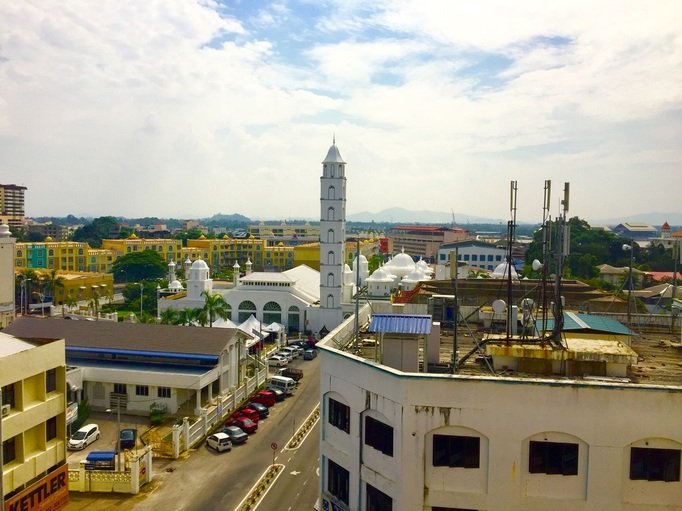
The white mosque seen from our hotel; in the evenings Muslim men socialised there and in the surrounding area.
Terengganu has a coastline of roughly 244 kilometres and the east coast feels much more traditional. Until then, we had travelled only along Malaysia's west coast. We had enjoyed popular destinations such as Penang, Langkawi and Pangkor Island but had been disappointed by their beaches, so we did not expect much from the east either. As our bus slowly entered the countryside and flashes of the sea appeared between the buildings, however, we realised we had made the right choice. We passed colourful traditional single-storey Malay homes and small villages. Even after four and a half months in Malaysia, seeing hundreds of palms together still filled us with wonder.

Single-storey homes in traditional Malay villages | 
Some of the palm trees we saw along the way |
Kuala Terengganu is a small city facing the South China Sea. Instead of Kuala Lumpur's skyscrapers, we found one- and two-storey homes with gardens. There may be luxurious ones too, but the village-style houses we saw in the centre charmed us. Usually built of wood, they have long, narrow plans and are raised above the ground.

Traditional wooden houses near our hotel. Raising them improves air circulation and helps keep insects out.

They may look ramshackle from outside, but large families live inside.
You can see Kuala Terengganu in roughly half a day without rushing too much. Besides a few historic buildings in the centre and the famous Crystal Mosque, it has a night market and a Chinatown, as many Malaysian cities do. The riverfront has also been landscaped and the trees illuminated. Malaysians love decorating public spaces—especially with colourful lights—so everything glows at night.

The side wall of a café in a Chinatown backstreet.
PLACES TO VISIT IN KUALA TERENGGANU
CRYSTAL MOSQUE
As its name suggests, the Crystal Mosque has become a symbol of Kuala Terengganu. Its domes and minarets are clad in reflective glass, while frosted-glass walls make the interior exceptionally bright. It is not enormous, but the way it reflects light makes it appear golden by day and reddish-purple around sunset. Arabic inscriptions, written in gold across the glass surfaces and presumably prayers, looked especially beautiful inside.

The loveliest feature of the Crystal Mosque is the way it reflects sunlight.

Gökay in traditional Malay clothing beside the mosque's mostly frosted-glass façade. The interior was bright and airy.
We visited on a Tuesday and discovered that many attractions were closed that day. On other days, it was possible to arrive on a river cruise and see the mosque from the water. We came on the free heritage bus known then as Cas Ligas Route 2; the mosque is around five or six kilometres from the centre. The people at the entrance were warm and helpful. They showed us how to cover our heads, explained how to wear traditional Malay clothing and asked us plenty of questions about Istanbul. Malaysians struck us as consistently kind, calm and cheerful. The Cas Ligas details reflect our trip and should not be treated as a current timetable.

The Crystal Mosque and its surroundings are beautifully arranged, especially the uninterrupted wooden waterfront path, which is a pleasure in a breeze. | 
The Crystal Mosque is not huge, but it is striking. The palms in its garden remind you of the climate. |
TAMAN TAMADUN ISLAM
This is rather like an Islamic version of Miniatürk. Miniature replicas of important buildings from across the Islamic world are dotted through the green park beside the Crystal Mosque. It was closed on the Tuesday we visited, which disappointed us. Bring a hat or umbrella because the sun can be punishing. The park still operates, but consult its official site for current hours and ticket information.

We could see one of the miniature mosques only from outside. | 
The entrance to Taman Tamadun Islam—which we used as an exit =) |
At around 5 p.m., after missing the park, we discovered that the Cas Ligas service had ended, there was no ordinary municipal bus, and taxis were hard to find nearby. We were not tired and the late-afternoon sun had weakened slightly, so we decided to walk the 1.5 kilometres to the state museum. In hindsight, being unable to find a vehicle was lucky. For about 40 minutes we followed a lush road past occasional traditional fishing huts and glimpsed the extraordinarily calm rhythm of village life. It felt like stepping into another time.

Fishing boats on the Terengganu River.

We had come fairly close to this house, but moved away as soon as we realised people genuinely lived there and we did not want to intrude.
Dengue is present in Malaysia, so mosquito protection matters, particularly around dusk. Using repellent meant we did not have to waste these beautiful hours. Along this route, the way local people in Kuala Terengganu live in close contact with the water was especially clear.
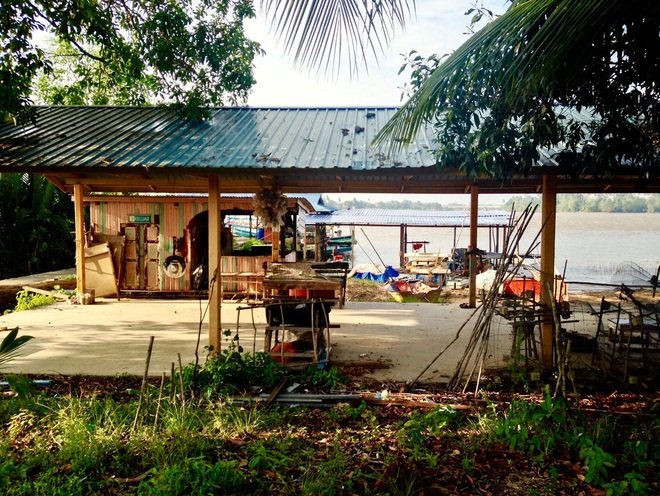
Fishing shelters hidden behind tall vegetation—and spaces where people truly live.

Wherever it may be, it certainly looks like a peaceful home =)
We passed an old man's modest fish stall, gardens filled with trees that must have been decades old, and tiny jetties tucked between them.
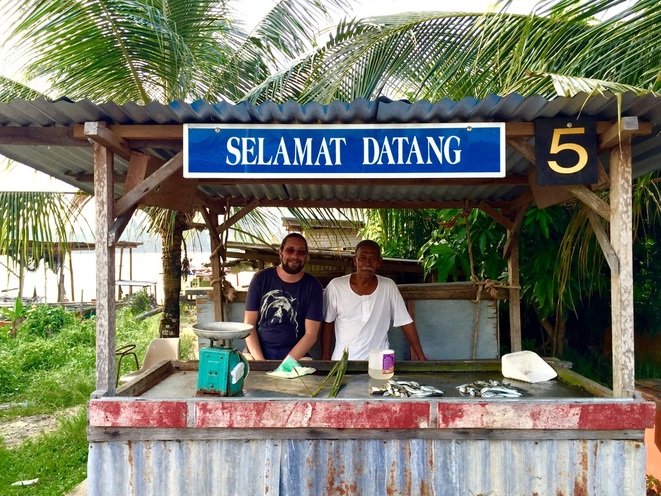
Simple lives, simple fish =) Selamat datang means “welcome” in Malay.

Can you believe we were only five kilometres from the city centre?
TERENGGANU STATE MUSEUM
After our 1.5-kilometre walk, we saw the museum beyond a group of local teenagers playing football. They greeted us immediately; people here seemed to enjoy welcoming visitors and striking up conversations. Sadly, the museum had already closed, but our research suggested that the building itself was the main sight—and it truly was impressive.
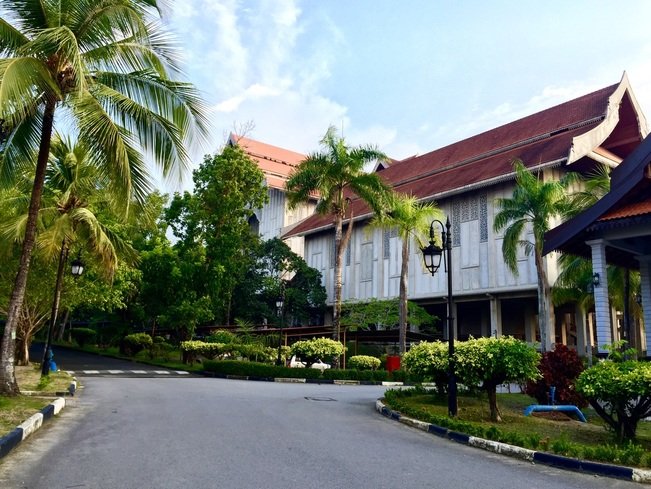
The museum looked like a Malay house built on an enormous scale.
The real adventure began when we tried to return to the centre. Our phones had died and we knew there were no buses or taxis nearby. We asked a woman parked at the museum gate whether she could call a taxi for us. She asked where we were going and, on hearing Shahbandar, told us to jump in and offered to drive us herself. Kindness like this still amazes us. Sadly, we were surprised that a woman travelling alone felt safe enough to take two strangers into her car; in Türkiye, I doubt I would have done the same. Indah was 31, a mother of four and worked in construction—another standing ovation from us.

The blue sky and shades of green in the trees surprised us every time.
CENTRAL MARKET AND THE NIGHT MARKET
These two markets near Shahbandar Square mainly sell fruit, vegetables, batik clothing and fabrics. In Malaysia, buying groceries and cooking at home can cost more than eating at local restaurants, so many people eat all three meals out. Night markets are therefore places for food and socialising as much as shopping. This one was fairly small but still lively.

It was peak durian season, with every size on display. If you can withstand the smell of the so-called king of fruits, tell us what you thought of the taste =) | 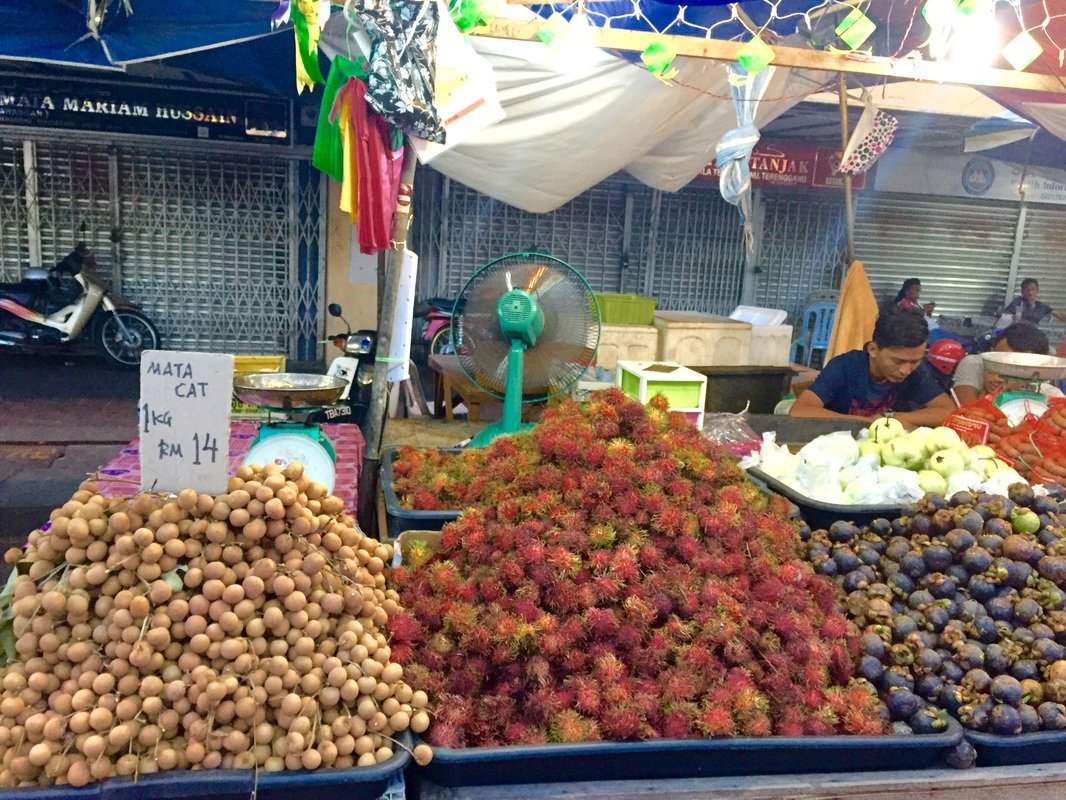
Colourful tropical fruit at the market. The red fruit is rambutan—its name relates to “hair”—and inside is a sweet, juicy, grape-like flesh. |
CHINATOWN
In Malay, a Chinese quarter may be called Kampung Cina; Kuala Terengganu's Chinatown is one of the city's highlights. Packed local Chinese restaurants, one or two wine bars and street art make it colourful. It may be the best part of town for a good coffee or an alcoholic drink.

Colourful Chinese restaurants

Malaysia has a large Chinese community, so most cities have a Chinatown. Restaurants in Chinese districts often look more polished, although appearances do not always guarantee flavour. These areas also tend to have an artistic side, with murals and small visual details.

Art is never far away in a Chinatown. | 
Some murals create a three-dimensional illusion so that you can step into the scene. |
WHERE TO STAY IN KUALA TERENGGANU
This small city has one or two hotels that could be considered luxurious, but since most visitors stay only briefly, a simpler option often makes more sense: a clean bed, a shower and perhaps breakfast in a three-star hotel. Before Redang, we stayed at Hotel Tanjong Vista. It was clean, though breakfast was not particularly appealing.

We did not photograph our hotel, but this was the atmosphere just nearby.
After returning from Redang, we stayed at Hotel YT Midtown. At the time, both hotels cost around TRY 100 per night; that is a historical price, not a current guide. The second was more central and cleaner. Breakfast in this type of hotel can be challenging for visitors, because Malaysians often eat the same hearty dishes in the morning as at dinner and sometimes there may not even be bread. Luckily, eggs are our common ground =)
WHAT TO EAT IN KUALA TERENGGANU
Beyond Malaysia's familiar dishes, the regional speciality is keropok lekor, a type of fish sausage. It may not sound promising, but it is actually tasty and filling, shaped like a sausage and usually served fried.

From left to right: spring rolls and keropok lekor, with curry puffs above. The accompanying sauce varies but is generally tomato-based, spicy and slightly sweet.
For dinner or a drink, we also tried Cellar in Chinatown. Its selection ranged from cheap wine to expensive bottles, vodka and whisky, while the food menu was broadly Western. We ordered pepperoni pizza and fried chicken breast; the food was not especially successful, though the décor was pleasant. Check current listings before making a special trip, as we could not confidently verify the venue's present status.

Tappers was a convenient place to sample Malaysian flavours: it was a chain, clean and had a pleasant atmosphere. The staff became a little flustered when serving Western visitors, but their intentions were good. Alongside nasi lemak and ayam goreng, the menu included spaghetti and pizza. This branch had some lovely murals. Branches and operating status can change, so verify the location before visiting.

WHAT TO BUY IN KUALA TERENGGANU
Batik is the region's signature product. Beautiful handmade batik fabrics are arranged in every imaginable colour and pattern; if they interest you, you could spend hours in Central Market.

Kuala Terengganu is also known for boatbuilding, so you may find miniature wooden boats.

Traditional Terengganu boats—and me =)
HOW TO GET TO KUALA TERENGGANU
Kuala Terengganu has an airport, though flights were not always cheap during our trip; from time to time, we found an affordable AirAsia fare from Kuala Lumpur. We also enjoy four- or five-hour bus trips because they let us see the landscape. With unexpected breaks, Kuala Lumpur to Kuala Terengganu could take six or seven hours. The operators we regarded as dependable at the time included Transnasional, Plusliner and Maju, but services and companies change. Easybook or Busonlineticket can be used to compare and buy current bus tickets.

Our bus | 
The prayer room at a rest stop. Malaysian drivers sometimes decide on a one-and-a-half-hour break =) |
If You Have Upcoming Travel Plans...
When you make a purchase by clicking our links, we get to earn a small commission but you still pay the same price. So, it's a win-win for everyone!

Book hotels via Booking.com | 
Find Cheap Flights via Skyscanner | 
Get a Travel Insurance via World Nomads | 
Make International Money Transfer via Wise |

Book Tours & Attractions via Getyourguide | 
Book a Cruise | 
Book Bus/Ferry/Train/Transfer via 12goAsia | 
Find free accommodation in exchange for petsitting |