BAKU
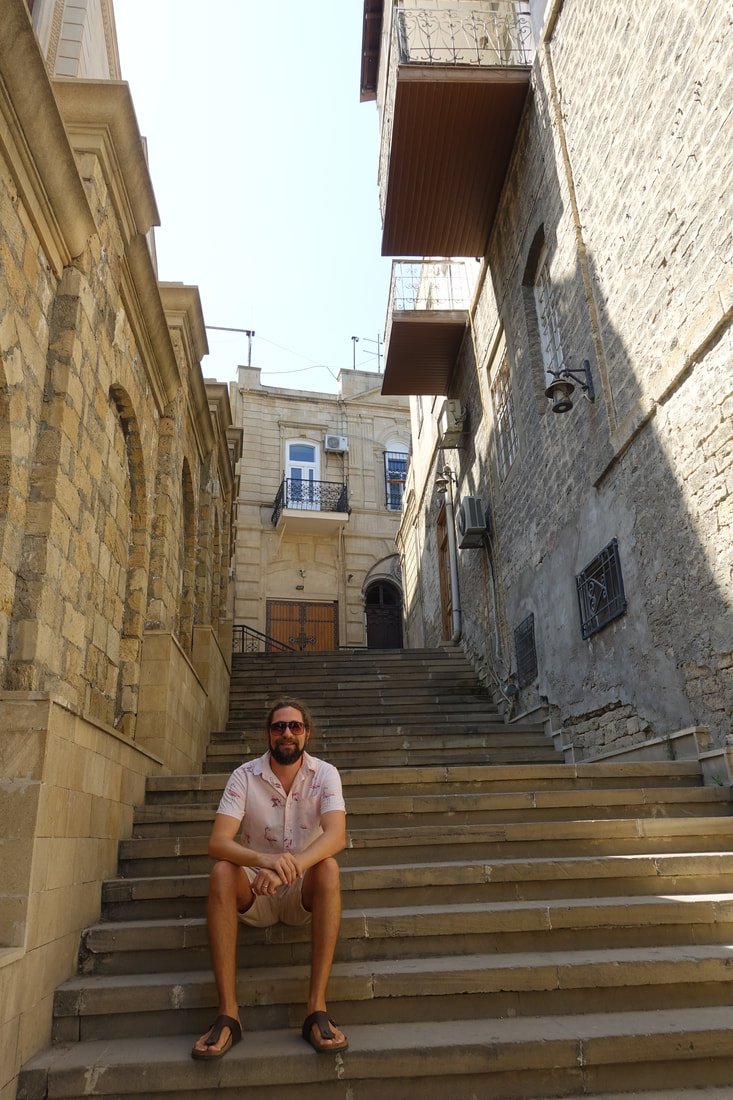
Baku had not been on our immediate travel plans, but when my cousin moved there for work, we seized the opportunity to fit in a trip. Although we visited in June 2019, the intense summer heat had not yet arrived. With both hot summers and cold winters, Azerbaijan is often most comfortable in spring or autumn. An extraordinary wind greeted us on our first day. My cousin had warned us that Baku could be windy, but we had not expected anything quite so fierce. We felt battered and spent the day as though we were jet-lagged. The wind was gentler over the following days—or perhaps we simply adapted—so it never troubled us quite as much again.

| 
|

| 
|
THINGS TO DO IN BAKU
There is genuinely a great deal to see in and around Baku. Most attractions are spread across the centre, while Yanar Dag, Ateshgah and the summer resorts along the Caspian coast lie roughly 30–35 kilometres outside the city. What surprised us most was seeing oil fields begin almost as soon as we left the centre. Pumpjacks—known locally as nodding donkeys—were working only 15–20 kilometres from where we stayed. Two days may be enough if you plan to see only central Baku. If you also want to explore the Absheron Peninsula, we recommend allowing at least four days. | 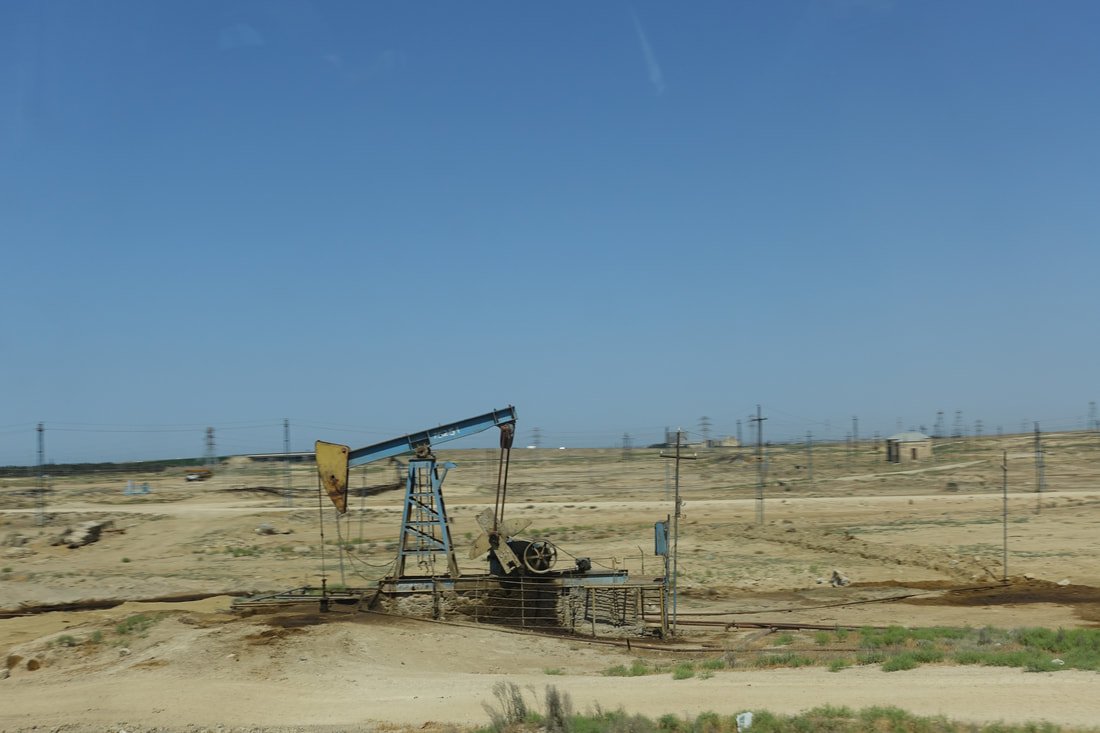
Oil being extracted beside the airport motorway—it hardly looks real |
ICHERISHEHER: BAKU OLD CITY
Icherisheher is Baku’s historic core and contains many of the city’s essential sights. The Walled City of Baku, together with the Shirvanshahs’ Palace and Maiden Tower, was inscribed on the UNESCO World Heritage List in 2000. It was removed from the List of World Heritage in Danger in 2009 after improvements in its conservation and management. There is plenty here to visit, photograph and simply sit beside, so we suggest devoting a full day to the Old City and its immediate surroundings.

| 
|

Like Türkiye, Azerbaijan contains traces of many different cultures. In the photograph above, for example, you can see a modern metro entrance, a building from the Russian period and the gates of Icherisheher in the same frame. Few cities bring such different layers together so visibly.
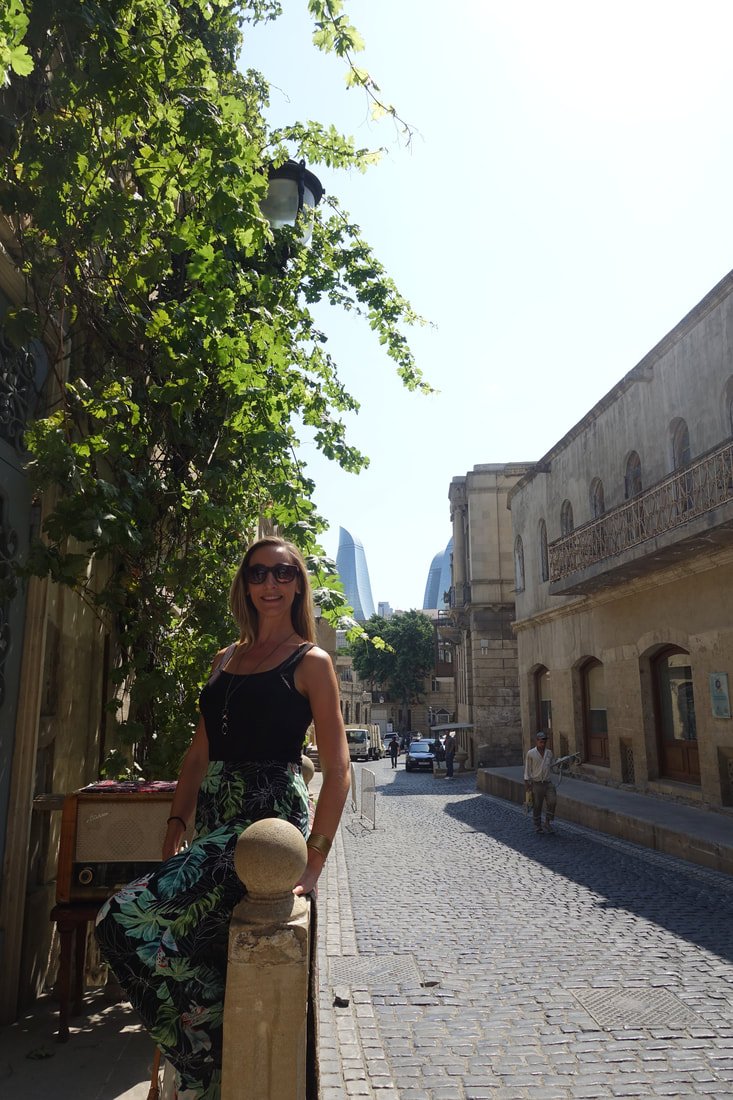
A few obligatory poses :) | 
The lanes of Icherisheher, with the Flame Towers in the background |
PALACE OF THE SHIRVANSHAHS
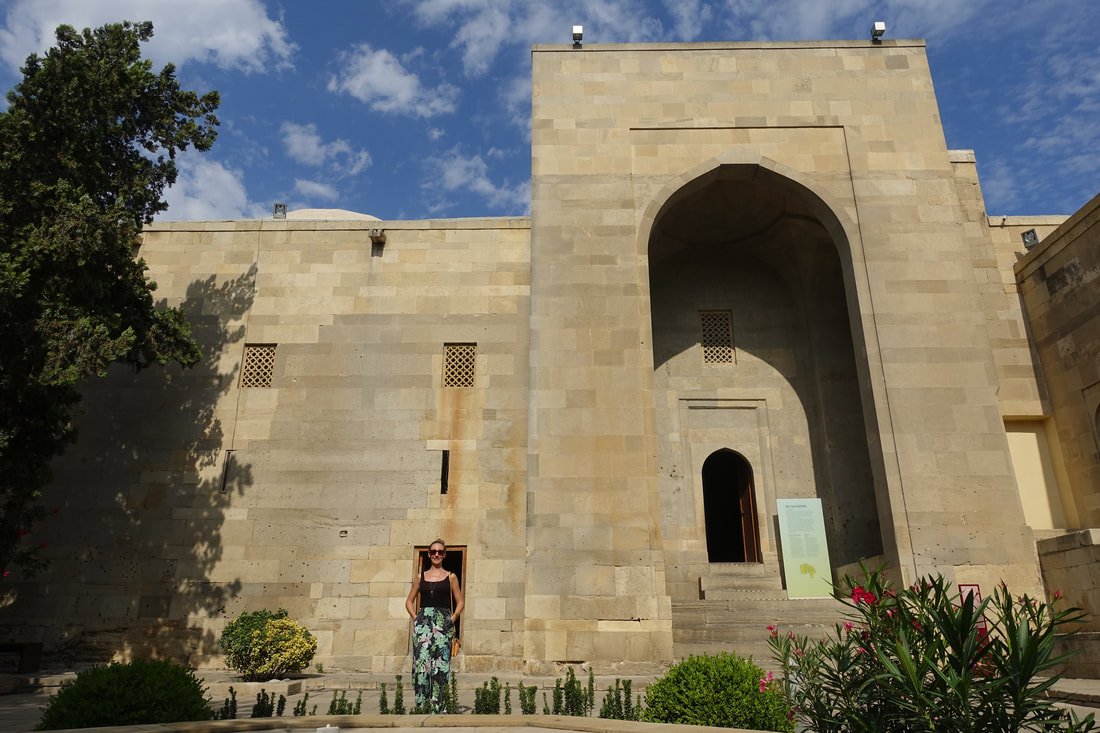
The Palace of the Shirvanshahs is a 15th-century royal complex in Icherisheher rather than a single fortress. We only visited the courtyard and took a few photographs, but the complex includes royal rooms, tombs, a mosque, a bathhouse and the Divankhana pavilion. Exhibitions inside explain the Shirvanshah period and display historical objects. Opening arrangements and ticket prices can change, so check the official museum information before visiting.

| 
|
MAIDEN TOWER
No single explanation for the Maiden Tower’s original purpose has been universally accepted, yet the building occupies an enormous place in Azerbaijani folklore. Its image has appeared on banknotes and stamps—pul means money in Azerbaijani, but never mind; this time I really do mean postage stamps :D—and it has inspired ballets and countless legends. Even the origin of the name remains debated, though tragic love stories naturally make excellent material. Visitors can normally enter the tower and climb to the top; check current access conditions before setting out.
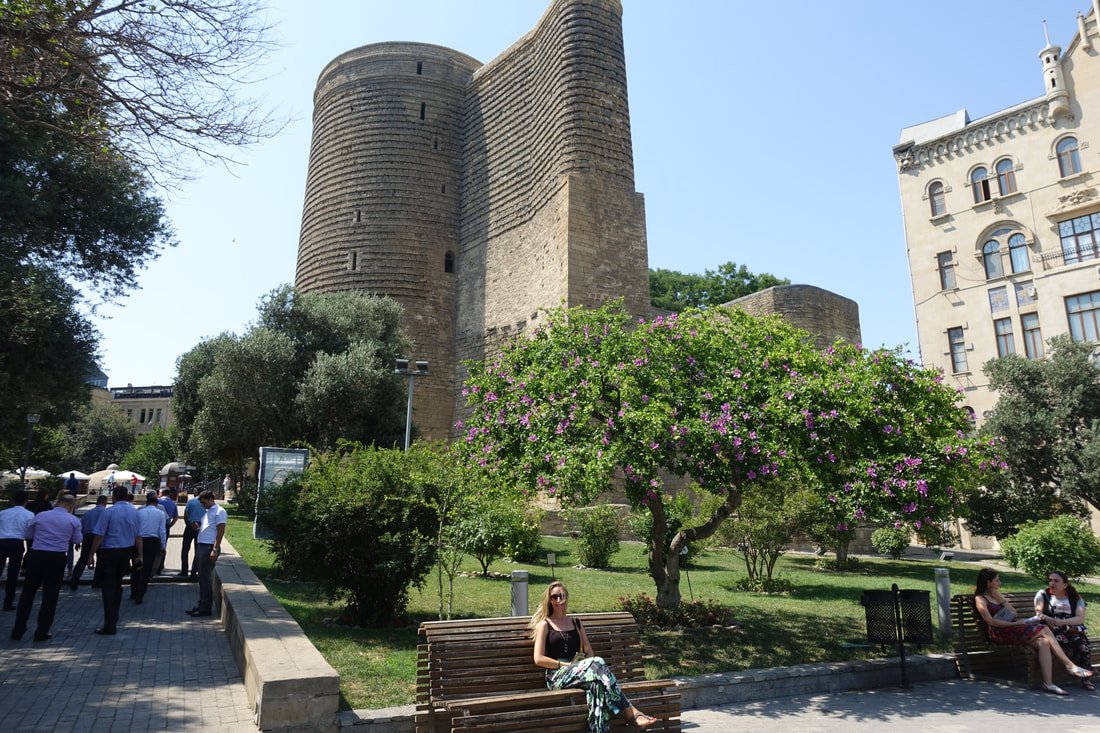
Maiden Tower | 
Maiden Tower from behind |
HEYDAR ALIYEV CENTRE
Whether you tell a taxi driver or Google that you want the Heydar Aliyev Centre or Heydar Aliyev Museum, you will be directed here. With so many places in the city carrying Heydar Aliyev’s name, we briefly wondered whether these might be different buildings, but they are not. Designed by the late architect Zaha Hadid, the centre has become one of Baku’s defining landmarks. It contains museums, exhibitions and event spaces, and its flowing interior is every bit as striking—and, for some visitors, disorientating—as the exterior.

The Heydar Aliyev Centre really is enormous

| 
|
Whether it was the sun, the wind or the building’s interior design, something inside completely unsettled Gökay. The smooth transitions between walls and floors made him lose his sense of space, and it took quite a while for him to recover. Gökay’s advice: if crowded shopping centres make you dizzy too, move slowly here—especially your eyes.


| 
|
BAKU FUNICULAR AND THE UPLAND PARK
Baku’s funicular first opened in 1960 and has operated intermittently over the years. Its one job is to carry passengers up a short but scenic slope. At the top, the Flame Towers, the Martyrs’ Lane memorial complex and broad views over the Caspian await you. Check the current operating status before planning your route, as services can pause for maintenance. Martyrs’ Lane commemorates Azerbaijanis killed during Black January in 1990 and the Nagorno-Karabakh conflict. Nearby stands the Turkish Martyrs’ Memorial, dedicated to Ottoman soldiers who died in the 1918 Battle of Baku; the two memorial areas should not be confused. The landscaped park around the memorials is generally known as Highland Park or Upland Park, and it includes a few cafés. We spent hours here looking at the view, taking photographs and drinking tea at a café overlooking the city.

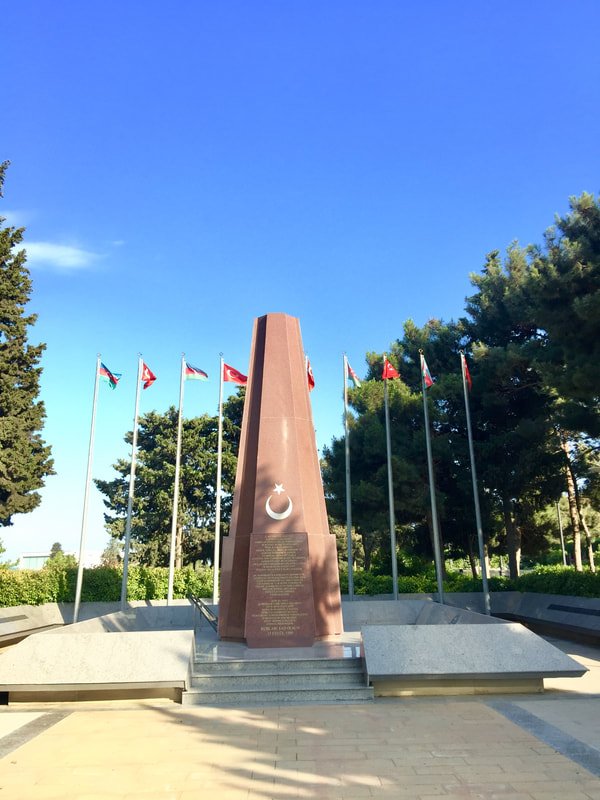
Monument to the Ottoman soldiers who died during the 1918 Caucasus campaign |

Highland Park, immediately above the funicular
BAKU FLAME TOWERS
Also known simply as the Flame Towers, these three buildings stand on high ground and can be seen from much of Baku. We took the funicular up for a closer look. To fit all three towers into one photograph, we climbed part of the staircase opposite the National Assembly. The police officers were not delighted, so we took our pictures halfway up and retreated quickly; we had been advised not to test the patience of the Azerbaijani police :) We were not especially fond of the towers looming over the otherwise beautiful city and thought they resembled leeches more than flames, but naturally we still had to photograph them. At night, however, the LED animations of flames and the Azerbaijani flag look impressive from a distance.

The funicular station, the Mosque of the Martyrs and the Flame Towers behind | 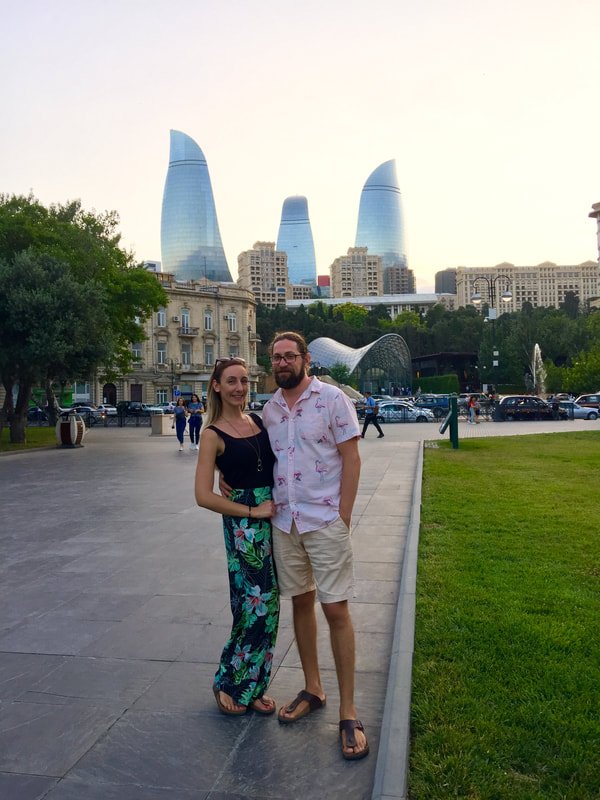
The Flame Towers, as if saying, ‘Don’t look at me; I’ll be wherever you look.’ |
FOUNTAINS SQUARE
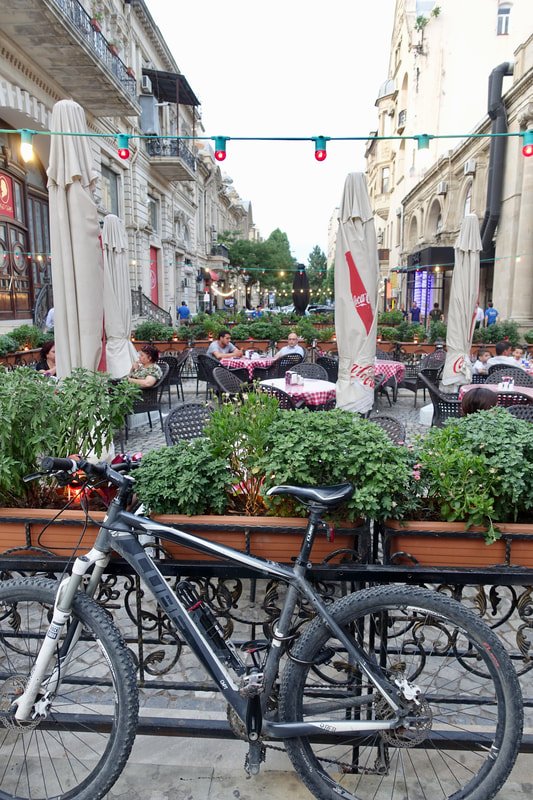
Fountains Square is now one of central Baku’s busiest public spaces, surrounded by restaurants, shops and everyday services. During our visit we found everything from Japanese and Mexican food to döner and Azerbaijani cooking, as well as exchange offices, mobile-phone shops, groceries and ice-cream parlours. Because it sits beside Icherisheher, it is an easy place to rest after exploring the Old City.
The names can be confusing. People may refer to Targovi, Fountains Square or Fontanlar Bağı and mean the same central area. Several names have survived in everyday use.
The names can be confusing. People may refer to Targovi, Fountains Square or Fontanlar Bağı and mean the same central area. Several names have survived in everyday use.
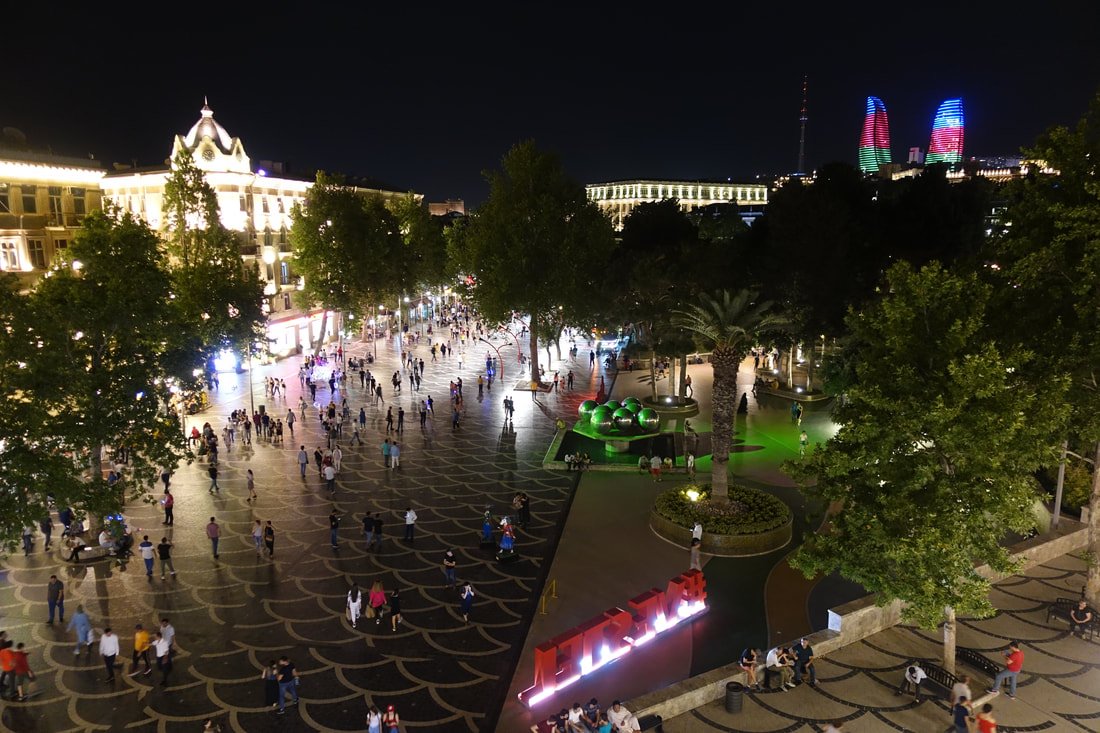
Targovi at night, with the Flame Towers in the background | 
Targovi is lively by day and night |

| 
|
BAKU BOULEVARD
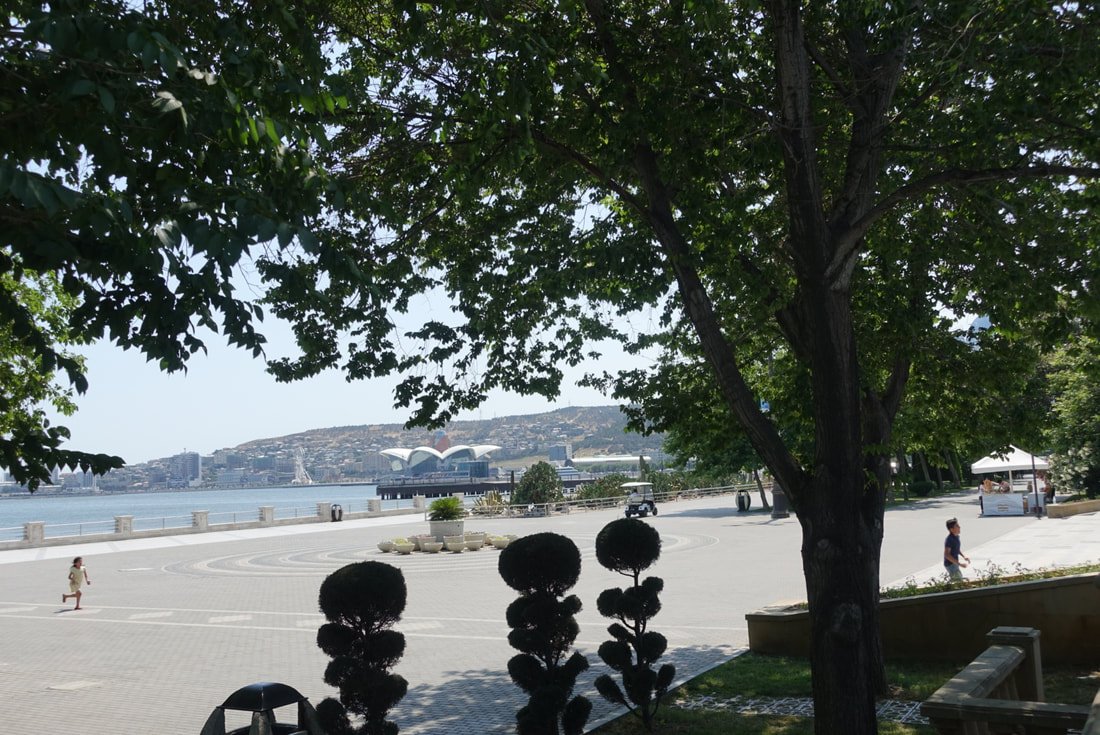
Baku Boulevard, officially the Seaside National Park, stretches along the Caspian waterfront. It has changed dramatically over the years. Along the promenade you will find cafés, amusement rides, the Baku Eye, the Puppet Theatre, the Carpet Museum, Little Venice and Park Bulvar Mall. There is also an area planted with trees from different parts of the world. We certainly never expected our first real-life baobab tree to be in Azerbaijan.

Park Bulvar Mall | 
Baobab trees |
There was also a tourist train whose schedule we never managed to decipher. The local unit of time seemed to be ‘ten minutes’: whatever we asked, the answer was ‘It’ll come in ten minutes’ or ‘It leaves in ten minutes,’ yet those ten minutes never arrived. After waiting half an hour, we gave up, photographed the train and moved on. Treat this as a memory from our visit rather than a current timetable.


| 

The first time we had ever seen people genuinely playing chess with pieces this size |
BAKU EYE
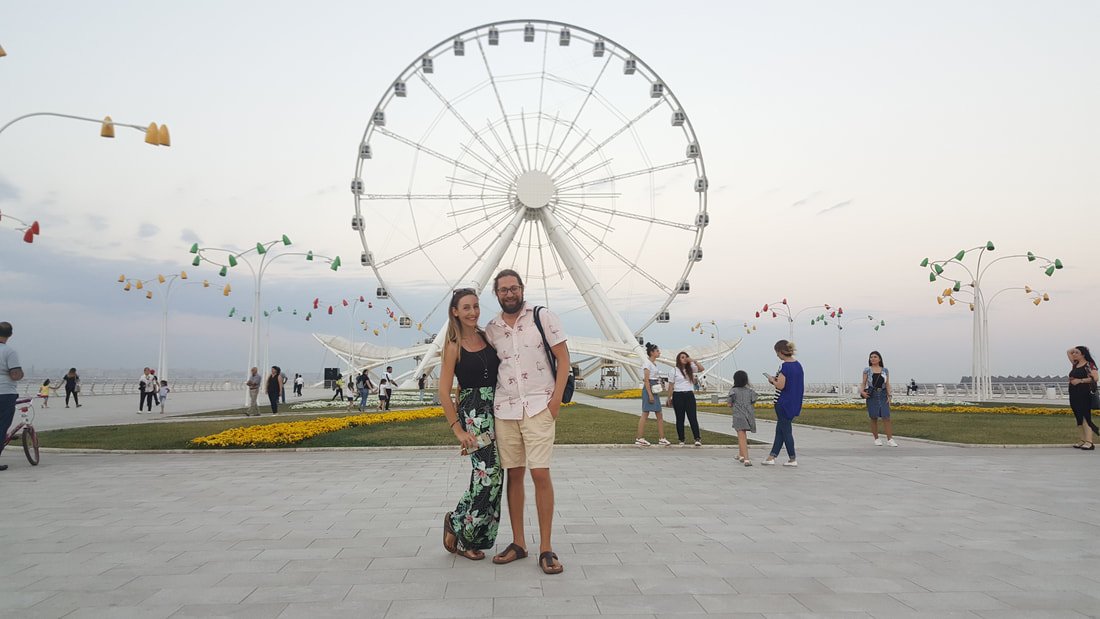
We never understood why some people called it the Devil’s Wheel, but the view was excellent. If it is operating during your visit, we recommend it; check current hours and ticket prices locally.
We never understood why some people called it the Devil’s Wheel, but the view was excellent. If it is operating during your visit, we recommend it; check current hours and ticket prices locally.
LITTLE VENICE
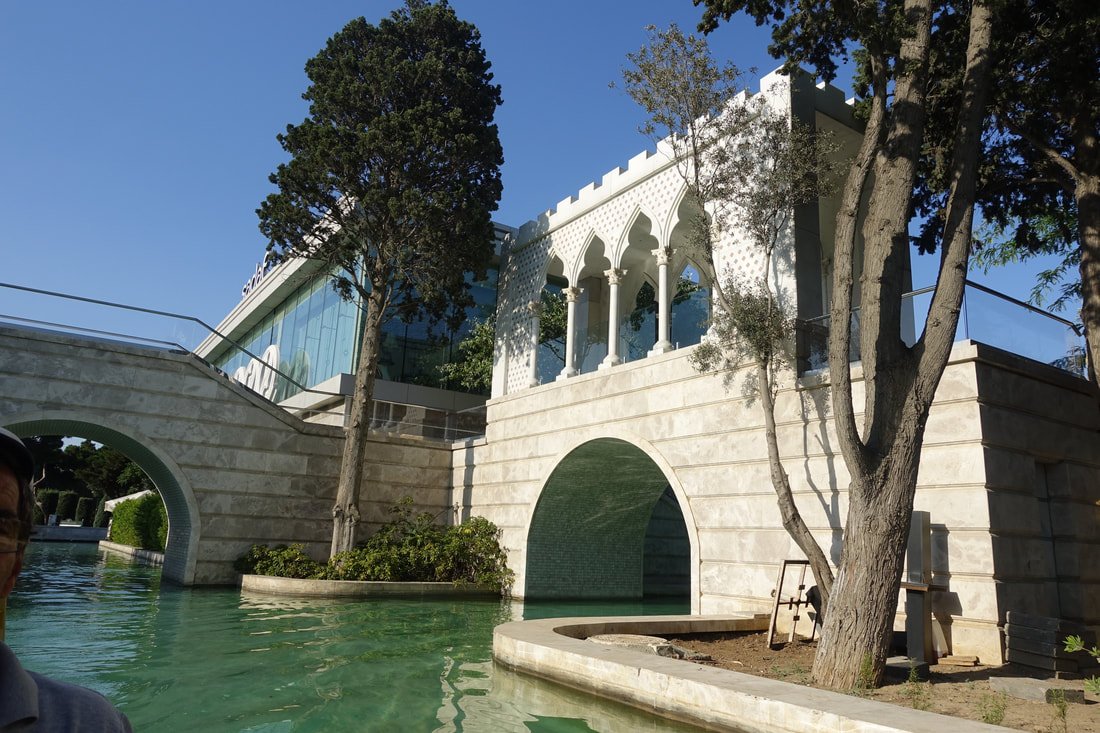
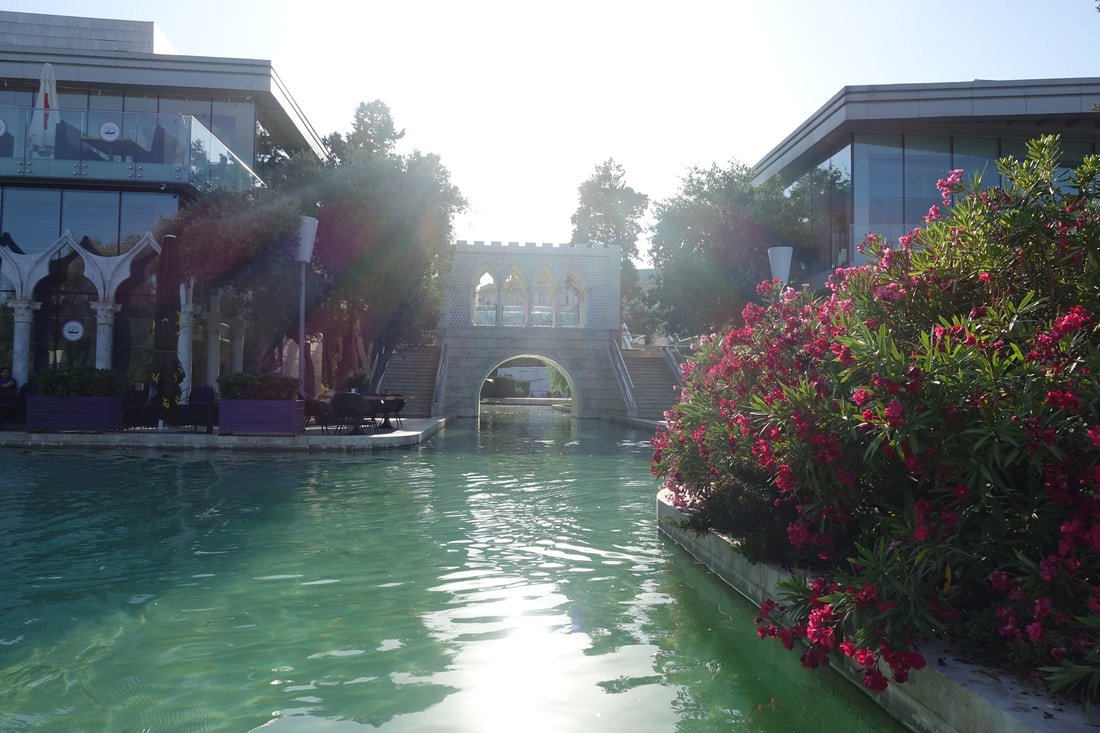
Little Venice sits in Baku Boulevard beside the Carpet Museum. Officially known as the Little Venice Water Town, it is an unapologetically Italian-inspired complex of shallow waterways, marble bridges and cafés. You can sit with a drink and watch the gondolas or buy a ticket for a short ride. Us? Naturally, we chose the gondola :D

| 
|
ATESHGAH FIRE TEMPLE
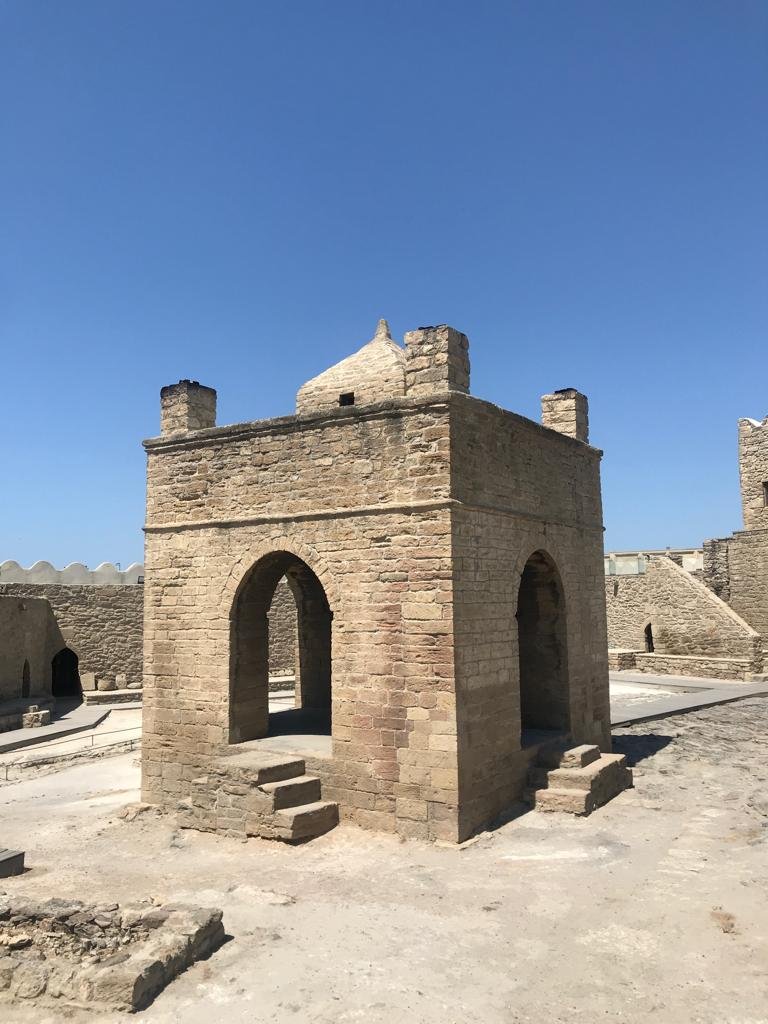
Ateshgah, about 30 kilometres from central Baku, is a historic fire-temple complex on the Absheron Peninsula. The surviving buildings largely date from the 17th and 18th centuries and are associated with Hindu, Sikh and Zoroastrian worship by merchants travelling through the region. It is therefore misleading to describe it simply as one of only three Zoroastrian temples in the world. A central altar contains an eternal-flame display, while the surrounding cells explain the site’s religious and commercial history. The courtyard also had tourist facilities during our visit. It was every bit as hot as its name suggested, so we made a fairly brisk circuit and left.
| 
|

WHAT TO EAT IN BAKU
Azerbaijani food is remarkably close to Turkish cooking. Even fast-food habits felt familiar, helped in part by businesses and communities moving between the two countries. Good döner was easy to find, and several Turkish restaurant brands had opened branches in Baku. Individual venues change quickly, so the names below should be read as memories and checked before making a special journey.
Tea culture is equally delightful. A çay dəsti is a tea set that may include preserves, nuts and tea, with larger versions adding pastries such as Turkish and Azerbaijani baklava. In many places it was surprisingly difficult to order a single glass unless you had also eaten; the full tea set seemed almost compulsory. We did not mind at all. Here are some of the places we tried and the dishes we remember.

| 
|
SHIRVANSHAH MUSEUM RESTAURANT
We came for Azerbaijani food but spent almost as much time examining the dizzyingly elaborate décor. The restaurant occupied a restored historic bathhouse and contained three large halls plus more than ten private rooms decorated around different themes. The Home Kitchen, Lenin and Revolution rooms caught our attention. After eating we wandered around for nearly an hour. They may have become slightly impatient with us, but such is the life of a blogger. Musicians and dancers were also performing traditional Caucasian music in the main halls.
We ordered lula kebab, bastırma, tika kebab, Mimosa salad and shah plov. The kebabs were excellent. Our hosts attributed the flavour to local livestock being raised less intensively, though we cannot independently verify that explanation. We did not especially love this restaurant’s shah plov; at the time it needed to be ordered at least an hour in advance. The dish is not so different from Turkish perde pilavı. As we said, the cuisines are genuinely close.
We ordered lula kebab, bastırma, tika kebab, Mimosa salad and shah plov. The kebabs were excellent. Our hosts attributed the flavour to local livestock being raised less intensively, though we cannot independently verify that explanation. We did not especially love this restaurant’s shah plov; at the time it needed to be ordered at least an hour in advance. The dish is not so different from Turkish perde pilavı. As we said, the cuisines are genuinely close.


| 
| 
|
FIRUZE RESTAURANT
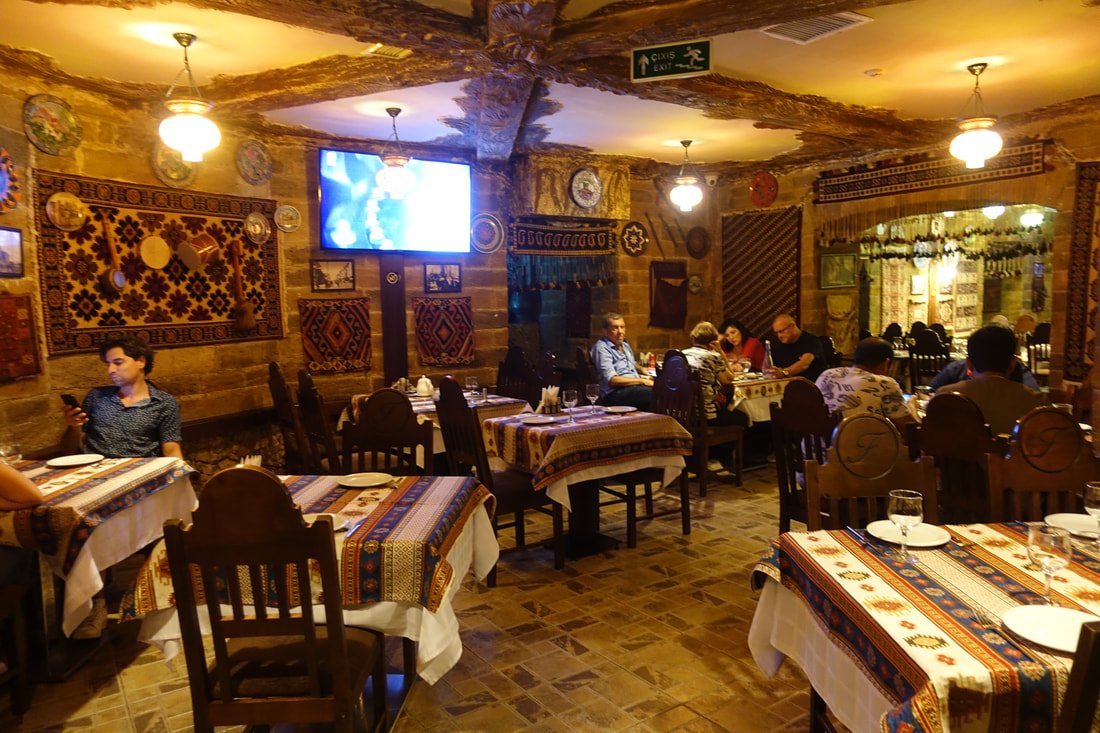
This was a very central restaurant serving dishes that again felt familiar. We ordered dushbara soup, yarpaq dolması, qutab filled with pumpkin, meat, herbs and cheese, and aşqara, a fruit-and-meat casserole. Even in the most touristy areas, prices during our trip remained below what we were used to in Istanbul: we generally spent no more than AZN25 per person, or up to about AZN50 with alcohol. These are historical prices from 2019, not current menu guidance. We drank local pear soda, though you could also try arak or Xırdalan beer.

| 
|
HOUSE CAFE
At the time of our visit, the Turkish chain House Cafe had two Baku branches: one in Port Baku Mall and another overlooking the green and constantly busy Fountains Square. We visited both. The mall branch served an excellent Turkish breakfast, while at Fountains Square we cooled down and ate good meatballs. If you are craving familiar flavours, it may suit you—but verify the present branches before going.
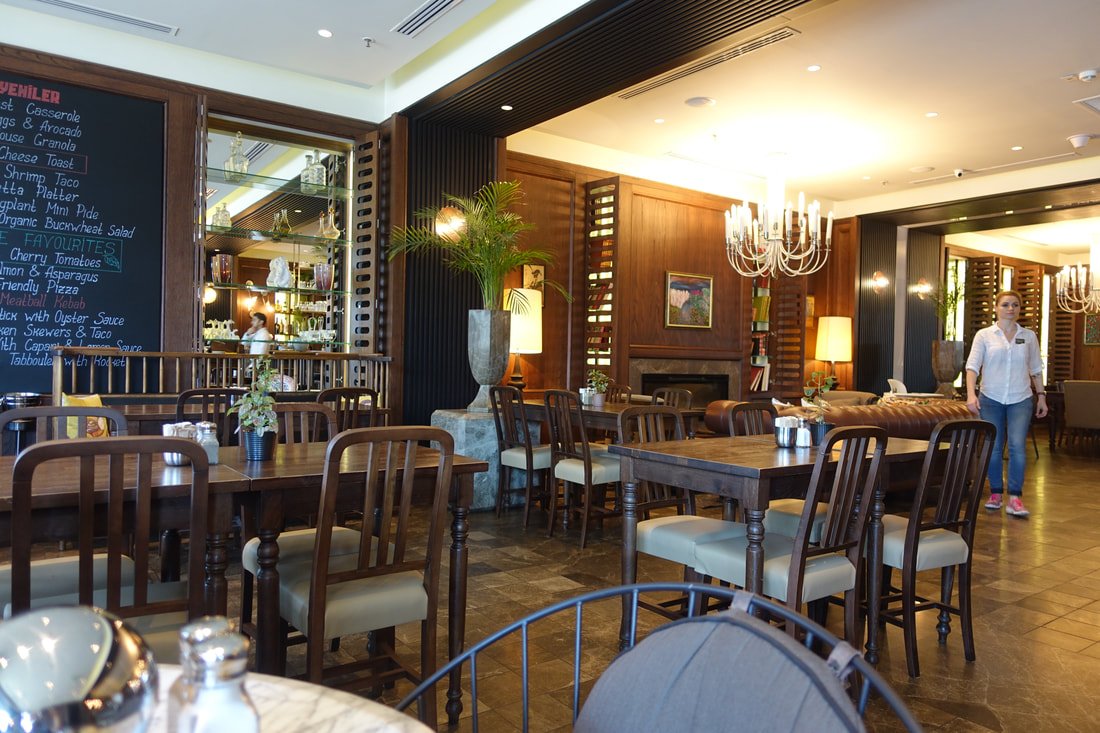
Port Baku Mall branch | 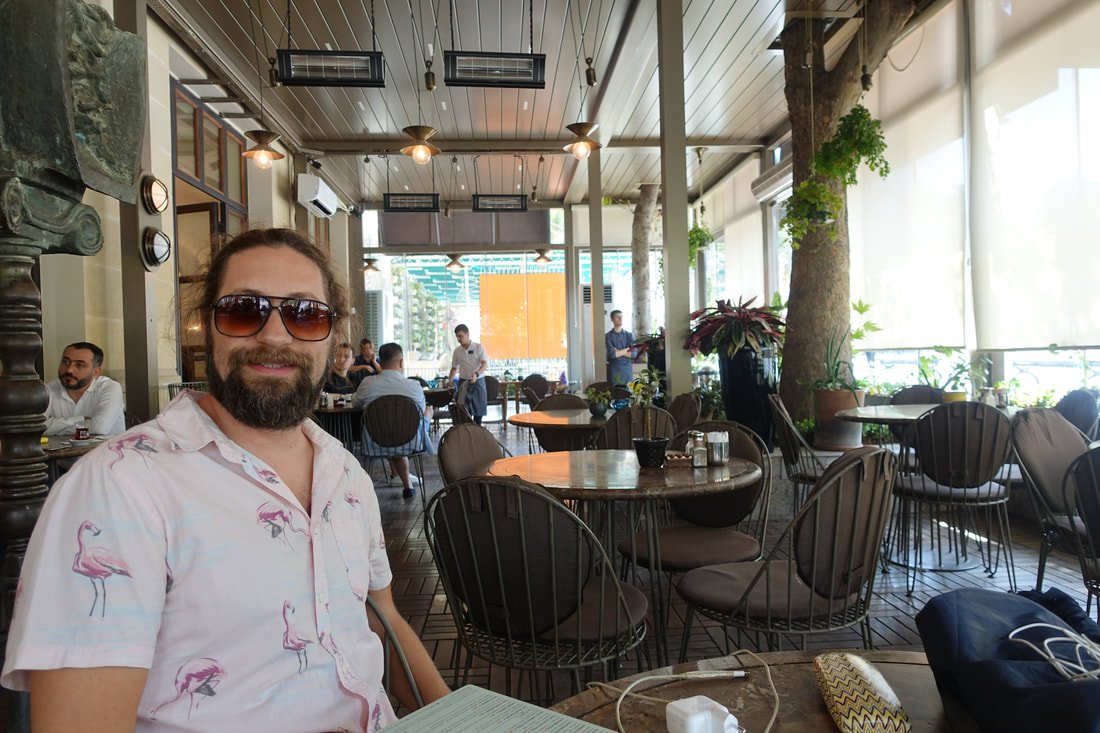
The garden at the Fountains Square branch |
PARIS BISTRO
This place was decorated like a Parisian café and usually played very good music. When we passed on Saturday night it was crowded and the music did not suit us, so we did not stay; by day it had returned to its French-bistro personality. Close to both the Boulevard and Icherisheher, it was a pleasant place for a break, and the coffee was very good. Check that it is still operating before making a special trip.

| 
|
BACCANALE RESTAURANT
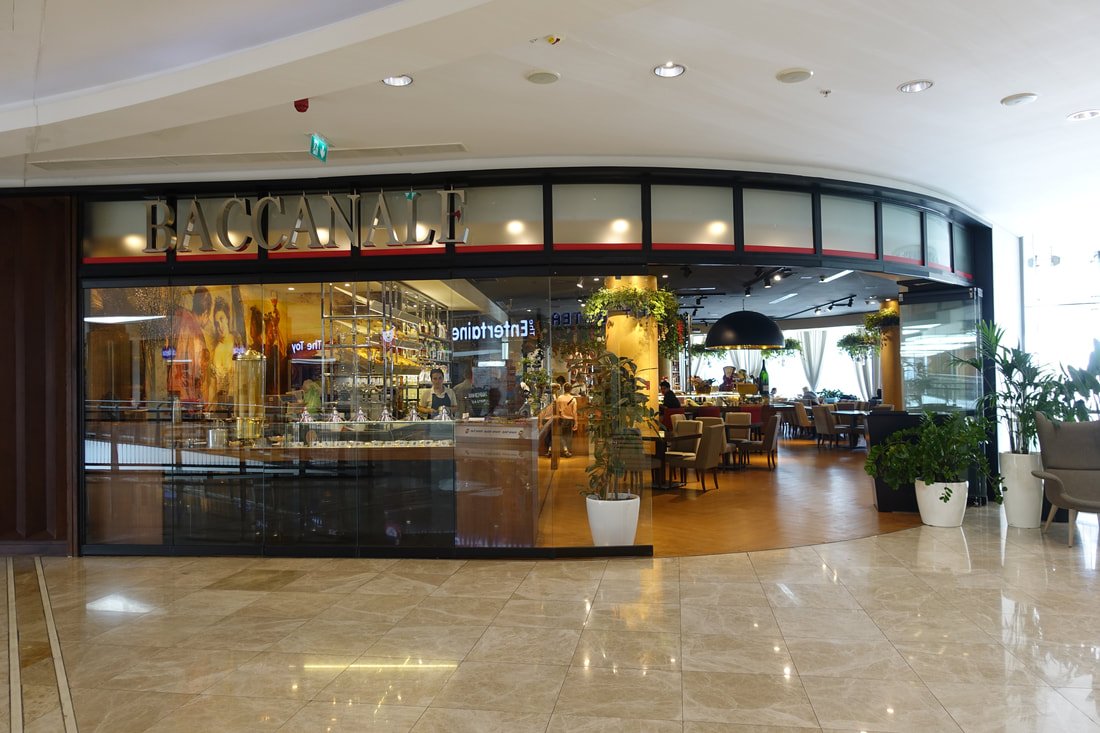
Baccanale was another attractive restaurant inside Port Baku Mall. We had breakfast there too. Everything was satisfying except the tea. If you want strong tea in Baku, remember to ask for it to be gara or tünd; otherwise it may arrive astonishingly pale.
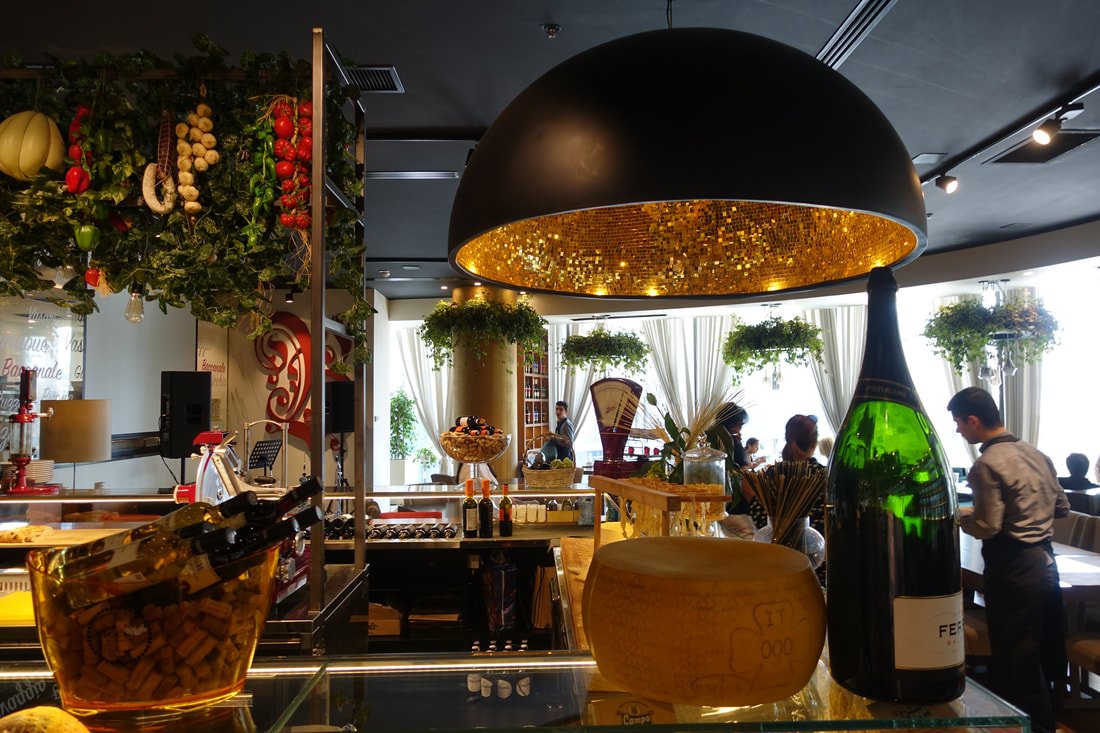

| 
|
TRATTORIA L’OLIVA
L’Oliva was where we ate genuinely good Italian food in a very central location. Accompanied by live piano, we had pizza, lasagne and soup. It made a useful break from local cuisine. As with every older restaurant recommendation, confirm its current address and opening status first.
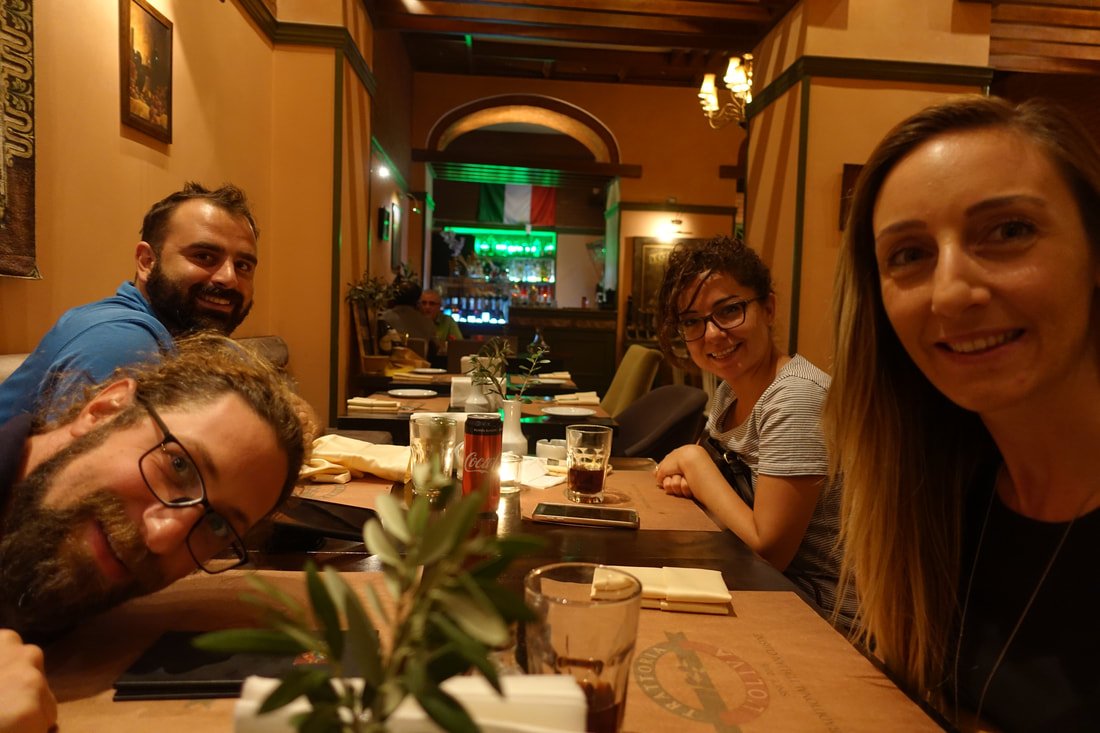
| 
|
MAYA MEXICAN RESTAURANT
For a change, we spent one evening at this Mexican restaurant on the Boulevard. Finding a table without a reservation could be difficult on Saturdays, but we somehow secured one for four. It was the best Mexican food we had eaten in a long time—although we had not yet been to Mexico, so perhaps our comparison standards were limited :D What we loved most was a four-piece mariachi band moving from table to table and playing short Mexican songs.


| 
| 
|
BARREL PLAYGROUND
We were told that this was the heart of electronic music in Baku. İzmir once had an excellent electronic scene too, and the place reminded me of its flourishing years. Apparently the surrounding area had been almost empty only a few years earlier; by our visit it had become a ticketed waterfront venue with intimidatingly large doormen. We liked the open seaside setting, the cocktails and the music. Nightlife changes especially quickly, so check whether Barrel or a successor venue is operating before setting out.

| 
| 
|
SHERLOCK’S BEACH
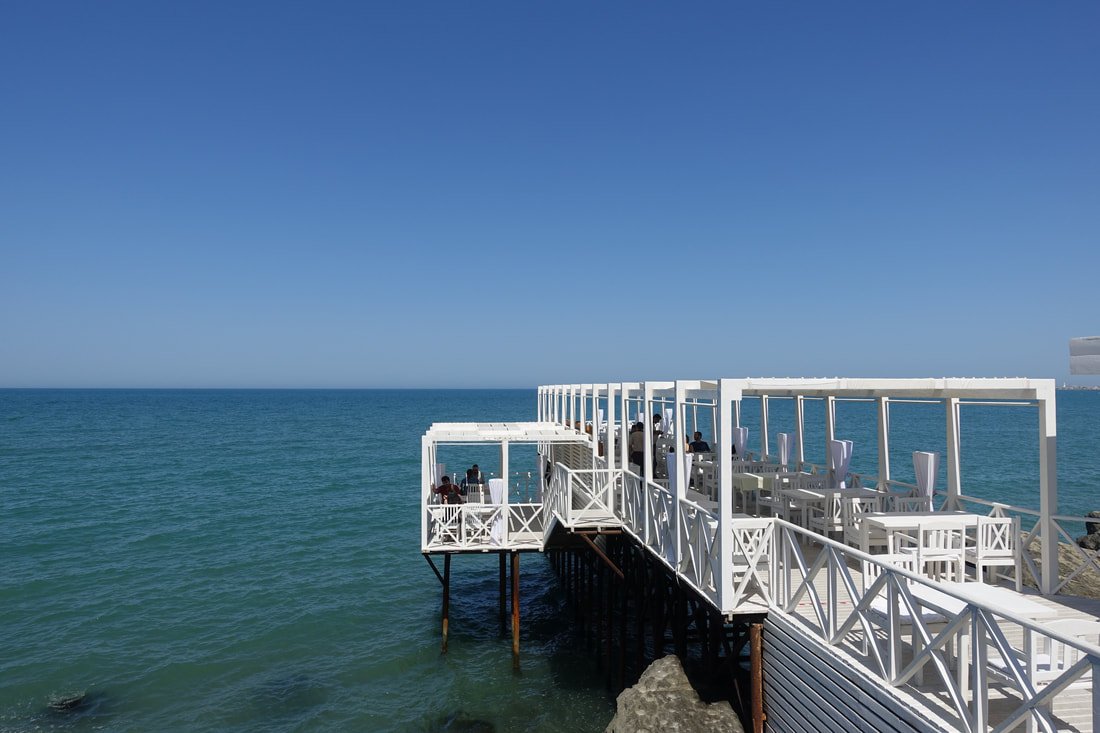
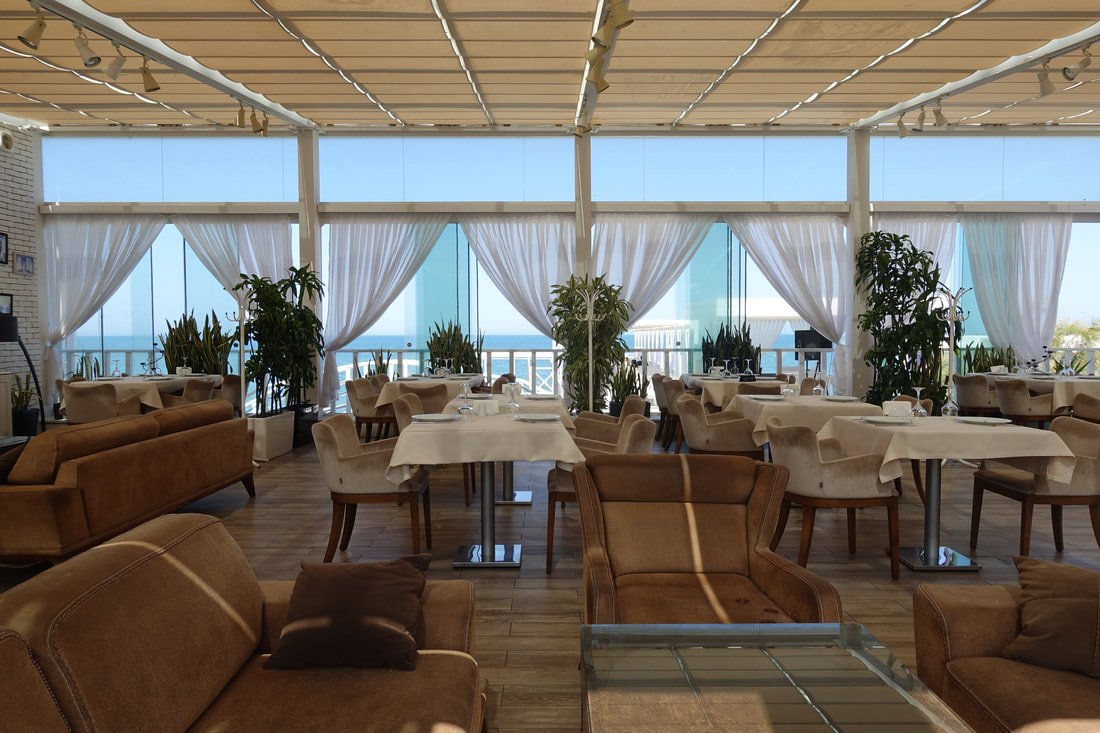
About 35 kilometres from the centre, this café complex overlooked the Caspian in an area used by many Baku residents for summer homes. It had several indoor areas and terraces of different sizes. If you visit in summer, the breeze can be a welcome escape. Accustomed to the beautiful waters of the Aegean and Mediterranean, we chose not to swim in the Caspian, but the sea air was lovely.
| 
|
LANDMARK HOTEL
Only about a kilometre from Port Baku Mall, the Landmark Hotel’s terrace also operated as a restaurant with an excellent view. The menu leaned towards Western food; we tried local Xırdalan beer with chips. It was worth visiting for the panorama alone. Verify present access and restaurant hours with the hotel.

That view, though
The city is beautifully illuminated and looks magnificent at night. With the restored façades along Neftchilar Avenue, landscaped parks and Russian-period buildings, Baku presents itself as a true global city. From above, however, you can sometimes glimpse what lies behind those carefully restored frontages. Still, out of sight, out of mind; we simply looked from the front.
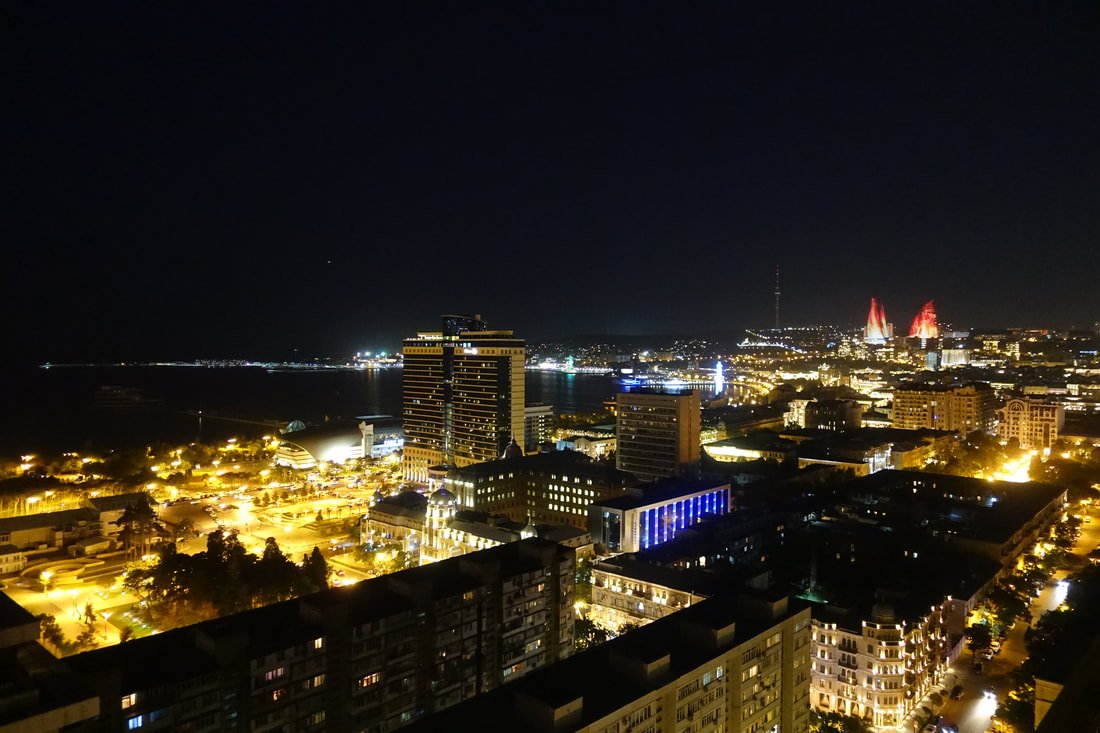
Baku at night, with the Flame Towers at the back right
HOW TO GET TO BAKU
Flights between Türkiye and Baku are operated by several airlines, but routes and seasonal departures change. Our direct Pegasus flight from İzmir took about three hours and had rather strange timings, though it was the cheapest option for our dates. Check current nonstop services from your departure city rather than relying on the 2019 route list.
How to get from Heydar Aliyev International Airport to central Baku
Aeroexpress buses connect Terminals 1 and 2 with Baku Railway Station beside 28 May metro station, also stopping at Surakhani Bridge and Koroglu metro. According to the airport’s official information checked in August 2026, services run every 20 minutes from 06:00 to 23:15 and every 45 minutes overnight. The scheduled journey is about 30 minutes, traffic permitting. A single-trip card costs AZN1.50; with a reusable BakuCard, the Aeroexpress fare is AZN1.30 and the card itself costs AZN2. The current timetable and fares are available on the official airport website for reference.
If you prefer a taxi, ignore unsolicited drivers and use an official rank or a reputable ride-hailing app. Some travellers have reported drivers disputing an agreed fare at the end of the journey. Taxify, the app we used in 2019, has since been renamed Bolt; our old promotional code is no longer relevant. Confirm the plate and fare in the app before getting into the car. Bolt worked well for us during that trip, but prices and availability change.
If you prefer a taxi, ignore unsolicited drivers and use an official rank or a reputable ride-hailing app. Some travellers have reported drivers disputing an agreed fare at the end of the journey. Taxify, the app we used in 2019, has since been renamed Bolt; our old promotional code is no longer relevant. Confirm the plate and fare in the app before getting into the car. Bolt worked well for us during that trip, but prices and availability change.
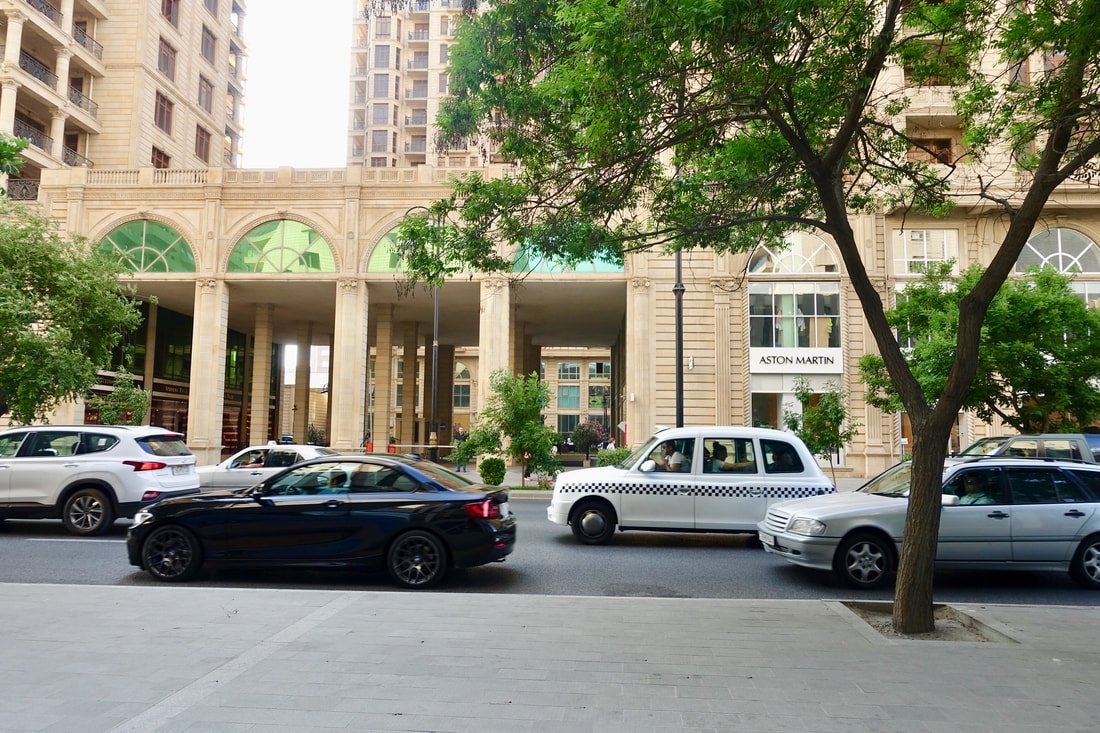
Baku’s taxis look wonderfully British
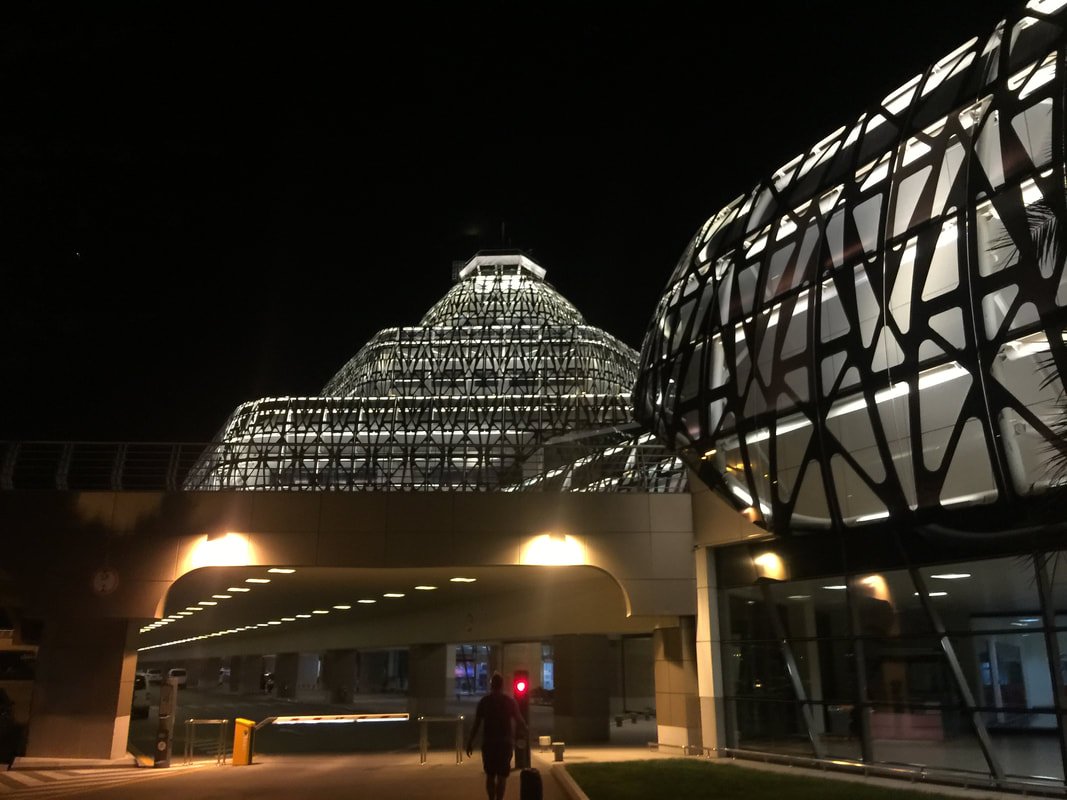
Not a Mayan pyramid: Heydar Aliyev International Airport | 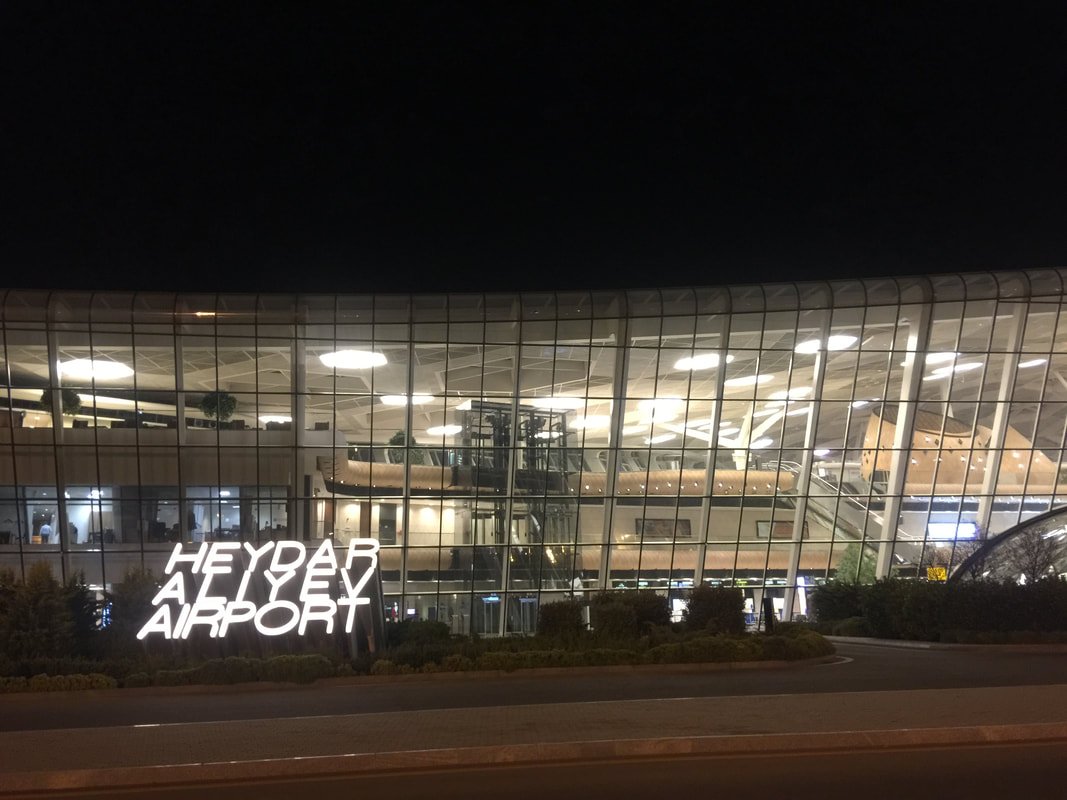
also known as Heydar Aliyev Airport |
WHERE TO STAY IN BAKU
Fountains Square and the area around Icherisheher are among Baku’s most convenient bases. Both offer everything from budget hostels to luxury hotels, with easy access to the metro and other transport. Compare recent reviews and current rates before booking.
WHAT TO BUY IN BAKU
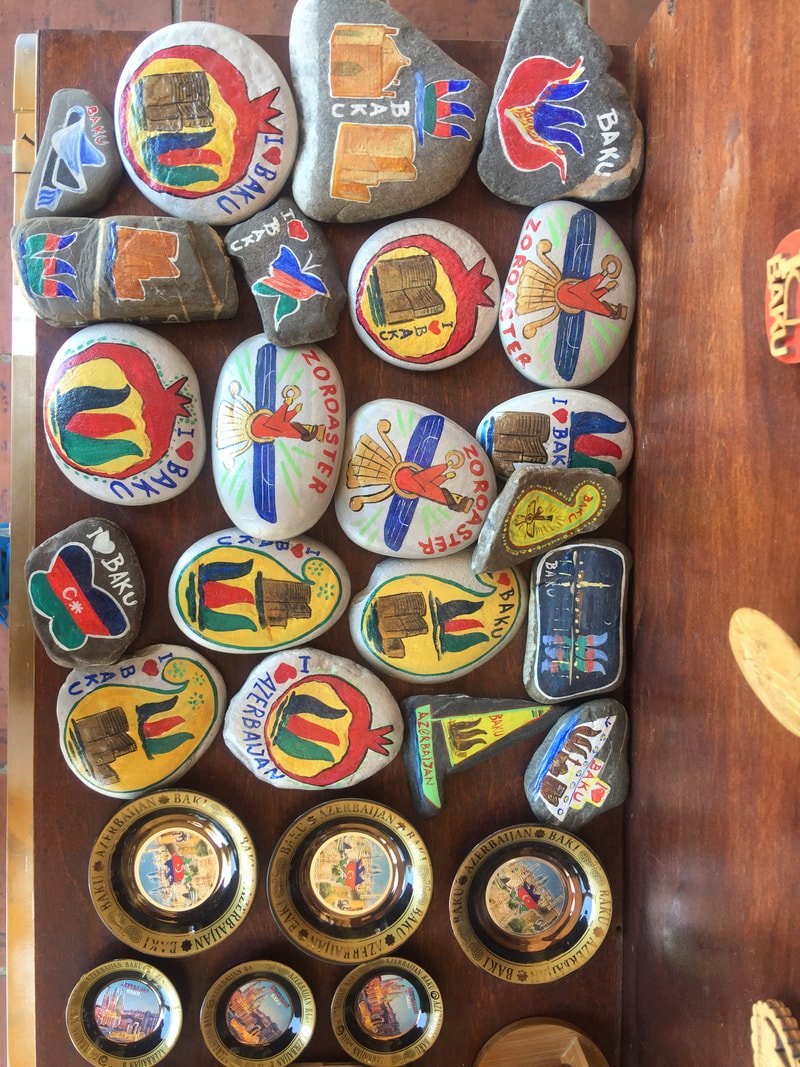
Beyond the usual magnets, T-shirts and bags, bergamot-flavoured black tea is a popular souvenir. We brought Berqa tea home for our mothers and grandmother. If you like strong tea, it is worth trying. The slim-waisted tea-glass motif is everywhere too—magnets, ornaments and even sculptures. Azerbaijan is also known for carpets and glasswork, though antique and cultural-property export rules should be checked before buying valuable pieces.
| 
| 
|
AZERBAIJAN ENTRY REQUIREMENTS FOR TURKISH CITIZENS
The visa information in the original 2019 article is no longer valid. Turkish citizens can now visit Azerbaijan visa-free for up to 90 days with a valid passport. Citizens travelling directly between Türkiye and Azerbaijan may also use a valid Turkish identity card under the bilateral agreement; a passport is required if the journey involves a third country. Entry rules and permitted border crossings can change, so check the Azerbaijani Ministry of Foreign Affairs and your carrier before departure.
The old distinction between ordinary, service and diplomatic passports, the USD11 visa-on-arrival machines and the airport visa procedure described here belonged to our 2019 trip and should not be used today. The current bilateral visa exemption replaced that process for Turkish citizens.
If you plan to travel by land or continue to another country, verify current border operations separately. Identity-card travel applies only to direct journeys between Türkiye and Azerbaijan; take a passport for onward international travel.
The old distinction between ordinary, service and diplomatic passports, the USD11 visa-on-arrival machines and the airport visa procedure described here belonged to our 2019 trip and should not be used today. The current bilateral visa exemption replaced that process for Turkish citizens.
If you plan to travel by land or continue to another country, verify current border operations separately. Identity-card travel applies only to direct journeys between Türkiye and Azerbaijan; take a passport for onward international travel.
PRACTICAL TIPS FOR AZERBAIJAN
Azerbaijan uses the same Type C and Type F plug shapes commonly used in Türkiye, with a 220V, 50Hz supply.
The exchange rate we recorded during our trip—roughly TRY3.2 to AZN1—is purely historical. Check a live rate immediately before travelling.
Baku is one hour ahead of Türkiye. Azerbaijan uses UTC+4 throughout the year, while Türkiye uses UTC+3. Information checked in August 2026.
The exchange rate we recorded during our trip—roughly TRY3.2 to AZN1—is purely historical. Check a live rate immediately before travelling.
Baku is one hour ahead of Türkiye. Azerbaijan uses UTC+4 throughout the year, while Türkiye uses UTC+3. Information checked in August 2026.
If You Have Upcoming Travel Plans...
When you make a purchase by clicking our links, we get to earn a small commission but you still pay the same price. So, it's a win-win for everyone!

Book hotels via Booking.com | 
Find Cheap Flights via Skyscanner | 
Get a Travel Insurance via World Nomads | 
Make International Money Transfer via Wise |

Book Tours & Attractions via Getyourguide | 
Book a Cruise | 
Book Bus/Ferry/Train/Transfer via 12goAsia | 
Find free accommodation in exchange for petsitting |