NAPLES AND ISCHIA
Practical update (August 2026): This article records our original trip, so the quoted entrance fees, hotel rate, bus fare and restaurant prices are historical. Naples–Ischia ferries and hydrofoils still operate, but times vary by date, weather and port; Caremar’s current timetable shows crossings of roughly 55 minutes by hydrofoil and around 1.5–2 hours by ferry. A temporary 2026 timetable change has also affected some sailings because of bradyseismic activity around Pozzuoli, so check live departures before travelling. Castel dell’Ovo remains subject to restoration/access changes, and current admission rules should be verified locally.
Naples has inspired countless films with its pizza, coffee, mafia stories and the legendary silhouette of Mount Vesuvius. It had been on our list for years. Italy always excites us: we picture wonderful food, warm and fashion-conscious people who are never afraid to be themselves, beautiful music and sunlit streets. For our first visit to southern Italy, we planned an ambitious route and started researching—only to find that Turkish and international blogs often described Naples negatively, as somewhere to pass through rather than explore. Our experience was the opposite. Naples is one of the best places to feel everyday southern Italian culture. We gave Naples and Ischia only two days, but left promising ourselves we would return. These are our notes from two very full days.
THINGS TO SEE AND DO IN NAPLES
Naples is one of those rare European cities where the historic centre is not separate from modern city life. Founded by Greeks and later the capital of powerful kingdoms, it carries layer upon layer of culture, yet its compact centre is easy to explore on foot. Castel Nuovo is a convenient starting point. The seafront castle reflects French and Spanish periods as well as the city’s older Mediterranean history. Admission was €6.50 during our trip; we skipped the interior, but you can still approach the main courtyard and see historic damage on the entrance.
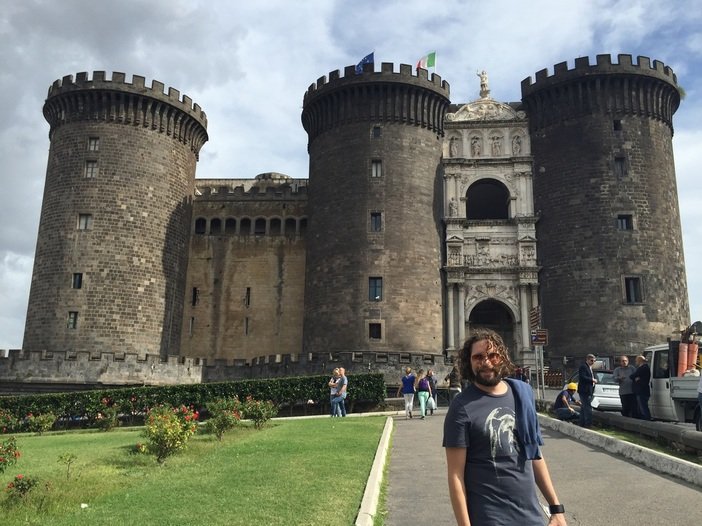
Castel Nuovo really is enormous =)
Continue towards Piazza del Plebiscito and Teatro di San Carlo appears on your left. Opened in 1737, it is one of the world’s oldest continuously active opera houses. If you have time and there is a performance, the interior is well worth seeing. Part of the façade was covered for restoration during our visit.
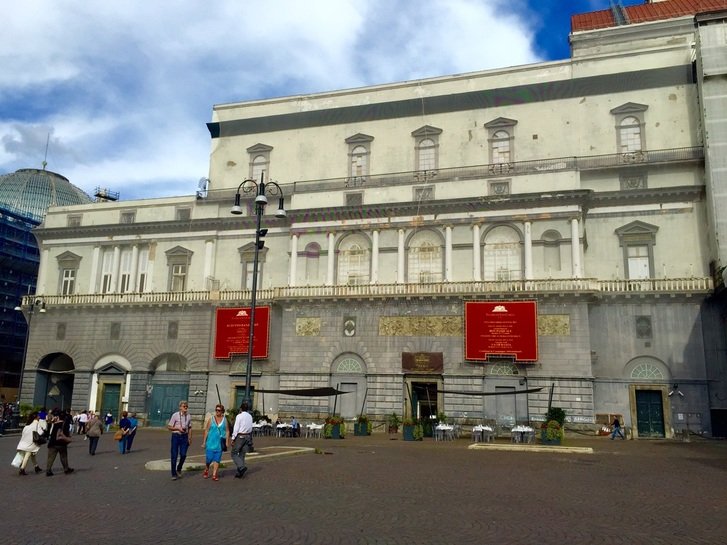
Teatro di San Carlo under restoration.
Opposite the theatre is Galleria Umberto I, one of nineteenth-century Naples’ fashionable gathering places. Its shops and cafés are still active today, beneath a soaring glass roof often compared with Milan’s Galleria Vittorio Emanuele II. The building also has spaces below street level that have hosted performances over the years, though the activity described in older accounts should not be assumed today.
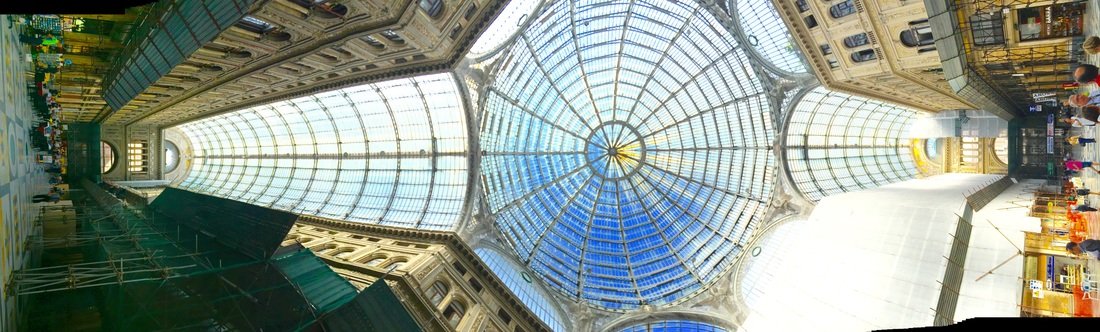
The transparent dome fills Galleria Umberto I with light.
A little farther on is Piazza del Plebiscito, one of Europe’s largest city squares, framed by the Royal Palace and the Basilica of San Francesco di Paola. After taking the essential photographs, turn towards the sea for a striking view of Mount Vesuvius on a clear day. Vesuvius is active and closely monitored. The documentary claim that an eruption would mean “the end of the world” was dramatic television, not a scientific fact, although the volcano presents a serious regional hazard.
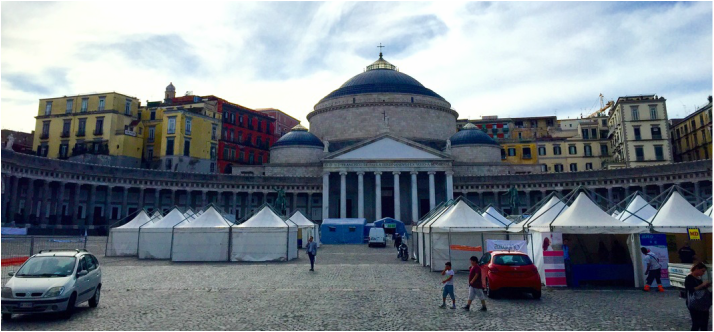
Piazza del Plebiscito.
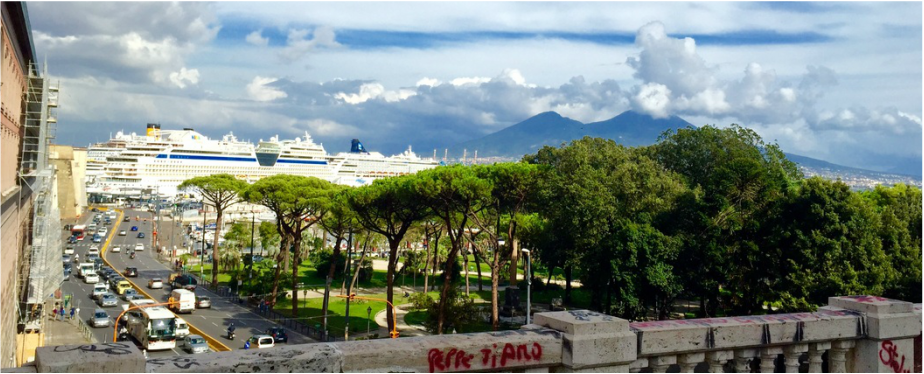
Mount Vesuvius looks magnificent on a clear day.
Via Toledo feels like the modern heart of Naples: long, lively and lined with shops and cafés. Volcanic stone gives many façades their dark texture, while warm-toned walls, green shutters and aligned balconies create that unmistakable Italian streetscape. To me, the individual buildings are not radically different from apartment blocks elsewhere; what makes them beautiful is their consistency and the way the details work together.
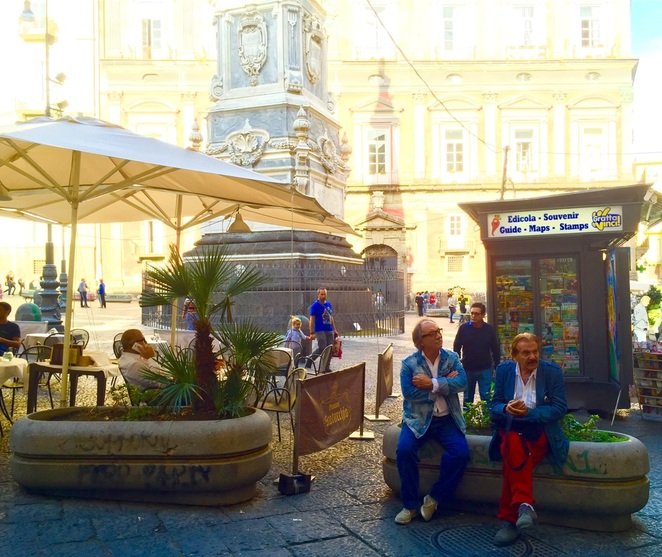
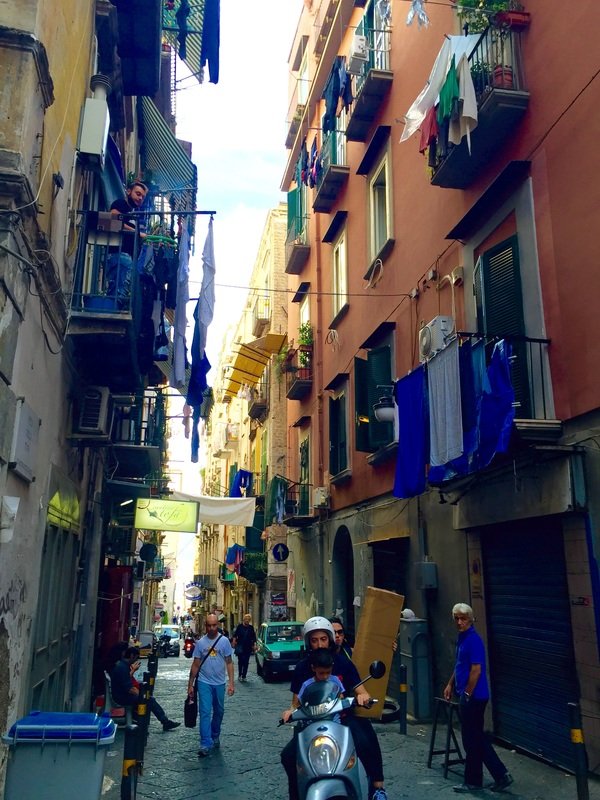
Running parallel to Via Toledo is Quartieri Spagnoli, the Spanish Quarter, home to some of Naples’ narrowest and most entertaining streets. If you see only one neighbourhood, make it this one: laundry hangs from balconies five or six floors above, tiny three-wheelers squeeze through alleys, walls are worn, and local trattorias appear around every corner. You will often hear warnings about bag-snatching and pickpockets. We had no trouble, but ordinary city awareness is sensible.
| 
|
Spaccanapoli is another essential route. Its name means “Naples splitter” because the long, mostly pedestrian axis appears to cut straight through the old city. Walking it is one of the easiest ways to experience the centro storico. We loved the tiny coffee counters with miniature tables tucked against old stone walls.
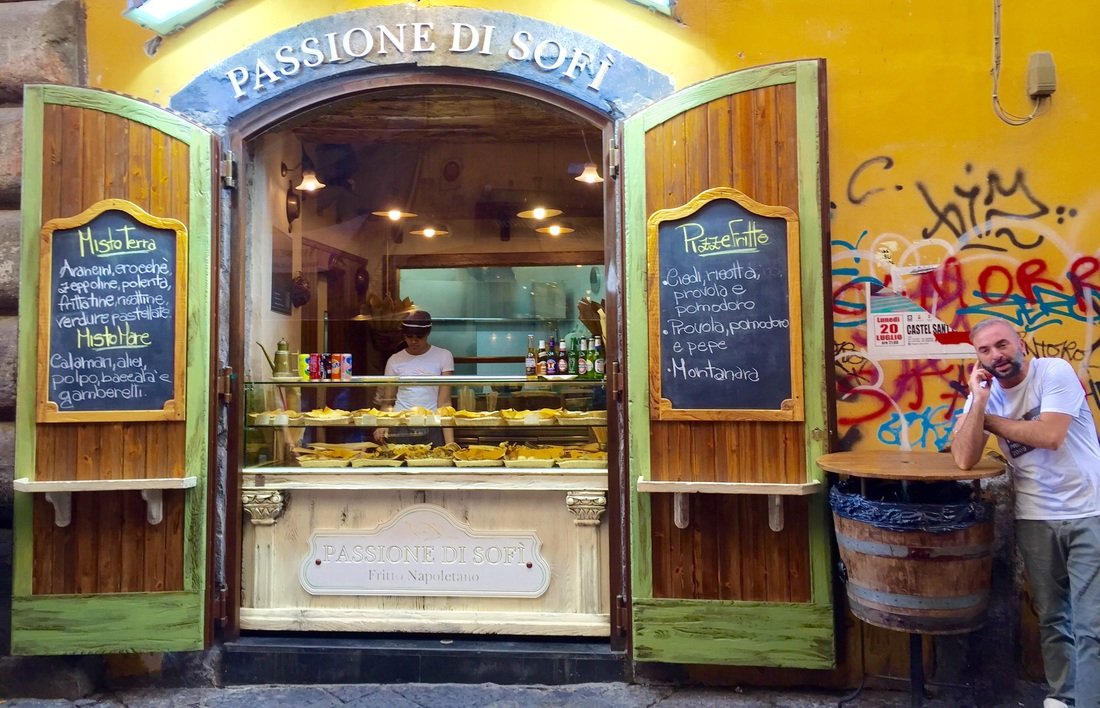
Colourful kiosks line Spaccanapoli. | 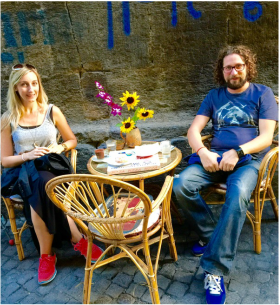
At this little café we tried Naples’ famous hazelnut-and-chocolate coffee. |
In Piazza del Gesù, the diamond-point stones on the façade of Gesù Nuovo carry mysterious carved symbols. A popular modern interpretation treated them as musical notation and produced a composition called Enigma. It is a fascinating story, although historians continue to debate what the marks originally meant.
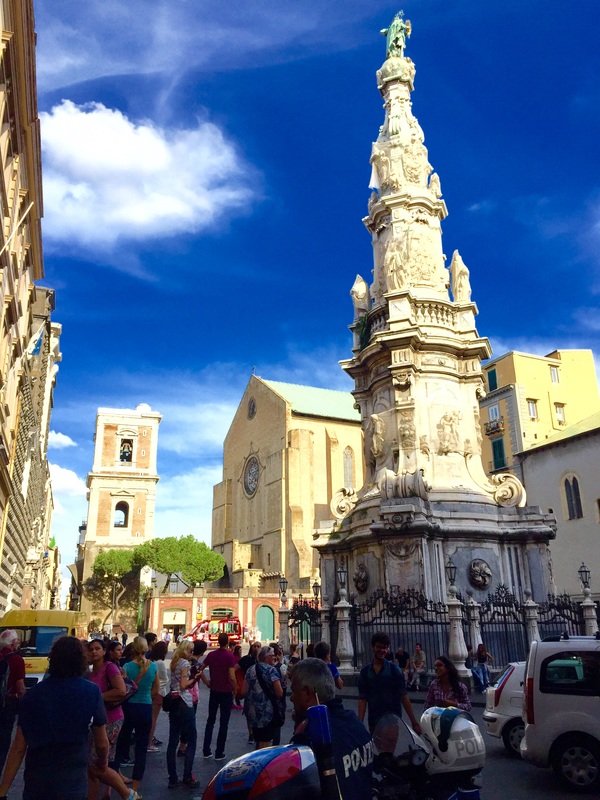
Piazza del Gesù. | 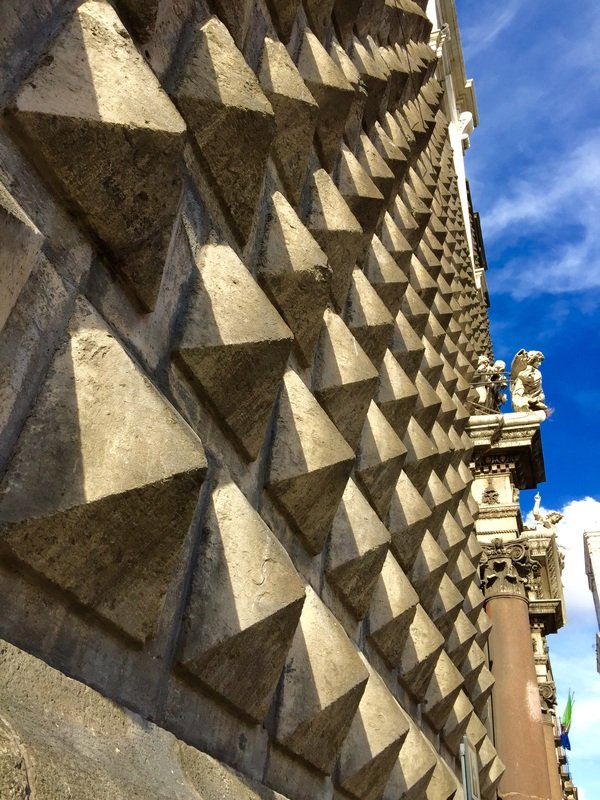
Look closely and you can see the symbols on the stones. |
Via dei Tribunali runs parallel to Spaccanapoli and is another of the old centre’s busiest streets. Do not leave without trying one of its pizzerias. Rain made the area quiet at night during our visit, but local friends told us that students often gathered around Piazza Bellini.
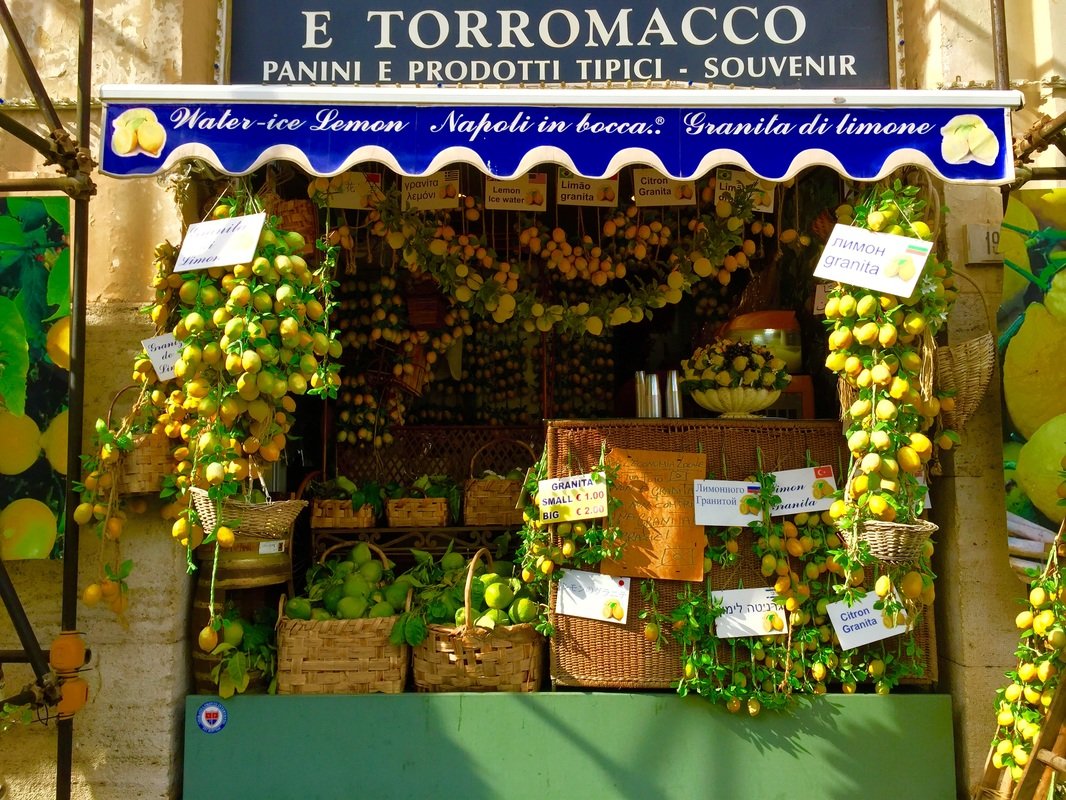
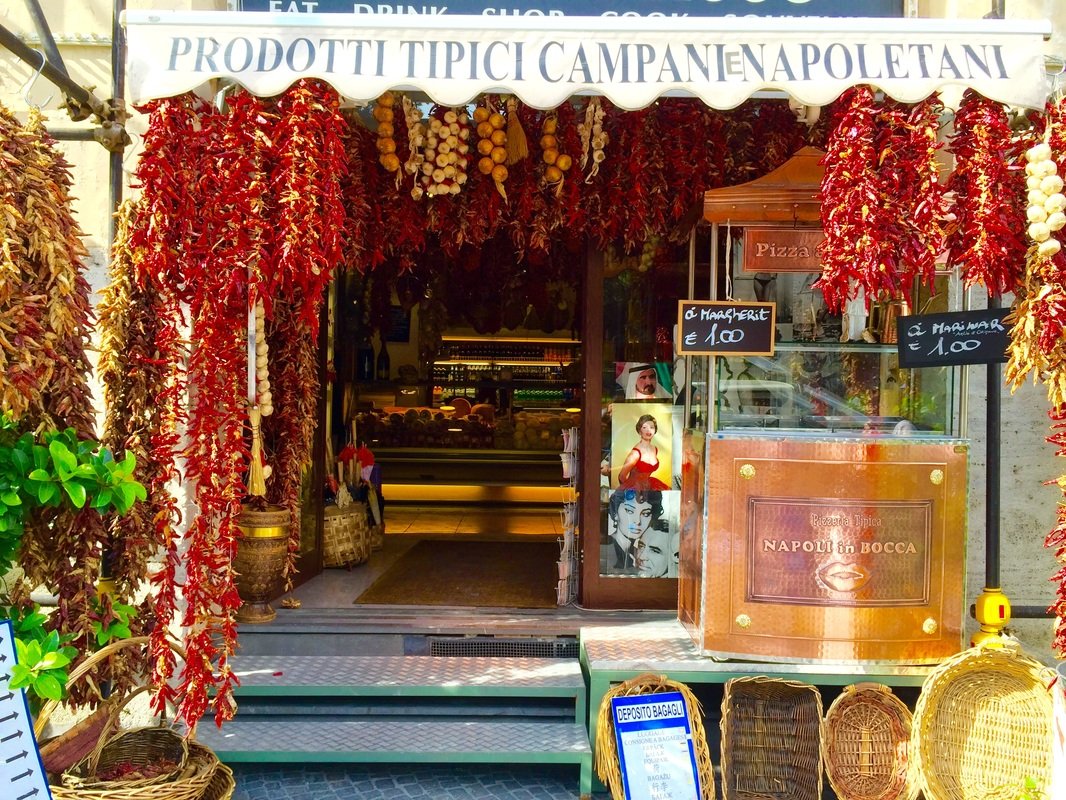
| 
|
We ran out of time for Castel dell’Ovo, the Egg Castle, on the seafront. Legend says the poet Virgil hid a magical egg in its foundations, and that if it ever broke both the castle and Naples would fall into disaster. The ancient egg appears to be holding up well. Entry was free during our visit, but restoration has affected access in recent years, so check before going.
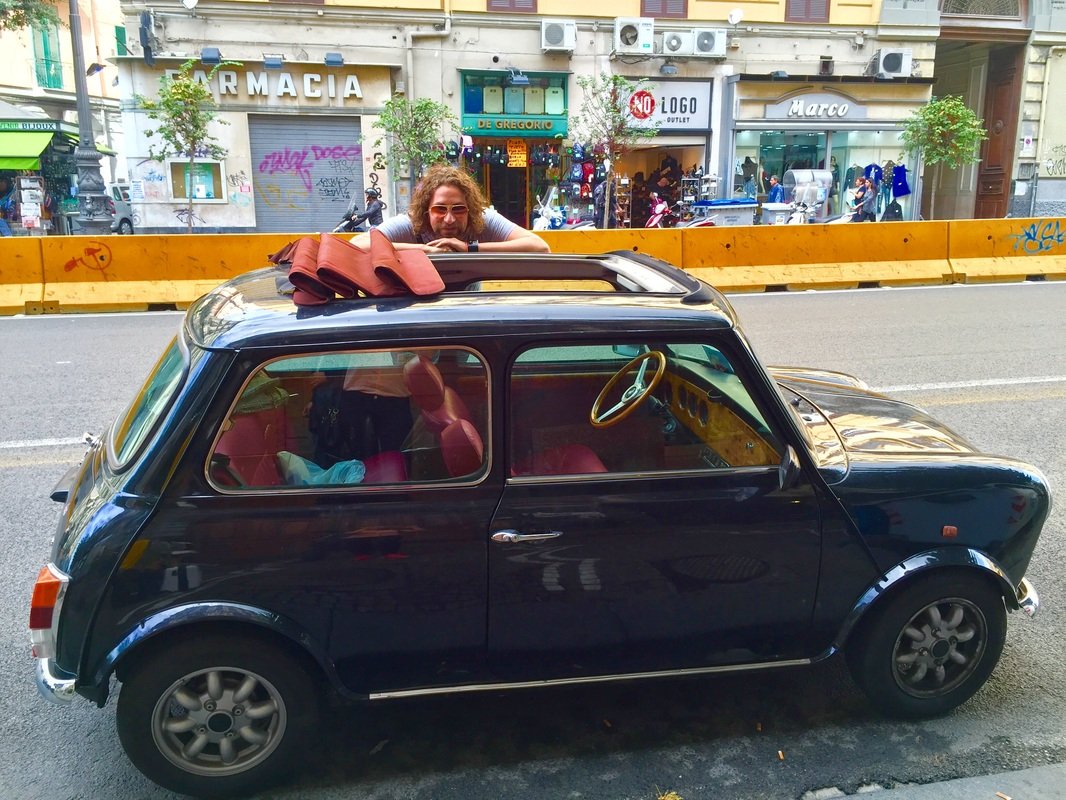
Classic Minis like these are still a familiar sight in Italy. | 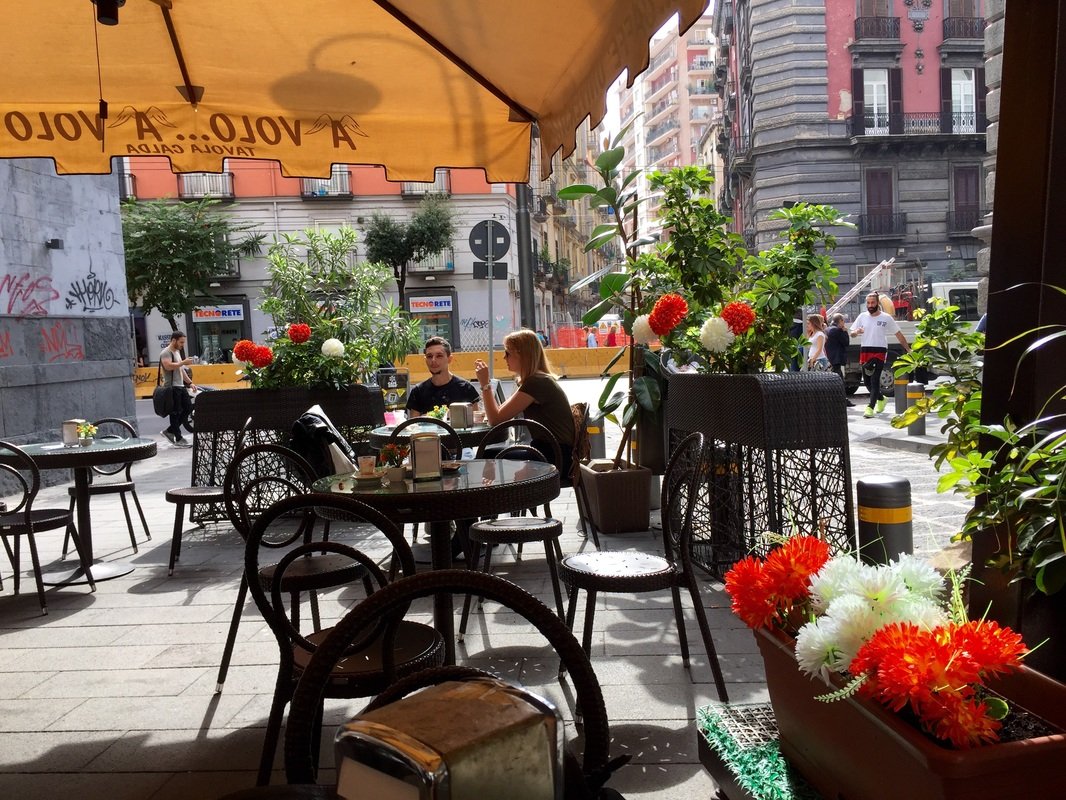
The café on Corso Umberto I where we stopped for coffee as soon as we arrived. |
Corso Umberto I is one of the main streets of modern Naples, stretching for more than two kilometres past shops, cafés and historic buildings. Street sellers sometimes set up tables of second-hand goods and inexpensive imports when the weather is good. Following the avenue is a straightforward way to walk from Napoli Centrale towards the centre.
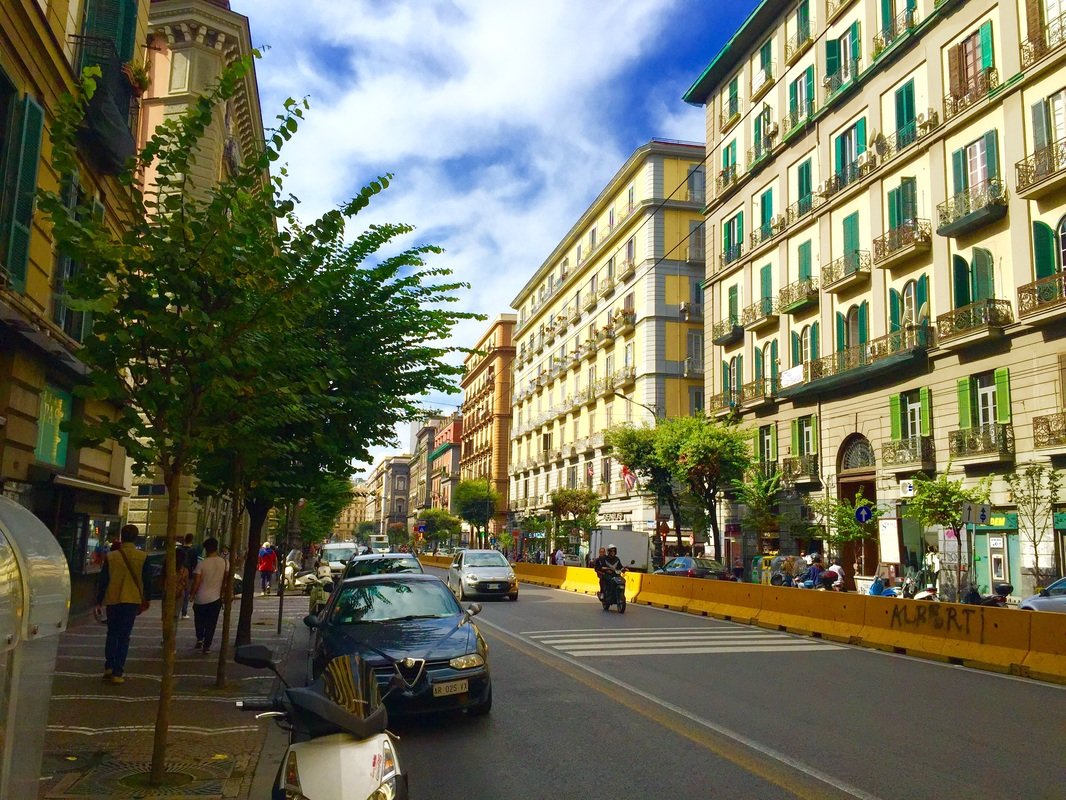
Sunshine welcomed us on Corso Umberto I.
For a broad view over Naples, take the funicular from the Via Toledo area towards Vomero and walk to Castel Sant’Elmo. Our old notes list a €2 ride, €5 admission and free Sunday entry; these prices are historical. From above you can see how sharply Spaccanapoli cuts through the city. We mostly walked and occasionally used the metro. Our remembered €3.60 day ticket is also outdated. Traffic, meanwhile, was gloriously chaotic—an Italian friend joked that even driving schools advise beginners to practise in another city for five years before attempting Naples.
WHAT TO EAT IN NAPLES
Italian food needs no introduction, and it suits our tastes perfectly. Pizza developed into its modern form in Naples. Neapolitan pizza received EU Traditional Speciality Guaranteed protection in 2010, while the craft of the Neapolitan pizzaiuolo was added to UNESCO’s intangible heritage list in 2017. The best-known story says pizza Margherita was named after Queen Margherita in 1889, using tomato, mozzarella and basil to echo the Italian flag; historians debate how literally the tale should be taken, but it remains part of the city’s culinary mythology.
| 
|
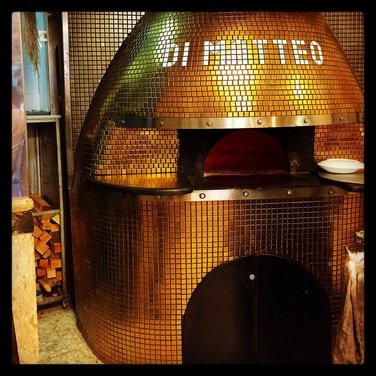
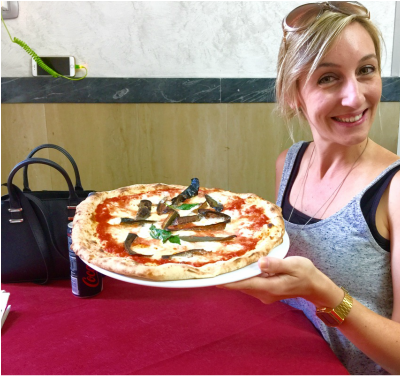
For pizza on Via dei Tribunali, we tried Di Matteo, which has been serving the neighbourhood since 1936. It absolutely lived up to expectations. We chose a Caprese-style pizza and a four-cheese pizza. They cost about €8–9 each during our trip, and one was enough to share unless you were very hungry.
Coffee is another Naples obsession. Italy has more coffee variations than any visitor can memorise, and the local espresso is especially intense. There is even a gloomy joke about a tourist dying after ten espressos in one day—only a joke, thankfully. Cappuccino felt too gentle by comparison, so we learned to ask for a cappuccino scuro, a stronger cappuccino.
| 
|
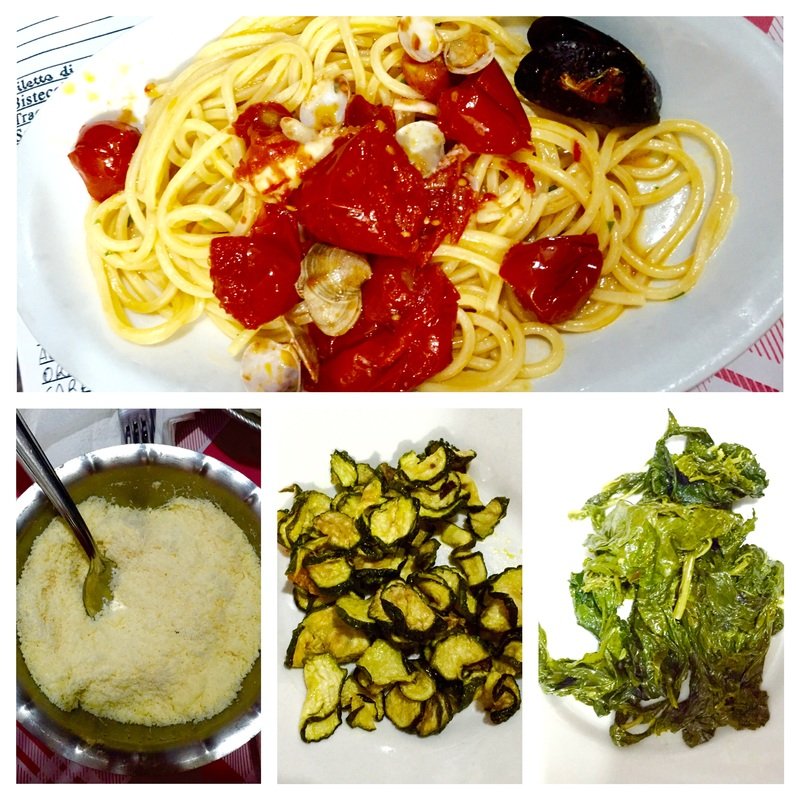
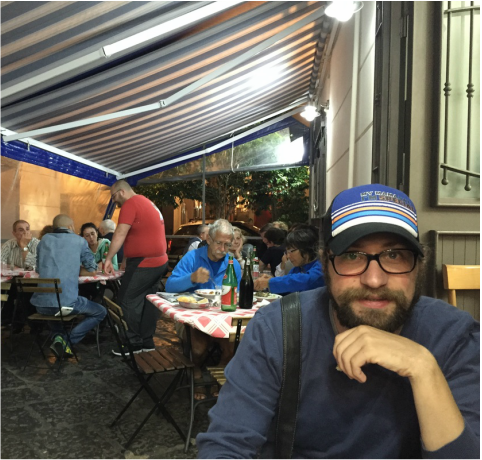
For a loud, theatrical taste of local dining, we went to Trattoria Nennella in the Spanish Quarter (Vico Lungo Teatro Nuovo, 103/104/105). There was already a queue around seven, so arriving by 6:30 helped. Our set menu cost €12 per person at the time. Waiters called across the room and fruit was handed out with the energy of a school canteen. Italian menus often move from a first course such as pasta to a meat or fish course and then a side dish. We tried seafood spaghetti, potatoes and pasta with provola, grilled steak, fried courgettes with mint and friarielli in padella, the classic Neapolitan sautéed greens. Nennella has moved and evolved since our visit, so verify its current address and menu.
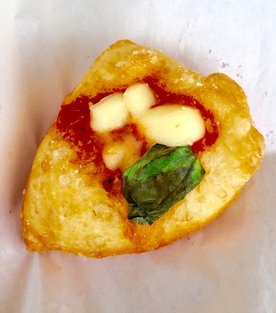
One of southern Italy’s famous fried pastries. | 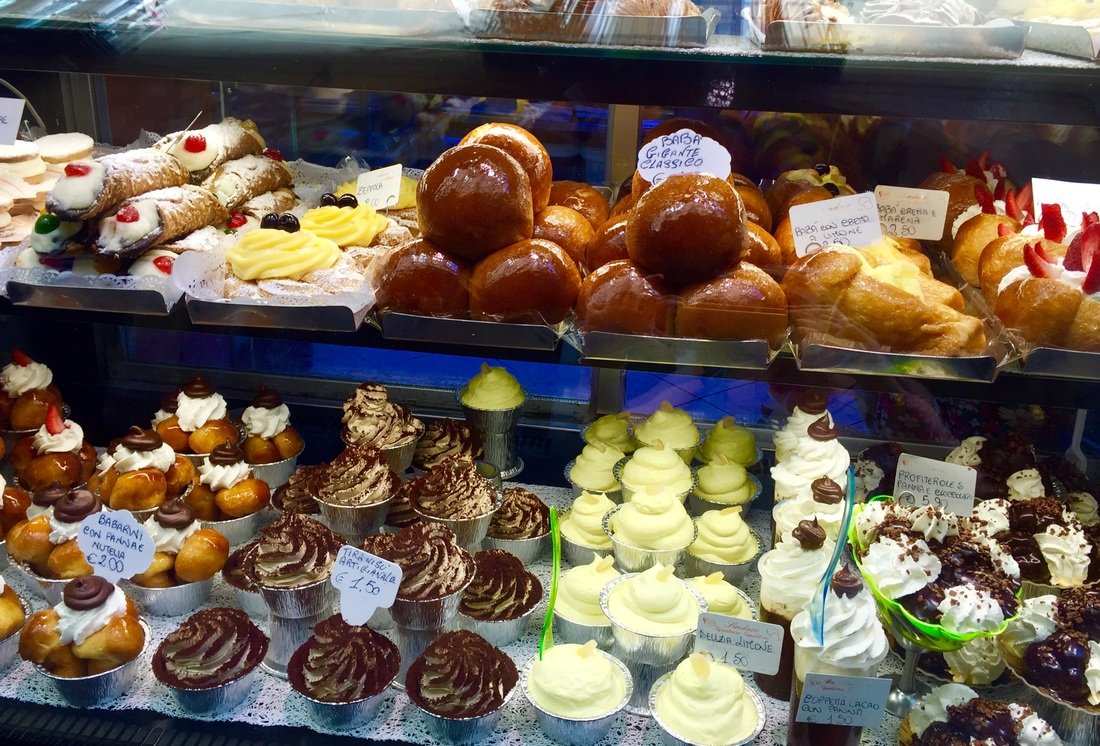
Naples seems to have a bakery on every corner =) |
Like Türkiye, Italy is full of neighbourhood bakeries. The pastries are particularly good. Naples’ sfogliatella is a crisp layered pastry filled with cream or ricotta and perfect beside coffee. For something savoury, we strongly recommend courgette focaccia.
WHERE TO STAY IN NAPLES
Hotels in Naples can be expensive. Older travel advice often warned against the cheapest properties immediately around Napoli Centrale because the area felt chaotic and less comfortable at night. Rather than labelling the whole district unsafe, choose accommodation by checking recent reviews, lighting and your walking route. We stayed farther into the centre at Hotel Europeo (Via Mezzocannone, 109/c), which suited our needs.
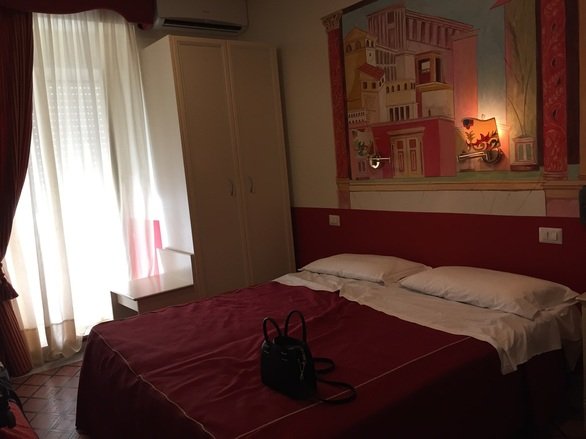
It was central, clean and affordable; the only frustration was reception staff who rarely acted on requests. We paid 125 TL—about €35 at the time—for two people and were given a four-person room. The hotel provided basic toiletries, a hair dryer, television and a simple safe. Its position opposite the university made the surroundings lively and full of inexpensive cafés. Treat that room rate purely as a historical snapshot.
WHAT TO BUY IN NAPLES
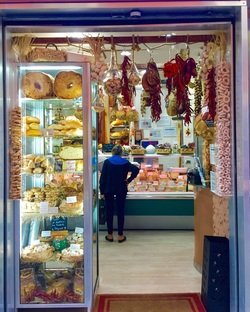
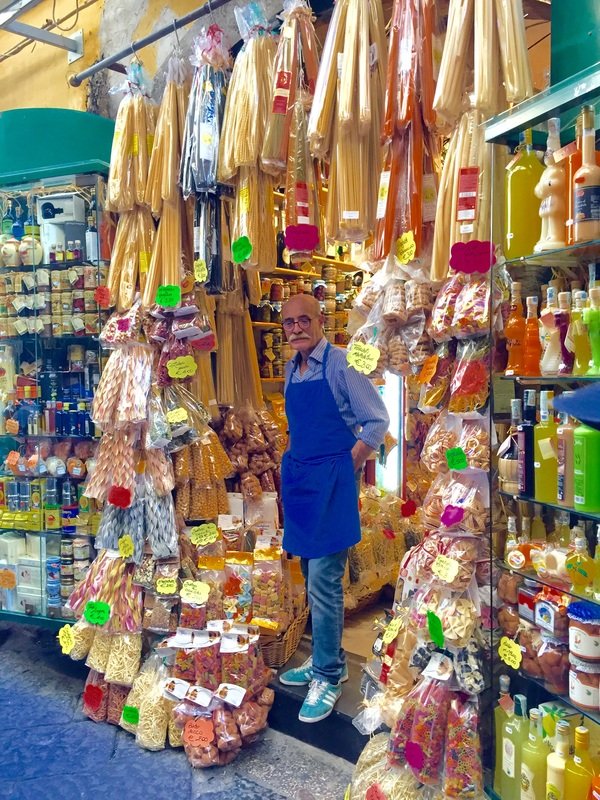
The souvenir magnets were irresistible: tiny pasta packets, cones and all sorts of miniature food. A neighbourhood supermarket is also a good place to buy fresh pasta, quality espresso and cured products that may cost more or be harder to find at home. Ask for anything perishable to be vacuum-packed and check customs rules for your destination. Limoncello, the region’s intensely lemony liqueur, is another classic choice.
HOW TO GET TO NAPLES
Naples has direct flights from many European cities, while trains and buses connect it with the rest of Italy. During our trip, a MarinoBus promotion took us from Bari to Naples in about three hours for €10 instead of the usual €22 at the time. Today, compare current rail and coach schedules for your exact date. Renting a car is possible, but central Naples has demanding traffic and limited parking, so public transport is usually simpler.
ISCHIA
Ischia is the sort of colourful Italian island that feels made for cinema. Its beaches are especially appealing in summer, although the swimming season was over when we visited. If you want a day trip from Naples, it is an excellent choice. The little painted houses made us feel as if we had walked onto a film set. Many films have used the island; we knew it from The Talented Mr Ripley, which made us love it even more.
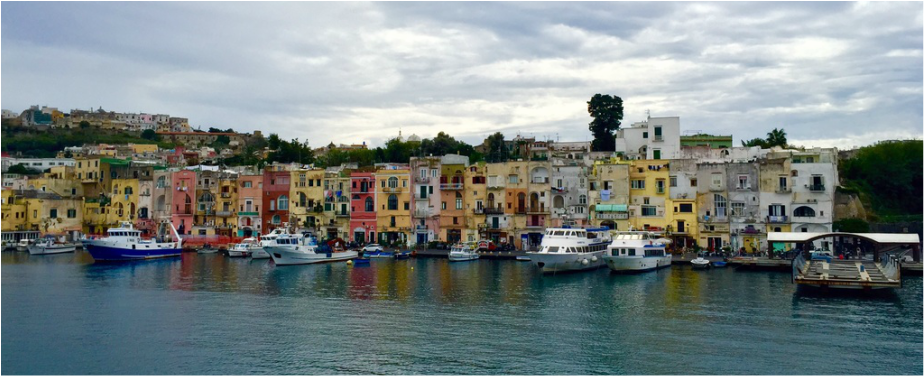
Colourful buildings greet you as the ferry approaches Ischia.
Ferries and hydrofoils leave from Naples for Ischia, with journey times varying from about 55 minutes to around two hours depending on the vessel and port. Check current sailings on Caremar’s official timetable and reconfirm close to departure because weather and operational changes can affect the service.
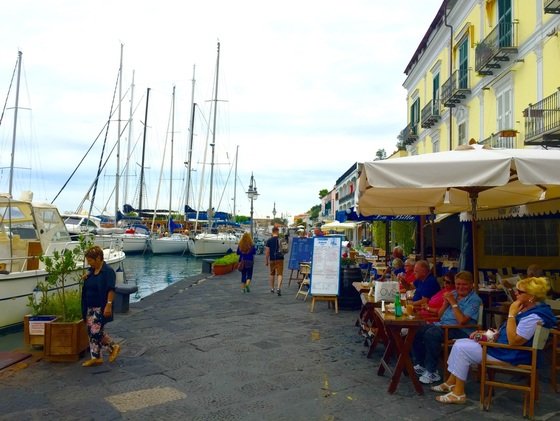
The island has many small villages, and although they share a family resemblance, each has its own character. Ischia Porto has a pleasant marina lined with restaurants, and seafood is one of the island’s strengths. Keep afternoon closing hours in mind. Local buses cover the island, but we chose to walk the roughly two kilometres to Ischia Ponte.
| 
|
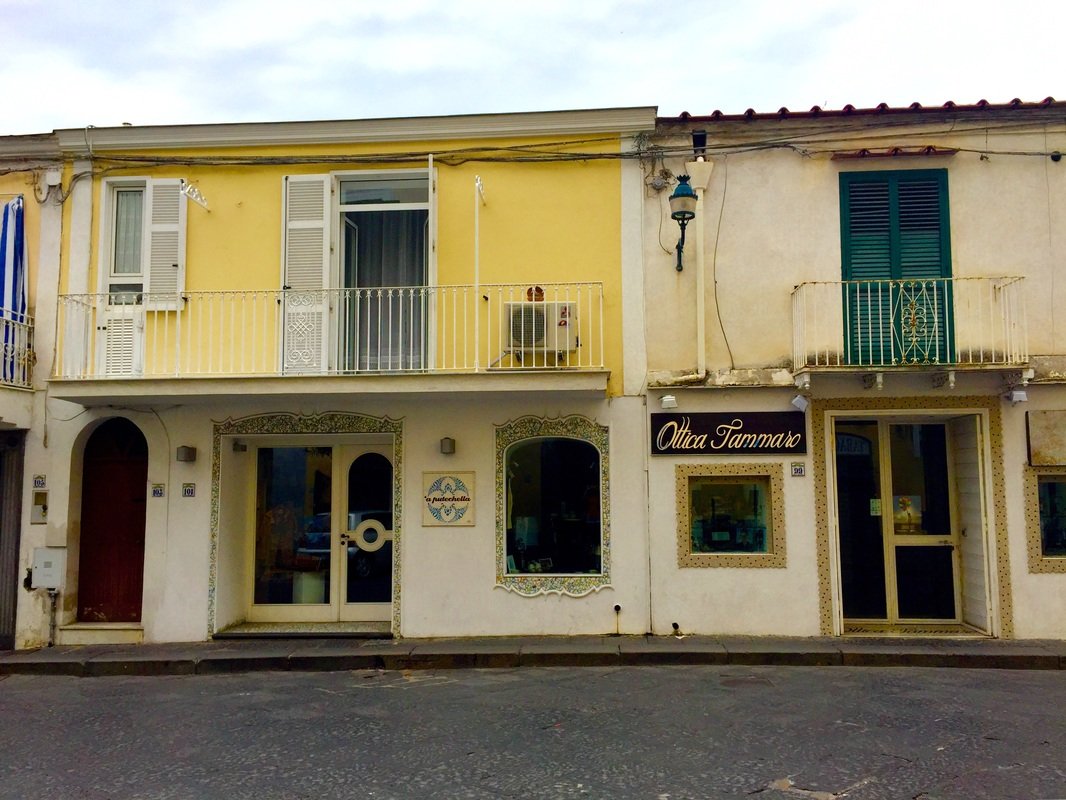
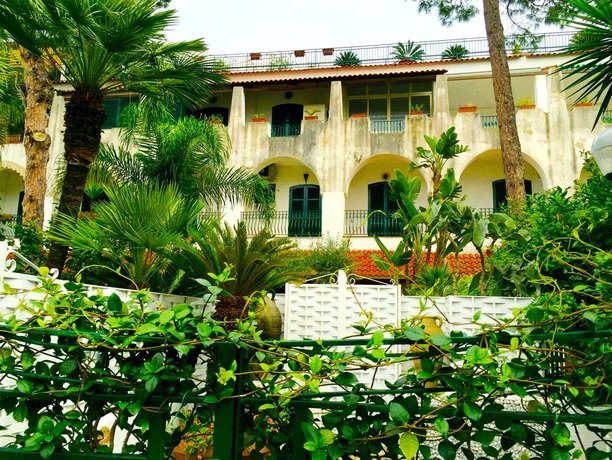
Along the way we passed green gardens and photogenic two- and three-storey houses. Ischia’s rich volcanic soil and mild climate support lush Mediterranean and subtropical plants. At the end of the walk, Castello Aragonese rose ahead of us.
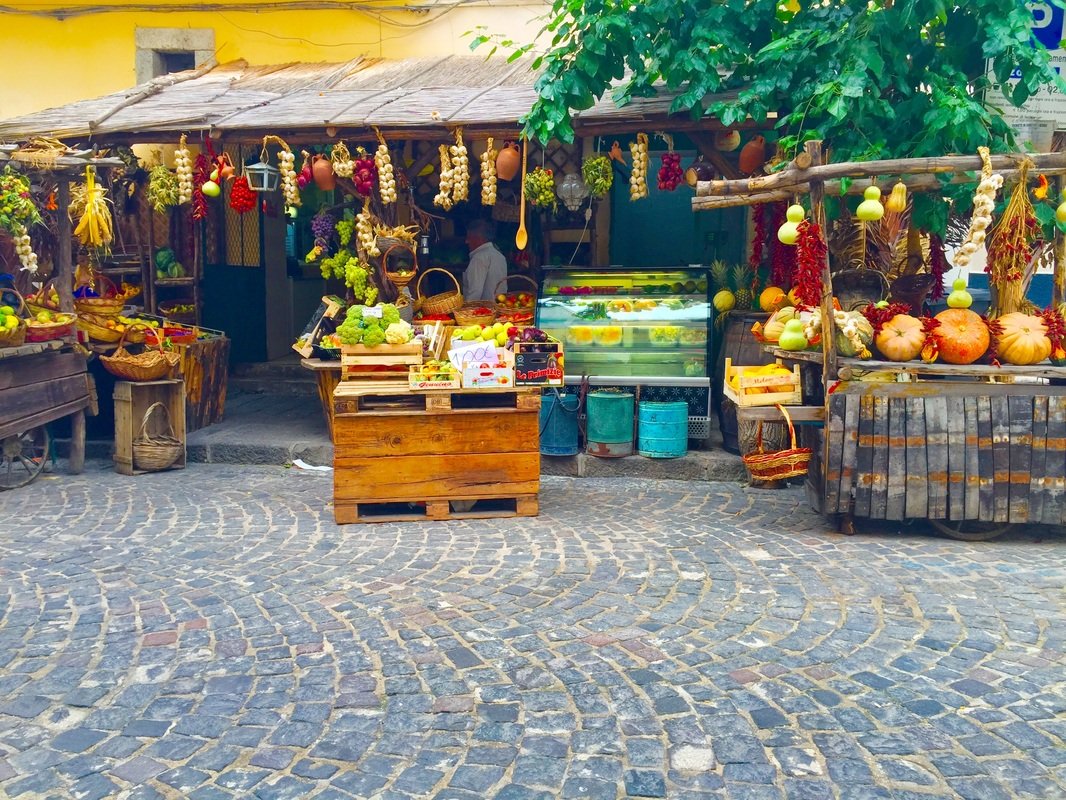
A greengrocer in Ischia Ponte. | 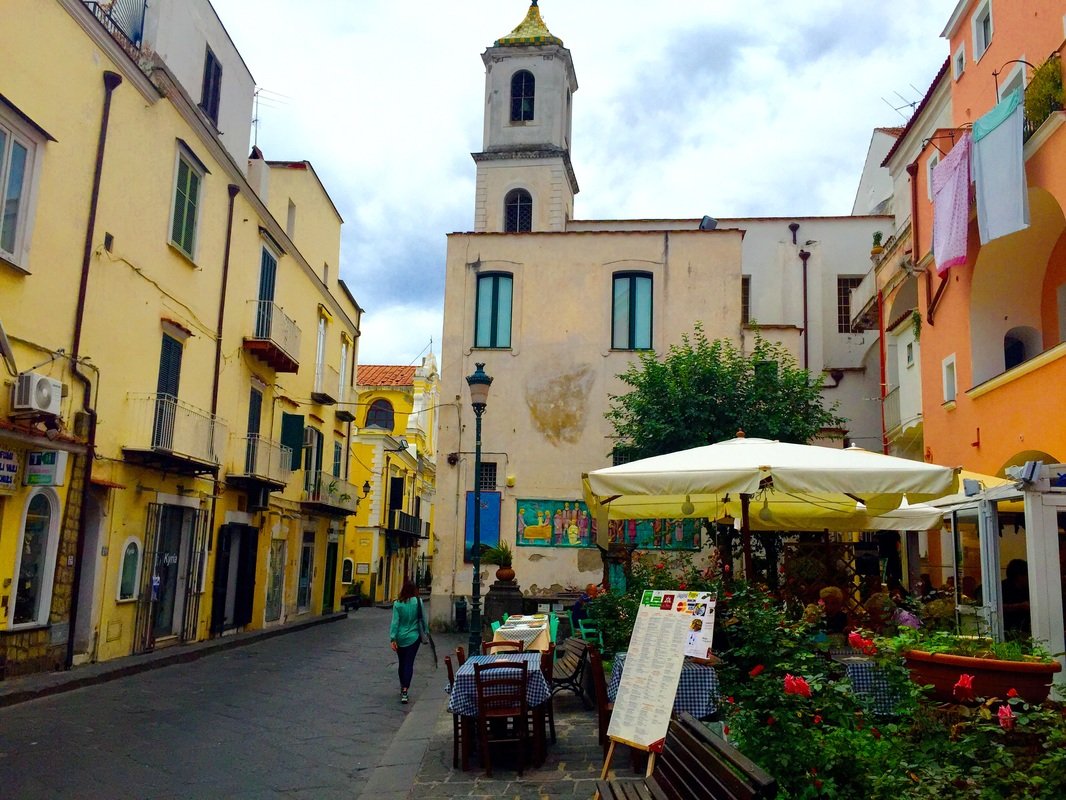
The square in Ischia Ponte. |
The castle stands on a rocky islet linked to Ischia by a causeway and looks as if it belongs in a fantasy series. Light rain made the view even more atmospheric. After taking photographs, we found a tiny café facing the castle and drank coffee while a cheerful local woman looked after us.
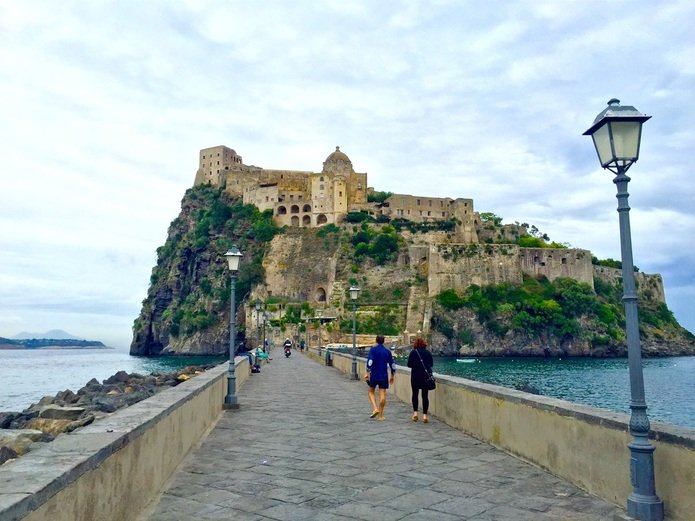
The dramatic Castello Aragonese. We were shocked to learn that parts of the complex have long been privately owned.
In the main square of Ischia Ponte, we searched for—and found—the house we recognised from The Talented Mr Ripley. The film shows the island in busy summer, while our weekday visit was wonderfully quiet.
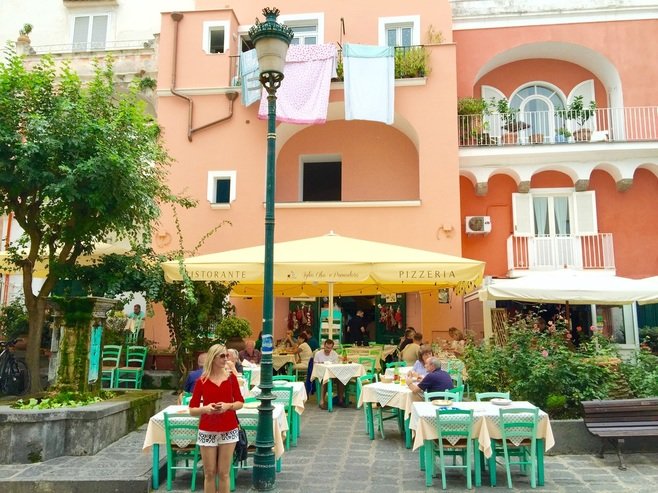
The house from The Talented Mr Ripley should be somewhere behind me.
Beyond swimming and eating, one of the best things to do on Ischia is visit a thermal spa. The island is famous for its hot springs, although spa prices can be high. We arrived without a detailed plan because it was too cold to swim, yet the island relaxed us completely. To return from Ischia Ponte to Ischia Porto we hitchhiked, and a friendly man from Palermo travelling with a woman from Florence gave us a lift. Their playful north-versus-south Italy debate entertained us all the way to the port.
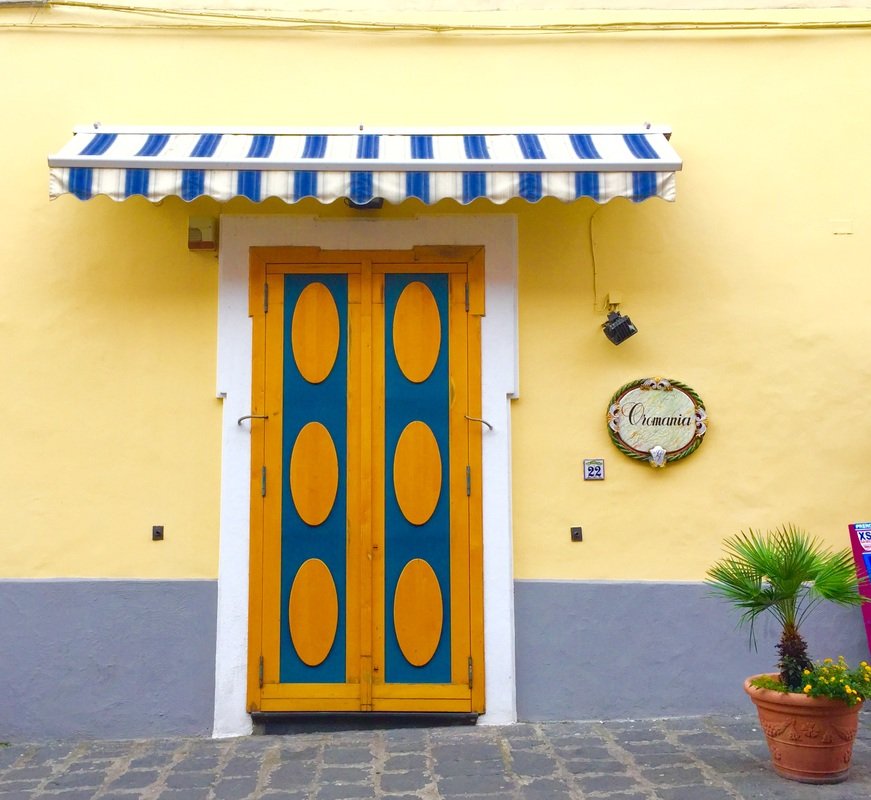
Ischia is full of colourful details like this. | 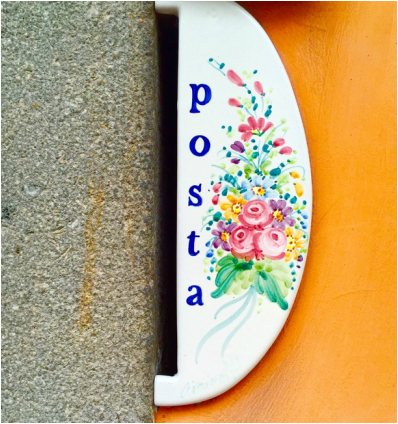
Even a simple postbox has character. |
If you have time while visiting Naples, we recommend coming to Ischia—especially in summer, when you can swim and make a full day of it. Contrary to the gloomy blog posts we had read, we loved Naples too. Yes, it was untidy and almost every car seemed scratched or dented, but somehow even the rough edges belonged to the city.
Our video from Naples offers a glimpse of everyday life. Enjoy!
If You Have Upcoming Travel Plans...
When you make a purchase by clicking our links, we get to earn a small commission but you still pay the same price. So, it's a win-win for everyone!

Book hotels via Booking.com | 
Find Cheap Flights via Skyscanner | 
Get a Travel Insurance via World Nomads | 
Make International Money Transfer via Wise |

Book Tours & Attractions via Getyourguide | 
Book a Cruise | 
Book Bus/Ferry/Train/Transfer via 12goAsia | 
Find free accommodation in exchange for petsitting |