THREE DESTINATIONS IN ONE: PENANG ISLAND
Your family's honorary Malaysian cultural ambassador is back on duty. This time we are writing about Penang, the pearl of Malaysia and number one in our hearts. It easily makes our personal top ten list of places where we could imagine settling, so you should definitely find room for this beautiful island in your Malaysia itinerary.
Practical update (August 2026): This story reflects our 2017–2018 visits. The trishaw, fort, bus, hotel and food prices below are historical. Penang Hill's official 2026 standard return fare for a non-Malaysian adult is RM40 (RM80 express), and the funicular operates 6:30 a.m.–11 p.m., subject to change. Direct passenger-ferry arrangements between Penang and Langkawi have changed since our trip, so do not rely on the old jetty description below; verify a current flight or sea-and-road connection before travelling. Copthorne Orchid Hotel closed in 2020 and the property has since been redeveloped, while several small cafés and hotels in this article could not be confidently verified under the same names.
Practical update (August 2026): This story reflects our 2017–2018 visits. The trishaw, fort, bus, hotel and food prices below are historical. Penang Hill's official 2026 standard return fare for a non-Malaysian adult is RM40 (RM80 express), and the funicular operates 6:30 a.m.–11 p.m., subject to change. Direct passenger-ferry arrangements between Penang and Langkawi have changed since our trip, so do not rely on the old jetty description below; verify a current flight or sea-and-road connection before travelling. Copthorne Orchid Hotel closed in 2020 and the property has since been redeveloped, while several small cafés and hotels in this article could not be confidently verified under the same names.
| 
|
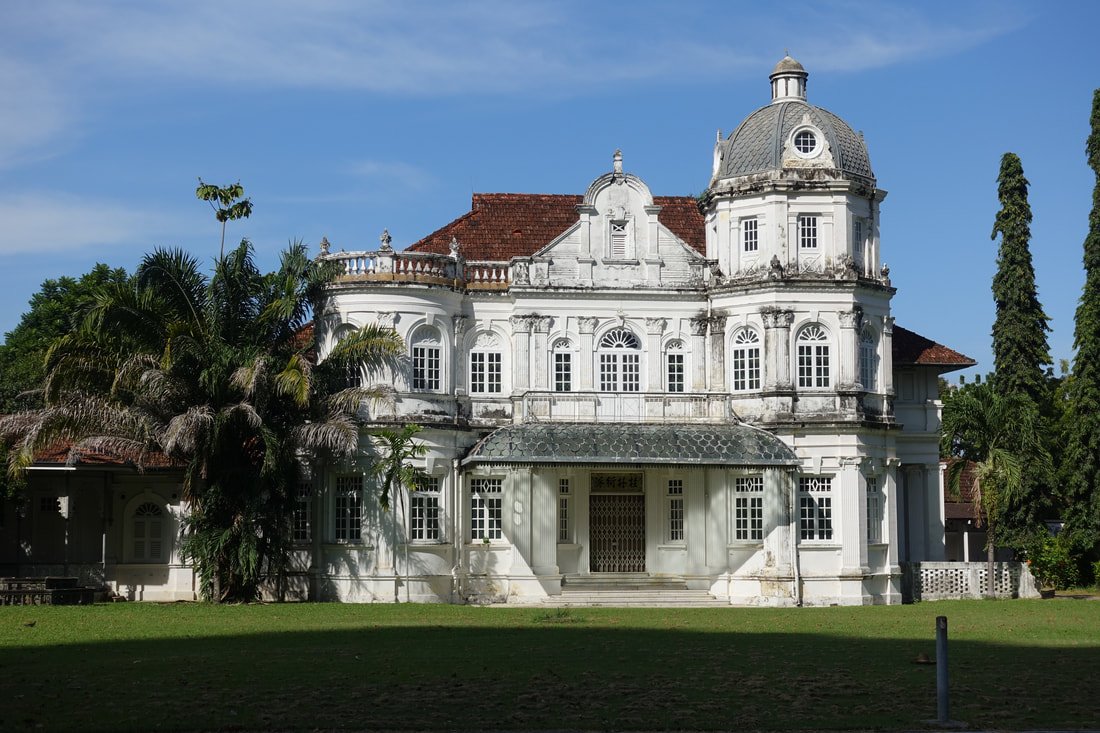
Arriving in Penang can feel like reaching three different destinations at once. Its character and variety offer a historic centre, a cosmopolitan modern city and a tropical-island experience. Penang is a true three-for-one deal.

| 
|
PLACES TO VISIT IN PENANG
GEORGE TOWN
This is the capital of Penang State and the island's defining attraction. George Town was established as a British trading settlement by Captain Francis Light in 1786 and named after King George III. As the port grew, Chinese, Indian and many other communities arrived, gradually urbanising the island. George Town and Melaka were jointly inscribed on UNESCO's World Heritage List in 2008, after which tourism accelerated. The most characteristic buildings are the long, narrow shophouses—commercial space below and living quarters above—associated particularly with Chinese communities. Some remain weathered, while tourism income has restored many as cafés and hotels. If you can withstand the heat and explore the backstreets, you will also see how these buildings remain part of everyday life.
| 
|
GEORGE TOWN STREET ART
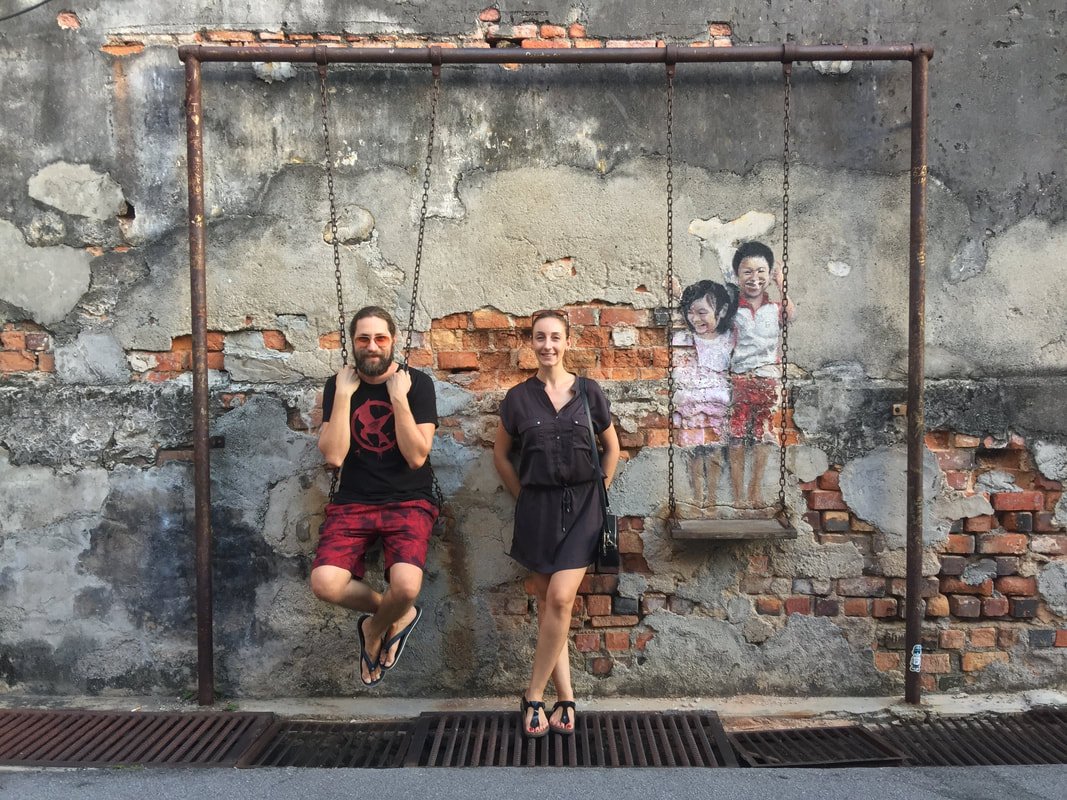
The murals everyone recognises from Instagram were commissioned from street artists for the outer walls of these historic buildings, and they played exactly the hoped-for role in developing tourism. As a tourism professional, I can tell you that this example alone could support an entire thesis—keep it in mind if you need a topic :) Many of the first murals appeared around Armenian Street, and later other artists spread work across the city. As you wander, you will encounter beautiful street art everywhere. You can walk around the central murals in roughly an hour, but the local ritual is to tour them in a trishaw. If the experience matters more than efficiency—as it did to us—give one a try. Prices depend on the day's crowds. On this trip we bargained a one-hour tour down from RM50 to RM30 after a tough negotiation; on our previous visit we had paid RM25 more easily. Those are old prices. We recommend the cheerful, childlike feeling of riding in that front seat for an hour. (Crossing the main road near the Clan Jetties scared us, but otherwise it felt safe.)
CLAN JETTIES
The Clan Jetties are a fascinating waterside settlement that still remains home to several Chinese clan communities. There is no perfect English equivalent beyond their established name. The village stands on wooden jetties and supports a substantial population. It may resemble other stilt or floating villages in Southeast Asia, but its place within George Town's UNESCO-listed heritage area has made it especially popular. A narrow, long walkway leads toward the sea; the jetty generally open to visitors is Chew Jetty. Residents may seem impatient, but it is understandable when you remember that tourists are walking through their home. At the far end, looking back, you sense the difficult conditions of life here. There must also be advantages—historically including particular tax arrangements—because families remain. Your trishaw driver may bring you here, knowing that a visit takes at least half an hour and shortens driving time while they wait at the entrance :) You could ask to skip it and visit somewhere else. During our trip, buses 307 and 401E passed nearby, but routes can change; check Rapid Penang's current journey information.

| 
|

| 
|
FORT CORNWALLIS AND QUEEN VICTORIA MEMORIAL CLOCK TOWER
Fort Cornwallis and the clock tower stood opposite the jetty we used for ferries to Langkawi and Payar, so we left them until the last day before our Langkawi trip. We arrived early, checked in for the ferry and walked toward the fort. About 20 metres from the entrance, a mother and daughter leaving offered us their wristband tickets. We put them on carefully and walked straight in. At our pace, looking around and taking a few photographs took about ten minutes, after which we sat in the café. The entry fee was RM20 during our visit. We might have been annoyed at paying it because there was little inside, but since the tickets were free, we spent that money on cendol shakes while waiting for our ferry. The fee and ferry details are historical; verify both independently today.
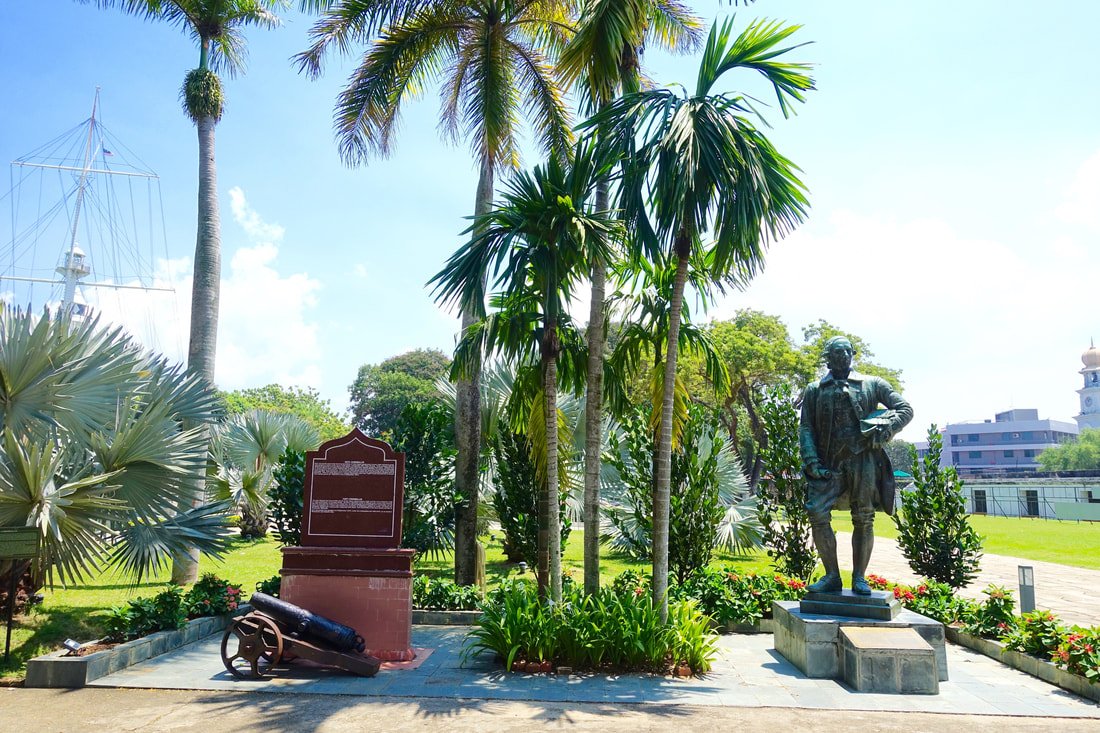
There are several cannons and guns inside the fort | 
Mr Cornwallis and I had a short discussion about dislocated wrists |
If you do not want to enter the fort, Penang City Hall—with its wonderful architecture—is only about 500 metres away. Although visitors could enter the building during our trip, we preferred to buy fruit from a nearby vendor and spend time in the lush park opposite and along the waterfront where street sellers gathered. The weather was so beautiful that we hardly wanted to leave, but as you know, sightseeing is serious business. We moved on before lingering too long.

We adore colonial buildings
PENANG HILL
Welcome to a tourist trap :D Penang Hill is a historic hill resort reached by funicular railway. The line is historic, though the cars are unfortunately modern. (At Victoria Peak in Hong Kong, even the vehicles felt historic.) The panorama at the top—especially at sunset, with the city lights below—is worth seeing. There are many attractions, though apart from the live music, several felt designed mainly for visitors aged eight to twelve.
Why did we call it a tourist trap? During our trip, the return fare was RM8 for Malaysians and RM30 for us. Food and drinks above were both less tasty and more expensive than below. Perhaps because it was a weekend, the return queue lasted about two hours, and express tickets were unavailable by then. If you visit on a weekend or Malaysian public holiday, consider skipping it; on a weekday, we would still go. In 2026 the official standard adult return fare is RM40 for non-Malaysians (RM80 express), with service normally running from 6:30 a.m. to 11 p.m.; check the official page for changes.
Why did we call it a tourist trap? During our trip, the return fare was RM8 for Malaysians and RM30 for us. Food and drinks above were both less tasty and more expensive than below. Perhaps because it was a weekend, the return queue lasted about two hours, and express tickets were unavailable by then. If you visit on a weekend or Malaysian public holiday, consider skipping it; on a weekday, we would still go. In 2026 the official standard adult return fare is RM40 for non-Malaysians (RM80 express), with service normally running from 6:30 a.m. to 11 p.m.; check the official page for changes.


| 

|
GURNEY DRIVE
This wonderful green waterfront avenue lies near the heart of the island, with towers on one side and the sea on the other. It felt both among Penang's most European-looking and most expensive districts. The shops beneath the towers and the cars at the entrances could make you think you were in Miami rather than Penang. If the crowds and disorder of the historic centre tire you, Gurney Drive promises good food, coffee and somewhere cool. We did not miss it, and neither should you. We especially liked Gurney Paragon and Gurney Plaza, and we describe the restaurants at the start of the waterfront in the food section below. The shoreline has since been substantially transformed by the Gurney Bay project, so expect it to look different from our photographs.

| 
|
BATU FERRINGHI
This is the tropical face of the island. During our visit, a municipal bus from Komtar in George Town cost RM2—exact change required—and reached it in around half an hour. When you are absorbed in Penang's streets and buildings, it is easy to forget you are on an island. At Batu Ferringhi, the tropical setting hits you all at once. It is not quite Redang, but its broad beach and clear water are still very attractive. That is why many of the island's luxury hotels line this coast. Cafés and restaurants around the beach serve inexpensive local snacks. Plan to watch the sunset and then browse the night market, traditionally set up along the roadside. Pasar malam literally means “night market”; it is a place to buy local products and taste regional food. The RM2 bus fare belongs to our trip.

| 
|
STRAITS QUAY MARINA
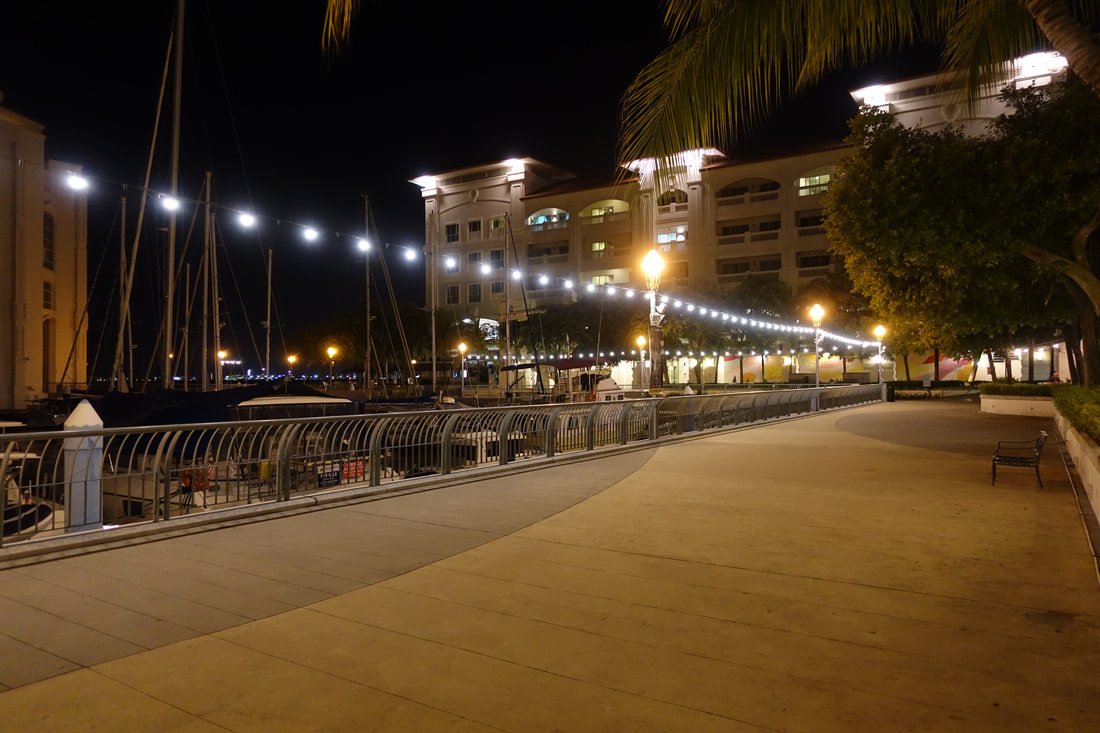
As the name tells you, this is a marina :) In keeping with Malaysian habits, it has also become a shopping complex, but rows of yachts, a pleasant promenade and a different view give it charm. If you have a gap in your programme, it can fill it nicely. We particularly liked the Beverly Hills-style mansions along the road.
| 
|
WHAT TO EAT IN PENANG
Penang is widely considered a food paradise, and after eating our way around the island, we agree. One of its essential dishes is Char Kway Teow , wok-fried flat rice noodles. Seafood is the most common version, though some stalls also use pork. Another celebrated Penang dish is Assam Laksa, but its sharp aroma stopped us from making a proper acquaintance; perhaps you will manage it :) Then there is Penang Nasi Kandar, loosely “Penang rice”, although the real pleasure lies in the dishes served beside it. Nasi kandar generally combines rice with chicken and curry gravies; on this island, accompaniments may also include fried fish, prawns or squid. Penang also has oh chien, an unforgettable oyster omelette. If you enjoy trying new things, do not leave without tasting some of these.
STREET FOOD AND FOOD TRUCKS
Penang is extraordinarily rich in food trucks, hawkers and street food. Such vendors are central to Asian food culture and appear in many cities across the region, but people widely agree that Penang excels. Some stalls are so popular that their locations appear in the local ride-hailing app Grab. Well-known areas have included New Lane Hawker Street near Komtar, at the Gurney end of town and in Batu Ferringhi. Long Beach Food CourtOur next stop, Gurney Beach Food Gallery, was another example during our trip. Hawker-centre names and locations evolve, especially around the redeveloped Gurney waterfront, so verify the current venue.
UNCLE BURGER
This burger seller had served from the same cart for 37 years and was a genuine local legend—so much so that residents simply called him Uncle Burger. Like Türkiye's beloved kokoreç or chicken-and-rice vendors, the cart attracted long lines of cars and opened only in the evening, then roughly 7 p.m. to midnight. There was a rumour it closed on Mondays and Tuesdays. Burgers cost RM7–10 when we went. We tried and approved; now it is your turn—if you can verify it is still trading at the same location. (Jalan Sungai Kelan)
GURNEY BEACH FOOD GALLERY
This was a food court at the far end of Gurney Drive with dozens of stalls. You chose food from any vendor and ate at shared tables. Beyond the famous dishes above, there were many mostly local options. If you managed to claim a waterfront table, even better. Alcoholic drinks were available and prices were reasonable. We may have eaten one of the best sweets of both our Malaysian travels and our lives here. Its performance exceeded expectations by roughly 500 percent, but perhaps the shock made our heads spin: we took no photograph, forgot the name and could not find it online. It became a personal myth. All we remembered was that it resembled a tahini-flavoured flour biscuit and came from a Muslim Malay family. We promised to learn its name if we returned.
Update: We found the name! Kacang Tumbuk! If you buy a packaged version from a supermarket and dislike it, please do not blame us :) We ate ours freshly made.
Update: We found the name! Kacang Tumbuk! If you buy a packaged version from a supermarket and dislike it, please do not blame us :) We ate ours freshly made.

| 
|
GURNEY PARAGON AND GURNEY PLAZA
If cleanliness is essential and you also want Western-style dishes, these two neighbouring malls on Gurney Drive offer plenty of choice. Many Malaysian café and restaurant chains have branches here, and the malls are useful places to rest even when you are not eating.


| 
|
PENANG HILL
If you ignored our warning and came up anyway, at least enjoy it :) We found a few places that suited us, but the view and live music drew us to the café-bar section of David Brown's. We each had a burger; the food was average, but the view and music were lovely. The same business also had a more formal restaurant set farther back, which we did not choose.
BORA BORA BY SUNSET
A wonderful café on the sand at Batu Ferringhi, where you could watch the sunset through the palms. We found it by chance and still remember the octopus, squid and noodles. It was a memorable stop on our trip, but check its current operating status before adding it to your plans.

| 
|
LOLLIPOP ROPITIAM
A quirky café beside our hotel, serving local food with a slightly European approach. Whenever it opened—the hours were rather mysterious—it had a queue. Our hotel served no breakfast and the famous Toh Soon Kopitiam on our street always had a terrifying line, so we ate here. If you are staying in central George Town and need breakfast, it was a good option during our visit. Its present status is unclear. (118 Lebuh Campbell)

| 
|
KOPITAN CLASSIC
Lebuh Pantai is a beautiful street lined with colonial and historic buildings, and your trishaw route will probably cross it. Kopitan Classic offered a clean, quick alternative among local cafés, useful both for breakfast and a light lunch. With branches elsewhere in the city, it was also a welcome place to cool down in the midday heat. Check for current branches before going.
LAGENDA CAFE
This charming restaurant occupied the whole ground floor of our hotel. Dedicated to P. Ramlee, one of Malaysia's most important entertainers, it served local dishes alongside wonderful Malaysian music from the 1960s. From the films we have seen, 1960s Malaysia looked remarkably like the world of Türkiye's old Belgin Doruk movies—the faces and even the songs seemed familiar. (43 Lebuh Campbell)


| 

|
BAA BAA BLACK SHEEP
This small café stood directly opposite Copthorne Orchid Hotel, where we stayed on our first visit. It looked unremarkable outside but was sweetly decorated within, with good coffee and desserts. Worth a stop if you are nearby and can confirm the branch is still open. (8A, Tanjung Bungah)

| 
|
CHINA HOUSE - KOPI C
China House is a beautiful complex containing several cafés and restaurants and doubling as a concert or event venue in the evenings—one of George Town's hip places. We sat at Kopi C and lost ourselves in homemade cakes and excellent coffee. You might encounter an open-air jazz concert or a Chinese New Year celebration, but it is an oasis either way. Admittedly, after George Town's heat, any air-conditioned room feels like an oasis; if it also serves music and coffee, why not? (153 Lebuh Pantai)

| 
|
WHERE TO STAY IN PENANG
At the time of writing, we had visited Penang twice :) On one trip we stayed in George Town and on the other in Tanjung Bungah. George Town's heritage hotels often occupy historic Chinese shophouses, giving them more style and charm than many hotels elsewhere on the island. Penang is large, and accommodation ranges from luxury properties to budget hostels.
COPTHORNE ORCHID HOTEL
On our first Penang trip, we stayed in Tanjung Bungah at the Copthorne Orchid Hotel. It had a private beach and sat on what we thought of as the island's tropical side. For the service, cleanliness, spacious rooms and magnificent view, the price felt excellent. Penang functions like a sizeable city and public transport reached much of the island, so the location was not a problem. The sea view and small pool won our hearts; when our mothers later visited, we booked the same hotel for them. Copthorne Orchid closed in 2020, so this paragraph is retained only as a record of our stay; do not attempt to book it under that old name.

The tiny beach reached directly from the hotel...
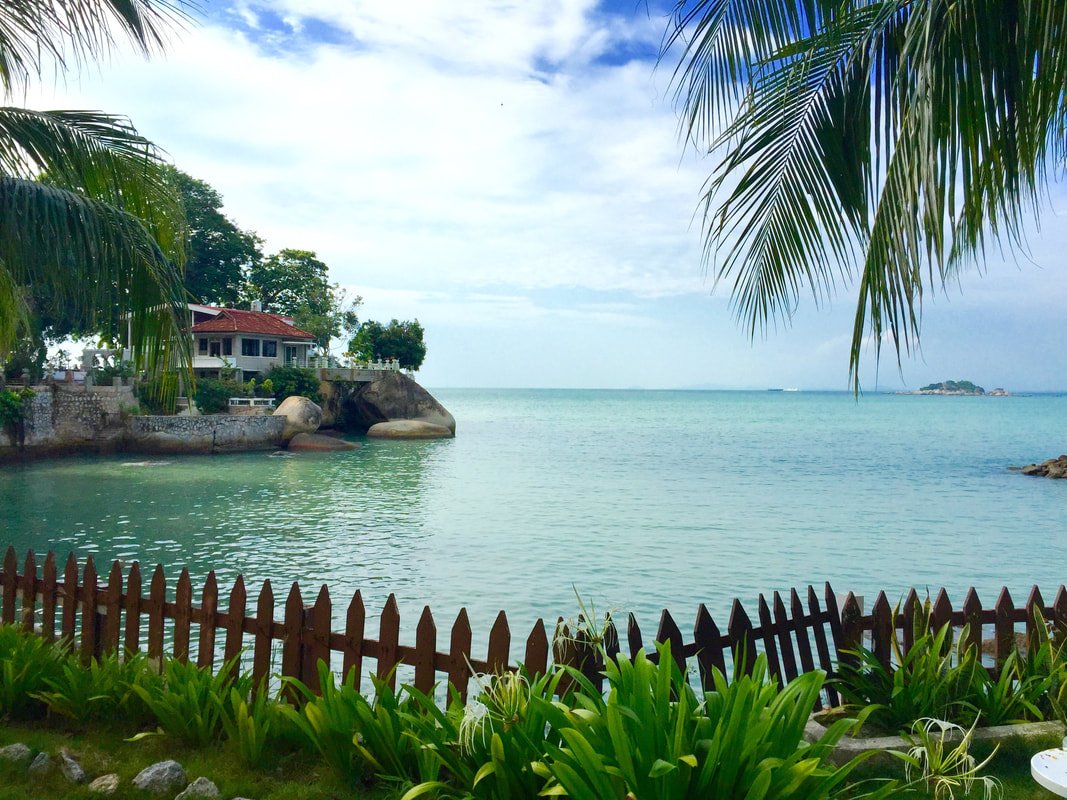
The neighbouring house we could not stop admiring | 
The only photo we have of the room :D We were beginners back then... |
SHANGHAI 1910 HERITAGE HOTEL
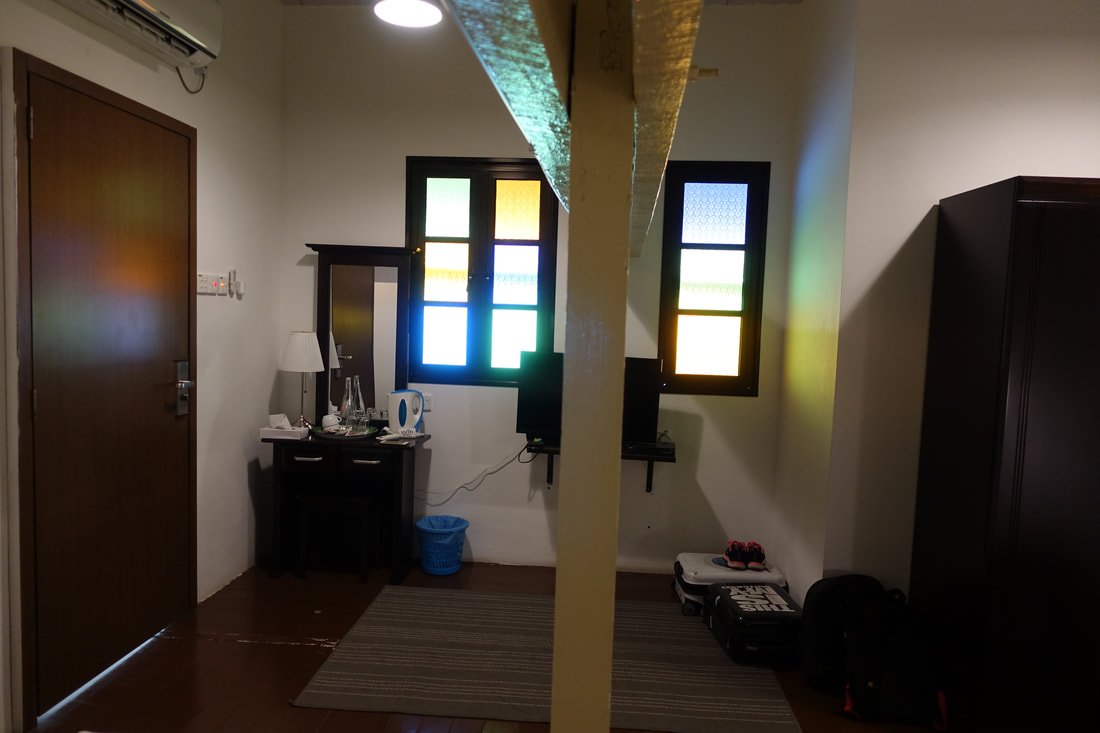
On our second visit, Shanghai 1910 Heritage Hotel's location put almost everything in George Town within walking distance. In Malaysia's heat, being able to walk to the sights makes a hotel especially practical. The immediate area became a little quiet at night, but streets where tourists gathered for drinks and conversation were only about 200 metres away. We could not confidently verify the same property under the same name in 2026, so check the current address, operator and recent reviews before booking.


| 
|
Just before arriving in Penang, we believe I became ill after being bitten in Langkawi. One of Malaysia's most important mosquito-borne illnesses caught up with us; if you want to protect yourself, read our article about dengue fever.
6 May 2018
If You Have Upcoming Travel Plans...
When you make a purchase by clicking our links, we get to earn a small commission but you still pay the same price. So, it's a win-win for everyone!

Book hotels via Booking.com | 
Find Cheap Flights via Skyscanner | 
Get a Travel Insurance via World Nomads | 
Make International Money Transfer via Wise |

Book Tours & Attractions via Getyourguide | 
Book a Cruise | 
Book Bus/Ferry/Train/Transfer via 12goAsia | 
Find free accommodation in exchange for petsitting |