PULAU BESAR
One of the best things about living in Kuala Lumpur is having dreamlike tropical islands within reach after a four- or five-hour journey overland followed by a ferry ride. Of all the tropical islands we have visited in Asia and Africa, the ones in Malaysia are still among our favourites. The islands along Malaysia’s east coast have truly wonderful beaches and turquoise water, and the hotels and service are both good and genuinely warm and friendly. What sets them apart from Thailand, the Philippines, and Indonesia, in our view, is how unspoiled they still feel. They are peaceful, and the party scene and sex tourism found in some other destinations have not taken over. With forest behind you, crystal-clear water and white sand ahead, and perhaps a few groups of Chinese holidaymakers around, you can have a wonderfully relaxed escape in nature.
| 
|
Malaysia’s tropical islands lie off the east coast of the mainland and can generally be visited between February and October. March to September is usually the best time to explore them: the monsoon rains have ended and the water has cleared from murky to crystal clear. From October to February, many of the islands close for the monsoon season — they literally shut the island down.

| 
|
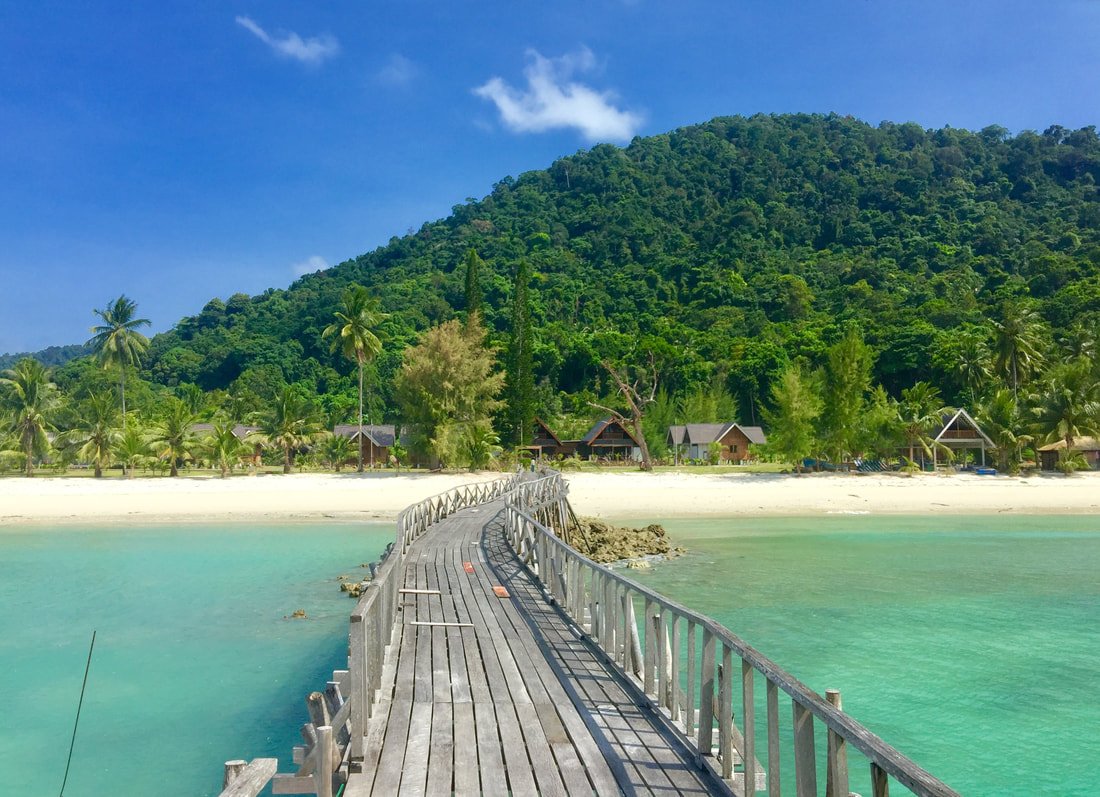
Pulau Besar is an island 15 kilometres off the east coast of Johor, near the town of Mersing. Its former name was Pulau Babi Besar, or “big wild-boar island,” but don’t worry: there are no wild boars on the island. Around 100 people live here, spread across seven or eight villages. We visited on 14 February at the invitation of the newly opened Bayu Lestari Resort, and Pulau Besar may well have been one of the most peaceful island holidays we have ever had.

| 
|
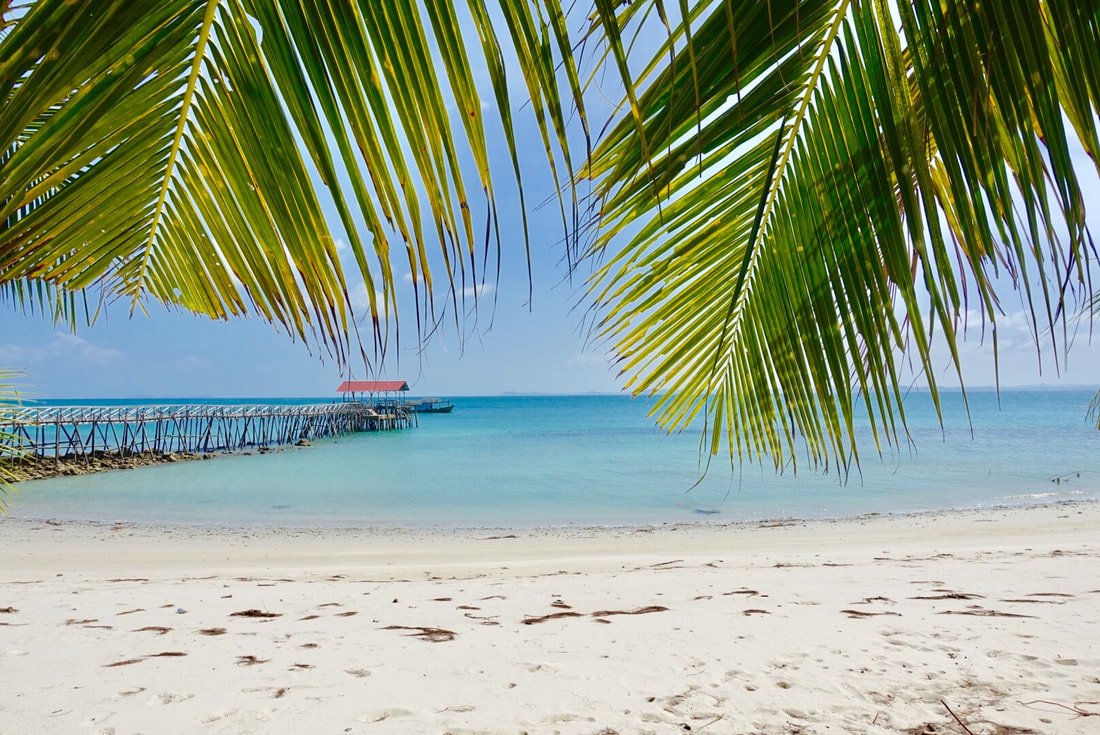
The fact that the season had not properly begun yet, and that there were only three or four other tourists on the island, certainly helped. There are no motor vehicles or even asphalt roads here. We spent three wonderfully peaceful days with a brilliant white, palm-lined beach in front of us, forest covering the mountain behind us, and the sound of waves all around.

If you can tear your eyes away from the deep-blue sea, lush green mountains rise behind you. | 
Bayu Lestari Resort’s private jetty. |
WHAT IS THERE TO DO IN PULAU BESAR?
The answer is: nothing =) For the three days we spent on the island, our routine was breakfast, tea, coffee, cycling, a walk on the beach, a shower, an episode or two of a TV series, and lights out. Because we travelled a little outside the season, we could not take a tour to the other islands and did not swim very much. Perhaps that is why we will return one day — who knows?

| 
|
Even if we had visited in high season, we probably would not have done anything beyond swimming. Pulau Besar has a beach only about 1.5 kilometres long, and it is sandy from end to end. With trees and palms along the shore, you can find a shady spot and enjoy the sea. There are rocks at both ends that can make for interesting snorkelling, but watch the tides: the depth changes throughout the day, and you could get caught on something and hurt yourself.

You could spend a lifetime on this swing. | 
This is the end of the beach. It was wonderful despite the sand flies. |
Across much of Asia, you can join a four- or five-hour island-hopping boat trip for a reasonable fee. From Pulau Besar, these trips can take you to four nearby islands: Pulau Rawa, Pulau Tengah, Pulau Tinggi, and Pulau Sibu. It is a great way to see them, since some are uninhabited while others have just one resort and are difficult to visit unless you are staying there. The Bayu Lestari Resort where we stayed arranged island-hopping trips, although the sea was still rough during our visit.

We had the beach entirely to ourselves. | 
Even in this season, the water was remarkably clear. |
The island’s only proper road is a 1.5-kilometre concrete path running parallel to the beach. You can walk along it or, as we did, borrow bicycles from your hotel and enjoy a lovely late afternoon ride. The concrete path passes the island’s other three hotels and ends at the far end of the beach. The two wooden houses at the end occupied our dreams for a while — and they were even for rent =).

There are no motor vehicles on this 1.5-kilometre road, making it ideal for cycling. | 
Some sections of the road are made up of wooden bridges. |

This is the island’s only road. | 
The house for rent that became part of our dreams. |

The end of the cycling path.
Finally, if you enjoy trekking, you can hike through the forest. Be sure to ask your hotel for a guide, though, because the route is not particularly easy and you may encounter some tropical insects. If you let your hotel know that you are taking this route, once you cross over the mountain to the far side of the island, they can collect you by boat so that you do not have to walk all the way back; they will bring you around to the side where your hotel is located.

When the tide is high, you can also go kayaking. | 
But our preference is always the hammock =) |
WHAT TO EAT IN PULAU BESAR?
Since there are no restaurants on Besar Island apart from those at the resorts, you have to eat what is available rather than what you might be hoping for. The hotels know this and generally sell all-inclusive packages. If you prefer, you can also order from the menus at the resort restaurants. Malay cuisine is heavy on protein, so you will usually find fish and chicken dishes, although you may not love all the sauces. For that reason, you might want to pick up a few snacks from the supermarkets in Mersing before crossing to the island.

| 

|
WHERE TO STAY IN PULAU BESAR?
There are only four resorts on the island. Pulau Besar hotel prices are a little high compared with Malaysia in general, but they are not outrageous. The Bayu Lestari Resort where we stayed is the newest and most affordable option. All rooms have air conditioning and are quite spacious, and there are accommodation options for larger families. The other resorts are Aseania Resort, d’Coconut Island Resort, and Mirage Island Resort. There are no tall concrete buildings on the island; all the rooms are wooden bungalows, which suits this lush, peaceful place perfectly. We hope it stays that way.

| 
|
HOW TO GET TO PULAU BESAR?
As far as we know, all ferries to Besar Island leave from Mersing, and they are private boats operated by the resorts on the island. When you book one of these resorts, the Pulau Besar ferry is included in the price and normally departs at a time determined by sea conditions. We took Bayu Lestari Resort’s own boat from Mersing to Pulau Besar at 10 a.m.; the journey took about 30 minutes. Our serious advice is not to visit these islands before March, when the sea may still be rough enough to make for a frightening boat ride. That was certainly our experience: when we stepped off the boat, which had been leaping over the waves, we were soaked through. Luckily neither of us gets seasick. Unfortunately, the Malay uncle sitting beside me was not so lucky.

| 
|
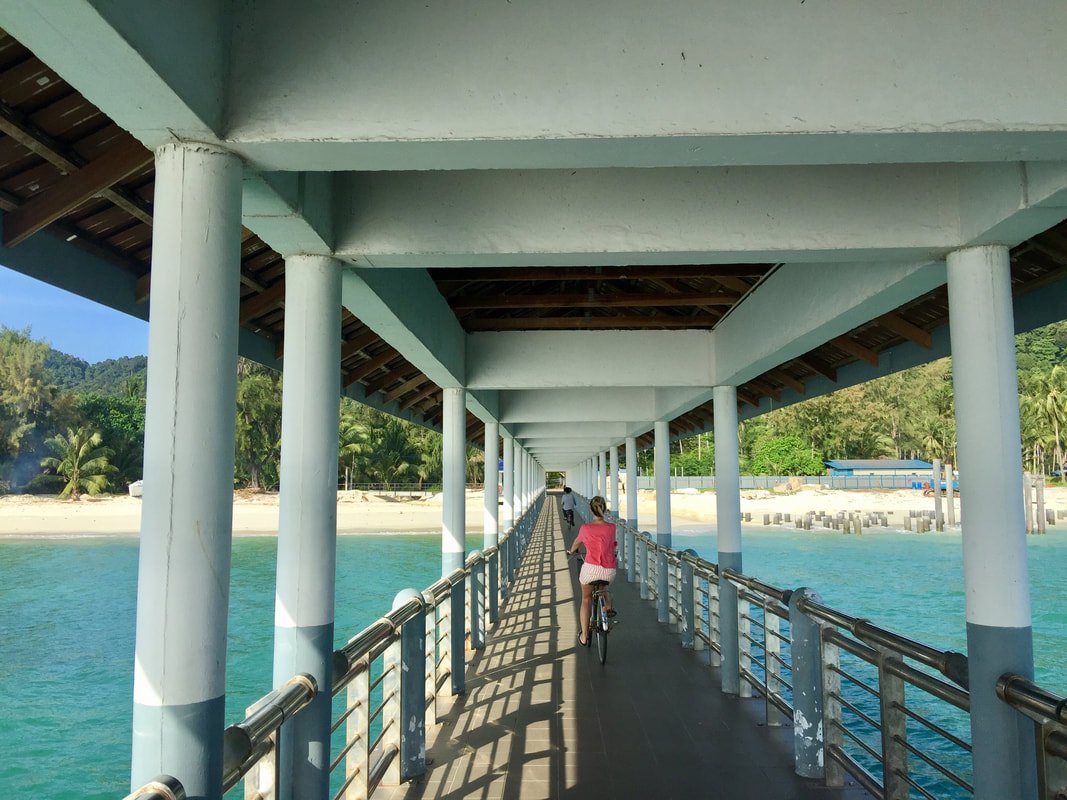
If you are wondering how to get from Kuala Lumpur to Mersing, the bus is your only option. Kuala Lumpur–Mersing bus fares were around TL 60 when we travelled, and the journey took five hours with one stop. That fare and schedule are historical, not current; check the operator before booking. We recommend travelling during the day so you can enjoy the lush scenery. After getting off the bus, Mersing Jetty is a 10-minute walk away. Sometimes the ferry and bus schedules do not line up, so you may need to spend a night in Mersing. There is not much to do or many places to eat in town; most visitors are simply passing through on their way to Tioman Island.

| 
|
VALENTINE’S DAY IN PULAU BESAR
That is how we ended up spending 14 February 2018 on Pulau Besar. You can be sure that Besar Island is a wonderful choice for a romantic tropical holiday. When we visited, there was not even an open shop on the island, so Gökay got creative: instead of flowers, he picked me some coconuts and brought them back in the bicycle basket =)


|
09.03.2018
Practical update (August 2026): This post describes our February 2018 visit. Ferry times, seasonal closures, sea conditions, and resort availability can change, so confirm the current details directly with your resort before travelling.
If You Have Upcoming Travel Plans...
When you make a purchase by clicking our links, we get to earn a small commission but you still pay the same price. So, it's a win-win for everyone!

Book hotels via Booking.com | 
Find Cheap Flights via Skyscanner | 
Get a Travel Insurance via World Nomads | 
Make International Money Transfer via Wise |

Book Tours & Attractions via Getyourguide | 
Book a Cruise | 
Book Bus/Ferry/Train/Transfer via 12goAsia | 
Find free accommodation in exchange for petsitting |