THESSALONIKI
Because of the city’s special place in Türkiye’s recent history, almost everyone in our country has heard the name Thessaloniki—perhaps even more often than the names of some Turkish cities. I knew Thessaloniki before I knew there was a place called Bilecik; I was in my first year of primary school. I knew it was in Greece, although I did not yet know where Greece was. We covered that later in a lesson about our neighbours, so that was another mystery solved. Even then, I knew Thessaloniki only through the photograph of that pink house, and I desperately wanted to see it. We finally used the Philoxenia Tourism Fair as an excuse: after two days at the fair, we allowed another two days to explore this beautiful city.
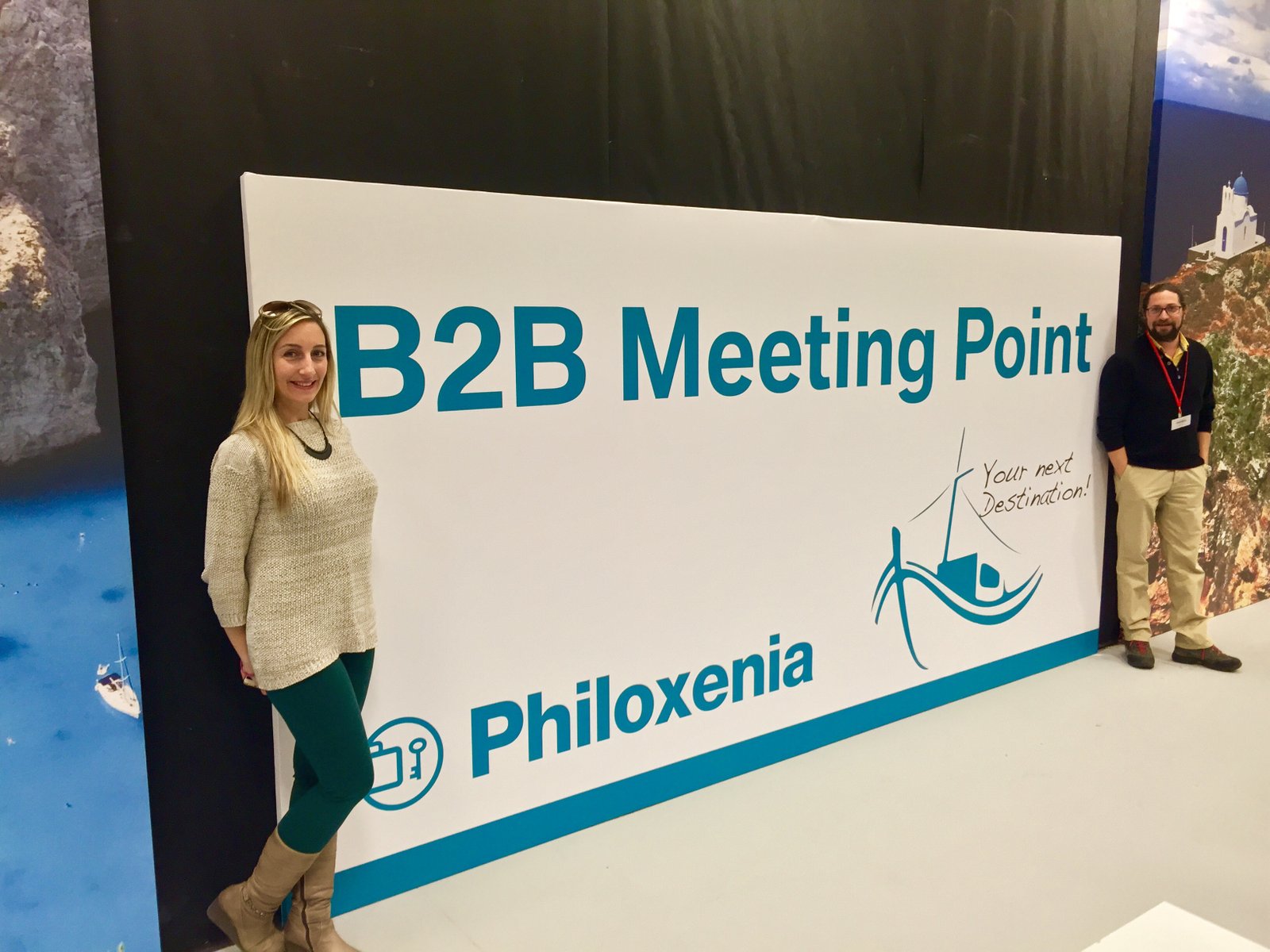
Philoxenia 2016 | 
Work in progress... |
THINGS TO DO IN THESSALONIKI
ATATÜRK’S HOUSE
We landed, checked into our hotel and, without even pausing for breath, went straight to Atatürk’s House. Blogs had led me to expect more of a home and less of a museum. After renovation, however, the interior felt more like a coolly lit exhibition—as if this were one of the many houses where Atatürk had once stayed rather than the place where he was born. Even so, I felt the energy of the birthplace of a man whose achievements as a commander, speaker, mathematician and patron of the arts I deeply admire. Beside the Turkish Consulate, the museum was free to enter during our visit. It is not enormous and includes displays relating to Atatürk and Zübeyde Hanım, along with wax figures and personal objects. A picture-matching game downstairs even entertained visiting children. If the visit tires you and the weather is fine, you can rest beneath the garden trees or buy Turkish tea and Atatürk House souvenirs from businesses opposite. Security procedures, opening hours and admission arrangements may change, so check the Turkish Consulate’s current visitor information before going.

That famous pink house...

The main entrance to Atatürk’s House | 
Writing that had already been on the wall for almost 85 years when we visited |

THE MAN | 
THE MOTHER |
THE WATERFRONT
Thessaloniki and İzmir feel so alike that almost everyone who knows İzmir mentions the resemblance. The city’s long waterfront, lined with cafés and restaurants, seems to live around the clock. Unlike many Greek islands and small towns, there is activity throughout the day, even on Sundays. Many important sights also sit along this route, but in Tuğçe’s words, Thessaloniki is a city that lives Greece with the energy of Paris.

| 
|
THE WHITE TOWER
Step onto the waterfront and look left: the White Tower is almost impossible to miss. The present tower was built during the Ottoman period. Its surrounding walls have disappeared, and it is not especially white, yet its position beside the sea is beautiful. It first served a defensive role and was later used as a prison. Because executions took place there, it became known as the Bloody Tower. A popular story says a prisoner whitewashed it in exchange for freedom, giving the monument its modern name, but this is a legend rather than settled historical fact. Today the tower houses an exhibition about Thessaloniki; check current museum hours and tickets before visiting.

CRUISE BOATS AND SHORT BOAT TOURS
The boats moored opposite the White Tower make short trips parallel to the waterfront. They had themes such as pirate or reggae. Boarding was advertised as free, but passengers had to buy a drink costing about €3 per person—essentially a complimentary cruise with your coffee. This price and the operating model describe our 2016 visit; inspect the signs and ask about the minimum purchase before boarding today. Only two boats were operating because we visited in low season; we were told that more appeared in summer. We chose the reggae-themed boat. The gentle music and friendly crew made it very enjoyable. One crew member had visited Mersin twice and had lost count of his trips to İzmir. Better still, he supported Beşiktaş :) No one forces you to disembark if you want to stay longer. It worked much like an ordinary café: as long as you kept ordering drinks, you could apparently remain aboard for another circuit. With warm sunshine adding to the pleasure, we spent about 45 minutes taking photographs and video. We were exhausted, so it was perfect :)

The pirate boat | 
The reggae boat |

They were not so different from ordinary cafés.
ALEXANDER THE GREAT STATUE AND OTE TOWER
A little beyond the White Tower stands an enormous equestrian statue of Alexander the Great, whom many Greeks regard as an ancestral national figure. Young people sit and skateboard around it, and the monument is visible from much of the waterfront. Farther along rises the OTE Tower, originally built for telecommunications and now known for its revolving café-bar. It remains one of the city skyline’s most recognisable features; check current café access before visiting.
MODIANO MARKET
Immediately inland from Aristotelous Square stands Modiano Market, Thessaloniki’s historic covered food market. When we visited, it still resembled a traditional European market where many flavours familiar to people from the Aegean could be found. It later closed in 2016 and reopened after restoration in 2022 as a contemporary food hall combining shops, prepared food and events. It is therefore no longer exactly the market described in our original story, but the listed building remains worth visiting.

| 
|
ARISTOTELOUS SQUARE
This vast pedestrian square is framed by buildings in an architectural style unusual in Greek cities. After the Great Fire of 1917, the authorities commissioned French architect Ernest Hébrard to redesign central Thessaloniki and provide the city with a monumental public square. The composition is often described as drawing on Byzantine influences, although it reminded us of Morocco. With shops, cafés and public events, it may become one of the places where you spend the most time. Dozens of restaurants and shops line the two long sides of the square. Walking towards the water brings you to its semicircular seafront opening. We were told that a different event happened here almost every weekend. Then again, feeding the pigeons is practically an event in itself, isn’t it? :)
ELECTRA PALACE HOTEL
Electra Palace occupies a commanding position at the seafront end of Aristotelous Square. Better still, you do not need to stay there to enjoy the view: the rooftop restaurant and bar welcome outside guests, subject to current opening arrangements. Prices matched the grandeur of the panorama during our visit, but it was a memorable stop.
The top floor of the building on the left

This was the view...
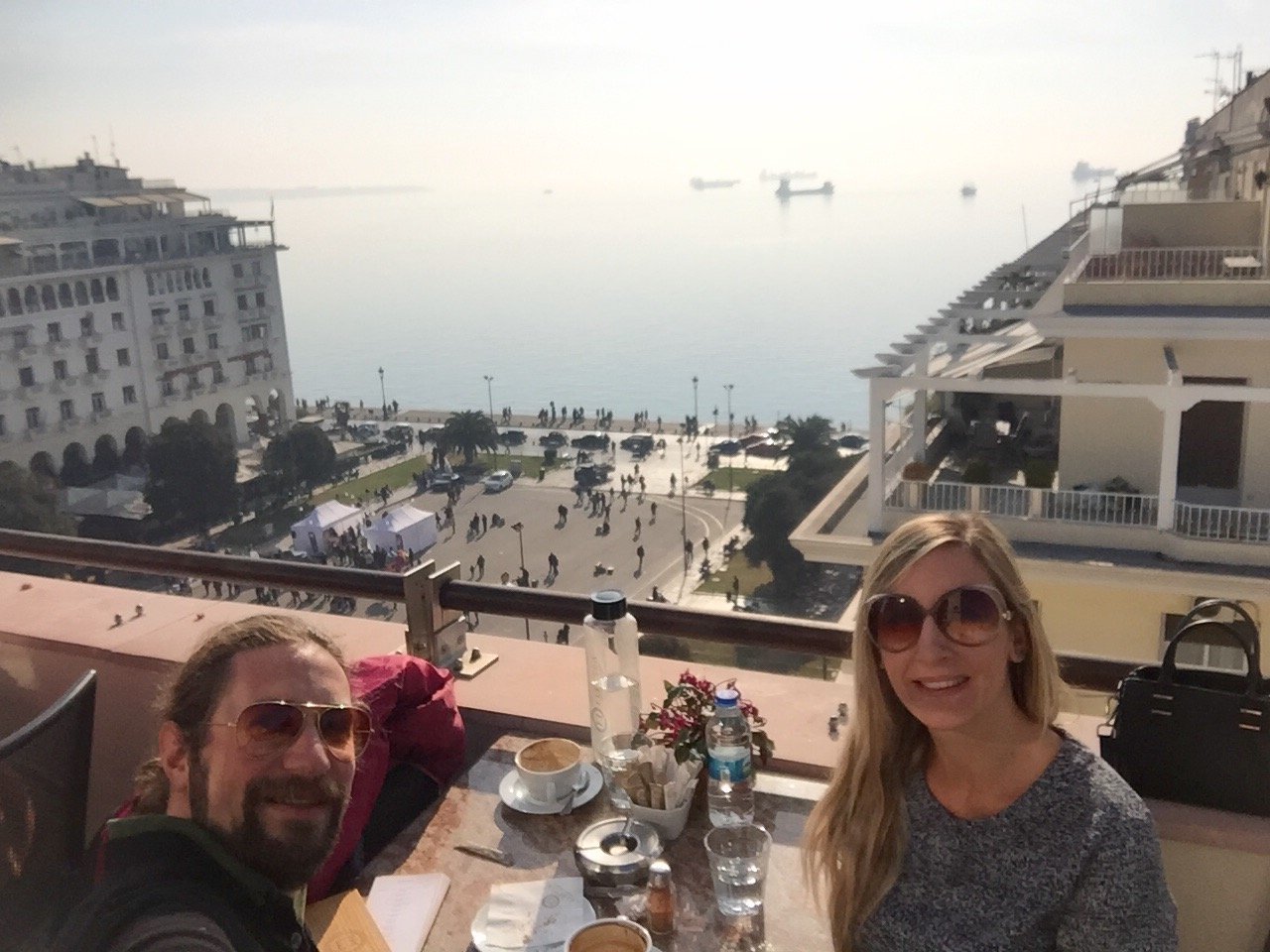
And this was us :)
KAMARA: THE ARCH OF GALERIUS
Walk inland from the White Tower for roughly a kilometre and the arch appears among the city streets. Standing between apartment blocks with a major road passing beneath it, Kamara may feel familiar to visitors from ancient cities such as İzmir or Istanbul, though the surprise on the faces of travellers from Canada or the United States was easy to read. What is truly remarkable is that the reliefs have survived for around 1,700 years despite modern traffic pollution. They clearly did not have the phrase ‘cheap workmanship’ back then—where are the arches of yesteryear? :)

THE ROTUNDA
Beside the Arch of Galerius stands the Rotunda, built in the early fourth century. It later served as a Christian church, was converted into a mosque after the Ottoman conquest and became a church again after Thessaloniki joined Greece. It is now a protected monument and occasional cultural venue—not the Museum of Macedonia described in the old text. Admission cost €1 during our visit, but that price is historical. We happened to arrive during Open House, an annual event in which volunteers introduce architecturally important buildings in many European cities. There was no English-language group, so we explored independently rather than wait at least half an hour. Architecture enthusiasts should check whether Open House is taking place during their trip.

| 
|
OTTOMAN HERITAGE
Thessaloniki contains many surviving buildings from almost five centuries of Ottoman rule, including markets, bathhouses and former mosques. During our 2016 visit, the Bedesten and the Pazar Hamam were under restoration. Hamza Bey Mosque had also been closed amid metro construction. Thessaloniki Metro finally opened in November 2024, so references to the ‘unfinished metro’ are no longer current, and the status of individual monuments may have changed. Check official cultural listings before visiting rather than relying on our old closures. We also found one of the city’s early Ottoman bathhouses in the park around the Roman Forum, but it too was closed, so we photographed it from outside.

The Ottoman bathhouse in the park | 
A statue of former prime minister Eleftherios Venizelos in the same park |
LADADIKA
Ladadika takes its name from the olive-oil businesses that once occupied the district. Turkish tour groups often reduce it to bouzouki and ouzo, but the neighbourhood offers far more varied nightlife. One venue might host lindy hop while another plays hard rock or heavy metal. The city’s enormous student population contributes to that diversity. Ladadika is worth visiting for food and almost every kind of evening entertainment.

TSIMISKI STREET
Running parallel to Nikis Avenue—the seafront road I insist on calling the Kordon—Tsimiski crosses the centre and is one of Thessaloniki’s main shopping streets. It is not primarily known for ancient monuments, but several notable modern buildings stand nearby. Open House queues had formed outside places we had never seen mentioned in our sources, so they had not made it into our plan. Travellers with a special interest in architecture should research the event programme in advance.

ANO POLI
Ano Poli means Upper Town, so naturally it lies at the top of a steep climb. Choose a clear day if you want the promised view; fog hid everything from us. With its walls, old houses and tavernas, Ano Poli feels as though it still belongs to another century and sits far beyond the modern city. The Heptapyrgion fortress—often called Yedikule in Turkish—is one of its major sights. It served as a prison for much of the period after the 1890s. Conservation work and access arrangements can change, so check current visitor information.

| 
Good morning from a foggy Thessaloniki |

WHAT TO EAT IN THESSALONIKI
Just as every Turkish city has its own cuisine, Thessaloniki’s food differs from that of many Greek islands and towns. Seafood and meze remain prominent, but influences from İzmir, Istanbul and the Balkans make the city’s cooking especially rich. Some dishes largely forgotten in Türkiye still appear under Turkish-derived names. Koulouri is a slimmer, smaller cousin of the sesame ring we know as simit, while bakeries sell pastries reminiscent of börek. Baklava needs little introduction—although after our Samos adventure, we had sworn off eating baklava in Greece; perhaps you will be braver :) When a restaurant promised us an extraordinary green vegetable we had never tried, we did not expect it to be the plant Turks call eşek helvası. Thessaloniki also has distinctive meze such as cured fish, more like heavily seasoned lakerda than Turkish pastırma. Our favourite new discovery was bouyourdi, a hot dish of feta, sweet pepper, olive oil and spices. We loved it, and you should try it too.
Another taste we have never forgotten was trigona, triangular sheets of crisp pastry filled with custard when you order. We had not eaten such a light, delicious dessert in years. It is sold elsewhere too, but we tried it at Trigona Elenidis, often credited with popularising it, at15 Sofouli Themistokli. If you go, think of us—and we would not refuse a box :)

| 
|
For a quick meal or good coffee during the day, we used the local Todaylicious chain, then known to us as Today’s Delicious Store. We liked the hot dogs, coffee, speed and value. Branches and branding change, so check the present locations.

| 
|
On our first evening we ate at a tiny taverna called To Tarti. That was where we tasted cured fish, our first bouyourdi and the mysterious greens. The little place did not even play recorded music, let alone host musicians, yet the food was excellent. We waited out the 17 November demonstrations there before returning to the hotel.

We may be experienced, but we decided not to interfere in somebody else’s political dispute | 
The meze |
On our second and third nights, the tourism fair invited us to dinners at two hotels. The first was The Met Hotel where the buffet was not exactly traditional Greek food, but it was generous and almost everything was excellent—the absence of seating was our only complaint. Slow-cooked beef and beef sushi were the stars of the evening. With stylish décor, the hotel could also be considered for accommodation. The bar and restaurant prices we saw in 2016 should not be treated as current.
Our third-night dinner was held in the Mediterranean Palace hotel’s top-floor Zeus Hall. Expecting something like the previous evening, we were startled by a blue room lit with blue LEDs and cocktail tables glowing red. We could not understand why such a beautifully designed hotel had made the hall look like a high-school prom from an American film. We escaped to the magnificent balcony overlooking the Thermaic Gulf and claimed a table with a view. The food was excellent again, though far from local: hot appetisers, prawns, meatballs and skewers turned the evening into an extended snack. The lobby’s aristocratic appearance continued into the rooms, making the hotel an interesting place to stay.
|
Decorate the lobby this beautifully... 
|
...and the ballroom like this. Interesting :)
|
We ate our final dinner at Full tou Meze in Ladadika, a restaurant popular with Turkish visitors. Meze was the speciality. We ordered more of the bouyourdi we had come to love, Macedonian fried vegetables and ‘yogurtlu kebab’—that spelling genuinely appeared on the menu. Dishes cost €4–7 during our 2016 visit; check today’s prices and reservation requirements.


| 

|
WHERE TO STAY IN THESSALONIKI
During the fair we stayed at Les Lazaristes , some distance from the centre. The service, room and breakfast were excellent, and the nightly rate represented good value at the time. Positioning itself around art, the hotel displayed works throughout the lobby and corridors. The photographs in our room related to Geyikler ve Lanetler, a play by Murathan Mungan that had also been staged in Thessaloniki. I do not know how many people study the art in their hotel room, but I always do :) Taxis felt inexpensive during our visit. One driver even picked up another passenger heading in the same direction without asking us and still charged us the full meter fare—an experience, not a rule to rely on today. Use licensed taxis or an established app and confirm the fare system.

| 
|
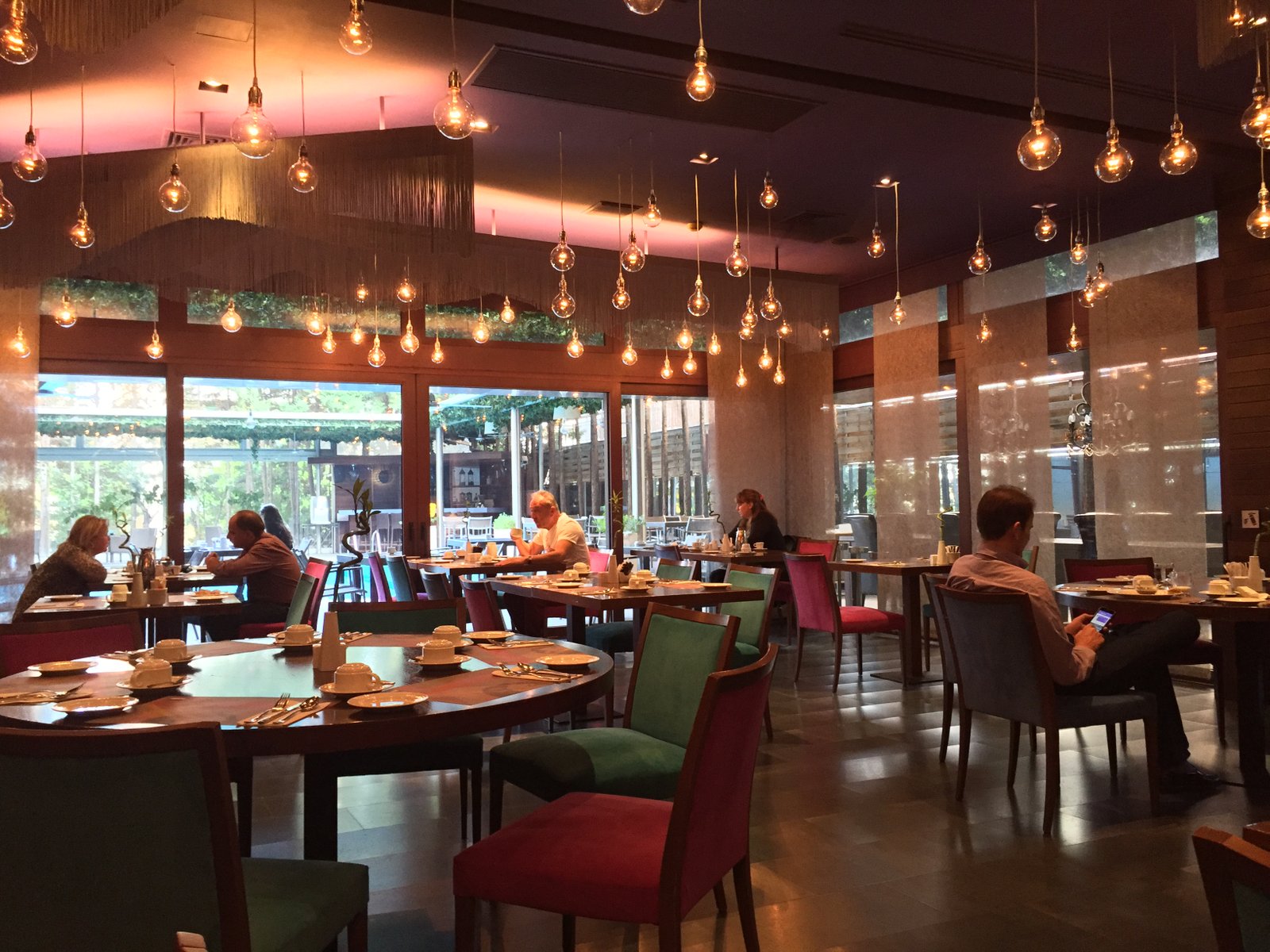
After the fair, we moved to the Pella Hotel, in the centre and only around 600 metres from the waterfront. We expected little from this simple budget hotel, but the room was spotless and the staff friendly. We left at 06:30 the following morning for the airport. With its central position, it was an efficient option among Thessaloniki hotels and worth checking in recent reviews before booking.

We had an enormous balcony—and a ‘magnificent’ Thessaloniki view behind us :)
WHAT TO BUY IN THESSALONIKI
Although many dishes resemble Turkish food, cheeses, vinegars and other ingredients often taste different. We recommend visiting a supermarket and comparing feta and halloumi with imported Italian and French cheeses, which—despite being priced in euros —were still cheaper than at home during our trip. Half a litre of balsamic vinegar cost only €2–3 at the time. Some ouzo and promotional Metaxa prices even beat duty-free. These are historical prices and exchange rates have changed. We also bought small packets of milk and sesame breadsticks. Most of these products can be found throughout Greece; more local souvenirs include koulouri, magnets and items connected with Atatürk’s House, subject to current retail arrangements.
HOW TO GET TO THESSALONIKI
There was no direct İzmir–Thessaloniki flight in our season, so we flew north to Istanbul and then back south-west, wasting much of two days on the return journey. We considered driving through Çanakkale and Edirne, crossing at İpsala and continuing via Alexandroupoli and Kavala, but abandoned the plan because of a possible Balkan cold front. Our guide to taking a car abroad came from a previous Samos trip, yet we did not dare risk snow in our little Hyundai i10. Direct and seasonal flight schedules change, so compare current air, bus and driving options for your dates.

Getting from Thessaloniki Airport to the centre is straightforward. Taxis and the OASTH airport buses are the usual options. The old 78 service in this article has been replaced by route 01X during the day and 01N at night. During our visit, the taxi cost about €25 and the bus €2, but neither price should be treated as current. Consult OASTH’s live timetable and fare page immediately before travel, allow extra time in traffic and validate the correct ticket after boarding. Information checked in August 2026. Have a wonderful trip!


| 
|
If You Have Upcoming Travel Plans...
When you make a purchase by clicking our links, we get to earn a small commission but you still pay the same price. So, it's a win-win for everyone!

Book hotels via Booking.com | 
Find Cheap Flights via Skyscanner | 
Get a Travel Insurance via World Nomads | 
Make International Money Transfer via Wise |

Book Tours & Attractions via Getyourguide | 
Book a Cruise | 
Book Bus/Ferry/Train/Transfer via 12goAsia | 
Find free accommodation in exchange for petsitting |