HOW TO GET A VIETNAM VISA: 2026 e-VISA GUIDE
Although we had spent a long time travelling around Southeast Asia, Vietnam somehow remained out of reach. In 2015, during our first year in Kuala Lumpur, we joined a trip planned by our dear friend Yasemin. We prepared for a broad itinerary that included Sapa, Ha Long Bay and Hanoi, and even paid for flights and accommodation.
| 
| 
|
We had heard that a Vietnam visa could be difficult for Turkish citizens. Because we were living in Malaysia on student visas, we assumed we could apply through the Vietnamese Embassy in Kuala Lumpur. We had not yet learned how many public holidays Malaysia had, so it did not occur to us to check whether the embassy would be open. For our Vietnam visa, we prepared the documents and took a taxi to the embassy—only to discover that a Malaysian public holiday and a Vietnamese holiday had combined into a closure of nearly twenty days. When it reopened, only five days remained before our trip, but we still arrived full of optimism and joined the crowd. When our turn came, the officer looked at our Turkish passports and the short deadline, held both sides of his head and shook it like a worried relative: it was not going to happen.

| 
|
In the end, the officer did not even accept our Vietnam visa application because it could not be processed in time. We missed the wonderful journey planned by one of our closest friends, returned home disappointed and postponed Vietnam. But when a place is so close—and AirAsia offers a tempting fare—it is difficult to stay away for long, so we soon began planning again.
For Turkish passport holders, visas are often the most important part of travel planning. Do I need one? Is the application difficult? Will I lose my reservations if the visa is refused? These questions can quickly take over your thoughts.
| 
|
The good news is that the process is now much clearer than it was during our original trip. Vietnam currently offers an official electronic visa valid for up to 90 days, with single- and multiple-entry options. Apply through the Vietnamese immigration authority's official portal—not through a lookalike commercial website—and wait for approval before travelling.
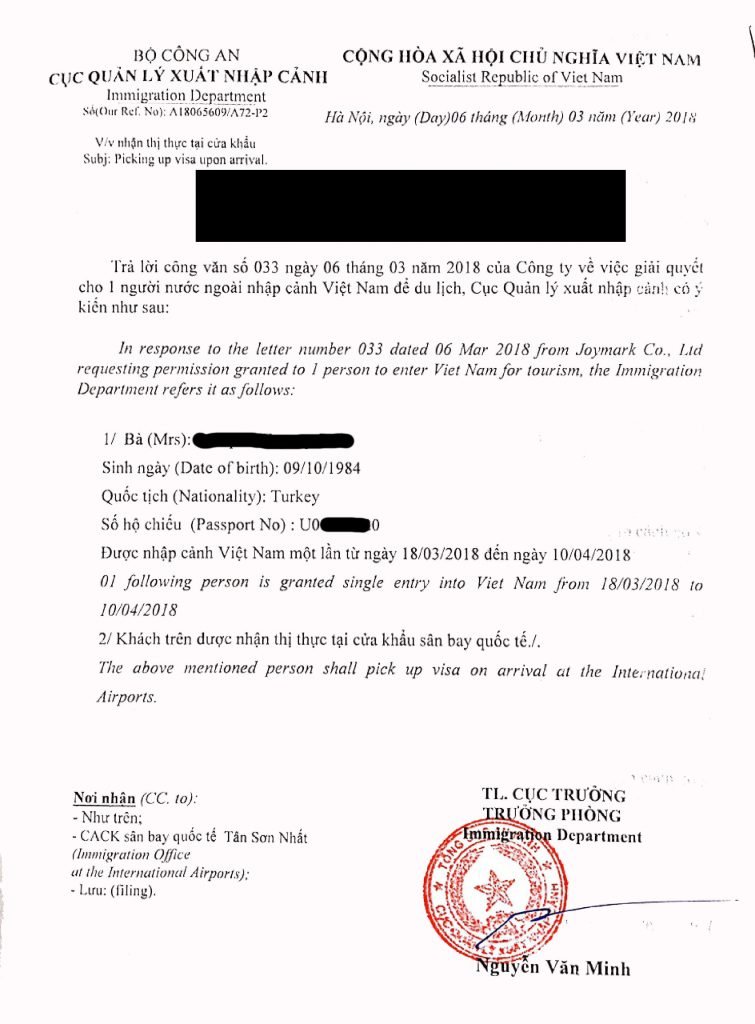
The agency mentioned in the historical version of this article helped us with the old approval-letter process. That method, often described as visa on arrival, should not be used as a substitute for the current official e-visa unless a Vietnamese authority specifically instructs you to do so. Vietnam tours and private visa services may still be sold online, but they are separate from the government's e-visa application. If you use an agent, understand its fee and verify that your application is submitted through the official system.

| 
|
HOW TO APPLY FOR A VIETNAM e-VISA STEP BY STEP
Turkish ordinary-passport holders should check the current visa requirement before every trip. Vietnam's official e-visa system currently accepts eligible applicants for stays of up to 90 days. Diplomatic or service-passport rules may differ, so confirm your own passport category with the official authority.
Start only at the official domains announced by Vietnam Immigration: evisa.gov.vn or thithucdientu.gov.vn. Type the address yourself or follow a link from immigration.gov.vn, and beware of paid websites designed to resemble the government portal.
Start only at the official domains announced by Vietnam Immigration: evisa.gov.vn or thithucdientu.gov.vn. Type the address yourself or follow a link from immigration.gov.vn, and beware of paid websites designed to resemble the government portal.
WHAT DO YOU NEED FOR A VIETNAM e-VISA?
1—Plan your intended arrival and departure dates and identify the approved port of entry you expect to use. You do not normally need to buy a non-refundable flight simply to begin the official online form, but your travel details must be accurate.
2—Prepare a clear image of the passport biographical page and a recent digital portrait that meets the specifications shown on the official application page.
3—Complete the online form carefully. Names, passport number, nationality, dates and entry point should match your passport and travel plan exactly. Save the application code because you will need it to check the result.
4—Pay the government fee through the official portal. The Ministry of Public Security currently lists US$25 for a single-entry e-visa and US$50 for a multiple-entry e-visa. The fee is normally non-refundable, including if an application is refused. Commercial agents may charge additional service fees.
5—Check the application status using the official portal and your application code. Processing times can vary, especially around holidays or if corrections are required, so apply well in advance rather than relying on the minimum estimate.
6—When approved, download and print the e-visa. Check every detail immediately. If anything is wrong, follow the official correction or new-application instructions before travelling.
7—Carry the passport used in the application and a printed or reliably accessible copy of the approved e-visa. Enter through a port permitted for e-visa holders and comply with the authorised dates and number of entries.
2—Prepare a clear image of the passport biographical page and a recent digital portrait that meets the specifications shown on the official application page.
3—Complete the online form carefully. Names, passport number, nationality, dates and entry point should match your passport and travel plan exactly. Save the application code because you will need it to check the result.
4—Pay the government fee through the official portal. The Ministry of Public Security currently lists US$25 for a single-entry e-visa and US$50 for a multiple-entry e-visa. The fee is normally non-refundable, including if an application is refused. Commercial agents may charge additional service fees.
5—Check the application status using the official portal and your application code. Processing times can vary, especially around holidays or if corrections are required, so apply well in advance rather than relying on the minimum estimate.
6—When approved, download and print the e-visa. Check every detail immediately. If anything is wrong, follow the official correction or new-application instructions before travelling.
7—Carry the passport used in the application and a printed or reliably accessible copy of the approved e-visa. Enter through a port permitted for e-visa holders and comply with the authorised dates and number of entries.
DOCUMENT CHECKLIST
1—The passport used for the application, valid for the period required by Vietnamese authorities
2—A compliant digital portrait photograph
3—A clear scan or photograph of the passport biographical page
4—The completed online application and saved application code
5—Payment of the official e-visa fee through the government portal
1—The passport used for the application, valid for the period required by Vietnamese authorities
2—A compliant digital portrait photograph
3—A clear scan or photograph of the passport biographical page
4—The completed online application and saved application code
5—Payment of the official e-visa fee through the government portal
The old C1 letter, airport form, passport photo and US$25 'stamping fee' checklist in this article described a previous visa-on-arrival process. It is not the standard official e-visa procedure in 2026.
Official Vietnam e-Visa portal
https://evisa.gov.vn
Vietnam Immigration information
https://immigration.gov.vn
https://evisa.gov.vn
Vietnam Immigration information
https://immigration.gov.vn
If You Have Upcoming Travel Plans...
When you make a purchase by clicking our links, we get to earn a small commission but you still pay the same price. So, it's a win-win for everyone!

Book hotels via Booking.com | 
Find Cheap Flights via Skyscanner | 
Get a Travel Insurance via World Nomads | 
Make International Money Transfer via Wise |

Book Tours & Attractions via Getyourguide | 
Book a Cruise | 
Book Bus/Ferry/Train/Transfer via 12goAsia | 
Find free accommodation in exchange for petsitting |